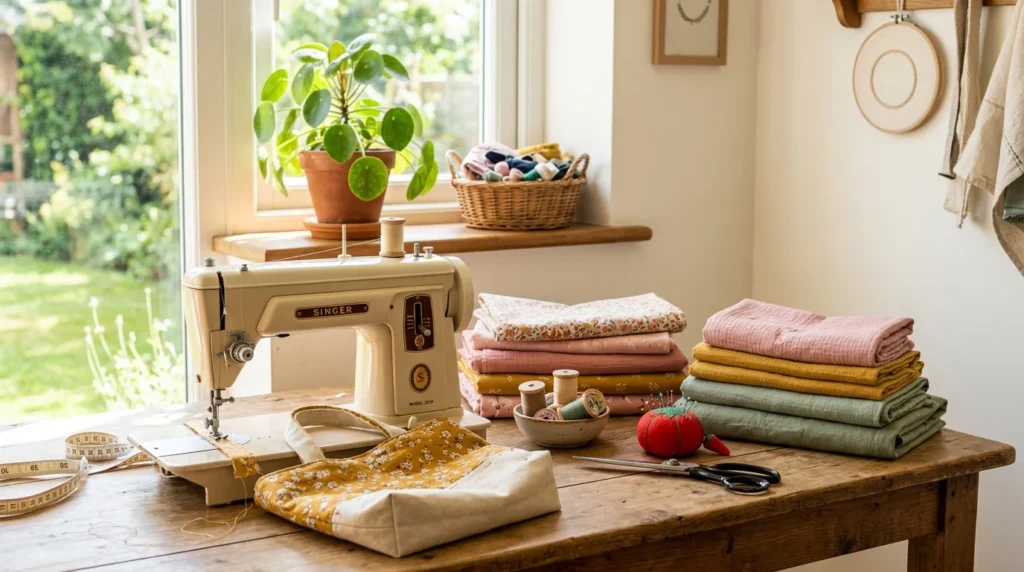
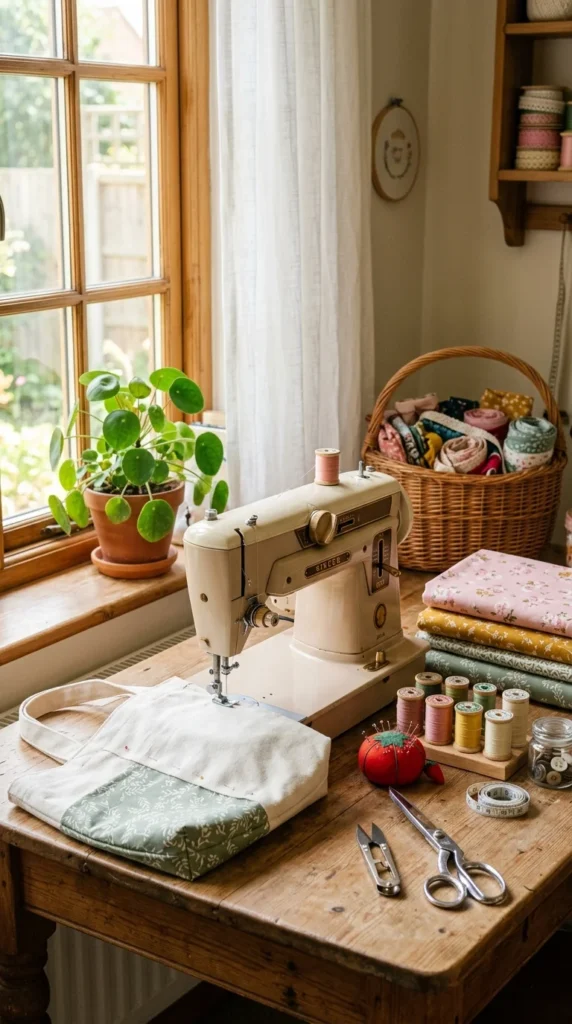
Sewing has quietly become one of the most loved hobbies again, with around 30 million Americans picking up a needle and thread. Gen Z and millennials are leading the charge, and TikTok alone hosts nearly 3 million sewing posts. If you have a basic machine, some cotton fabric, and a free afternoon, you already have what you need. This roundup pulls together 22 simple, low-cost sewing projects that beginners can actually finish, mostly using straight stitches, fabric scraps, or thrifted clothes you already own.
1. Classic Fabric Scrunchies
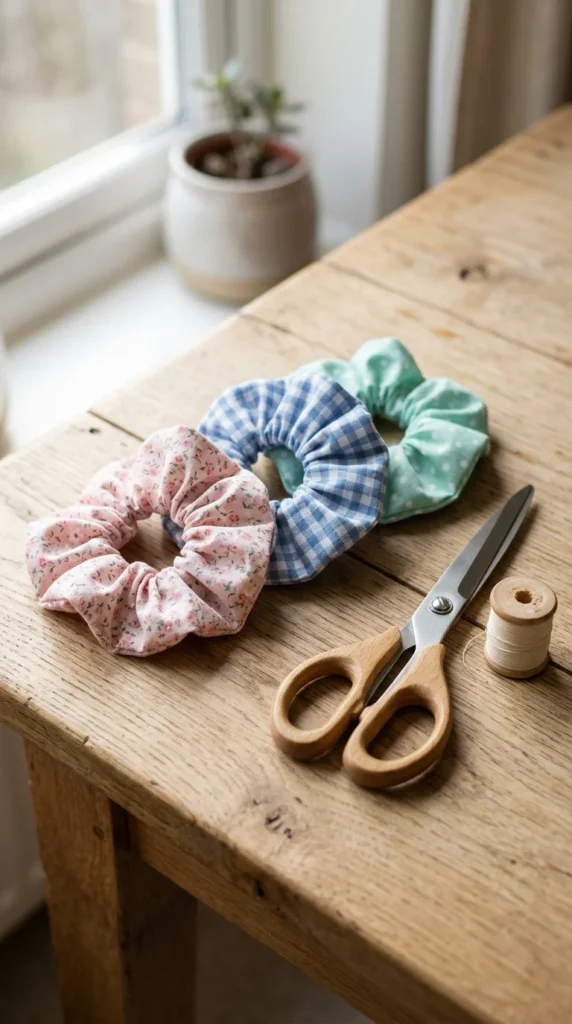
Scrunchies are the easiest first project you can make. You only need a strip of fabric about 4 inches wide and 18 inches long, plus a piece of elastic. Cotton or satin both work well. Fold the strip in half lengthwise, sew the long edge, turn it inside out, thread the elastic through, and stitch the ends together.
The whole thing takes about 10 minutes.
You can use fabric scraps from old shirts, pillowcases, or thrifted dresses. That keeps the cost close to zero.
Try mixing prints. Floral cotton, soft velvet, or even denim all look great as scrunchies. Make a set of five in different colors and you have ready-made gifts for friends, sisters, or a small Etsy bundle.
If you mess up the stitching, just use a seam ripper and try again. Scrunchies are forgiving because the gathers hide small mistakes. This is a great way to test your machine tension before moving to bigger projects.
2. Simple Cotton Tote Bag
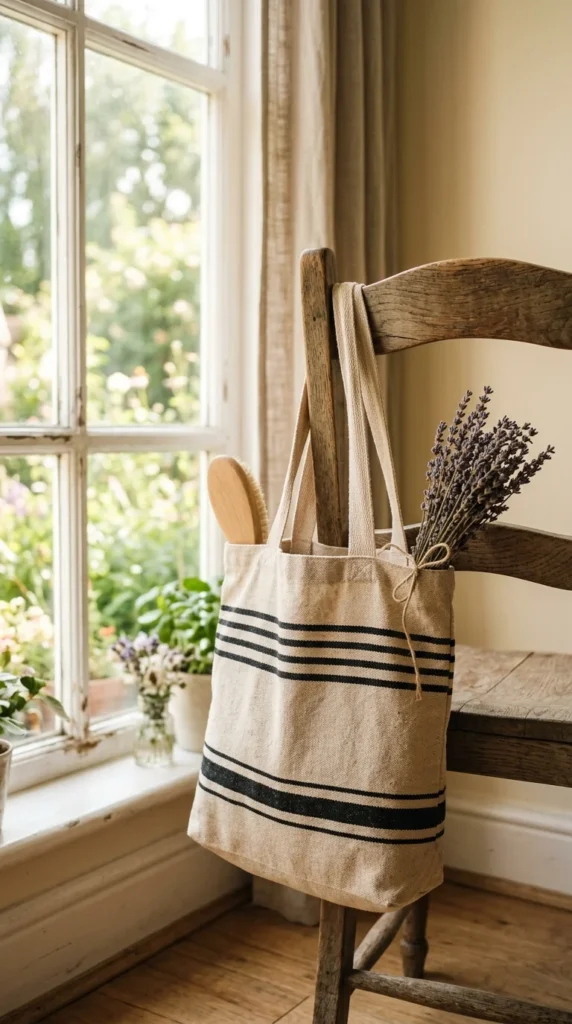
A tote bag is the project that most beginners are proudest of. It uses only straight lines, no zippers, and no tricky corners. Cut two rectangles of cotton fabric, around 15 by 17 inches. Add two strips for handles, each about 22 inches long.
Sew the sides and bottom of the rectangles together. Fold and stitch the top edge down. Attach the handles. Done.
Budget tip: use an old cotton bedsheet or a thrifted curtain. You get yards of fabric for the price of a coffee.
Totes are useful for groceries, the library, or carrying your sewing supplies. They also make solid handmade gifts.
Once you finish one, try adding a small inside pocket. That single upgrade teaches you how to layer fabric and stitch neat corners.
3. Envelope-Back Pillowcase
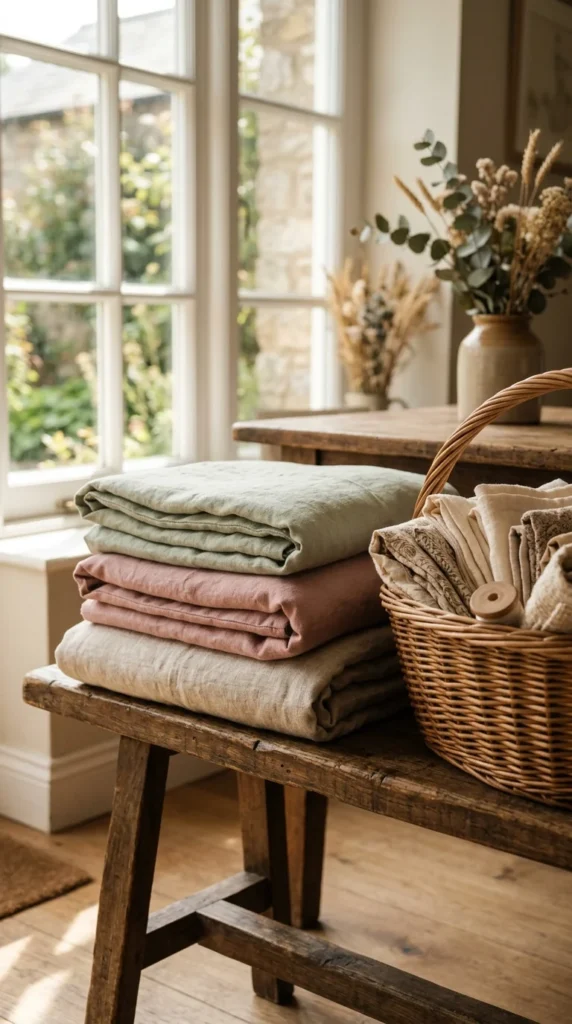
A pillowcase is the project most experienced sewists recommend you start with. There is no fitting, no zipper, and no curves. You only sew straight lines on cotton.
Measure your pillow. Cut one front piece the same size, then two back pieces that overlap in the middle. The overlap creates the envelope opening.
Hem the inner edges of the back pieces. Lay everything right-sides together, sew around the outside, and turn it inside out.
You can finish a pillowcase in under 30 minutes.
For fabric, hit the clearance shelf at your local craft store or use a thrifted flat sheet. A queen sheet gives you enough material for four or five pillowcases.
Try seasonal prints, plain linens, or even patchwork made from scraps. Swap them out every few months to refresh a room without buying new décor.
4. Half Apron with a Front Pocket
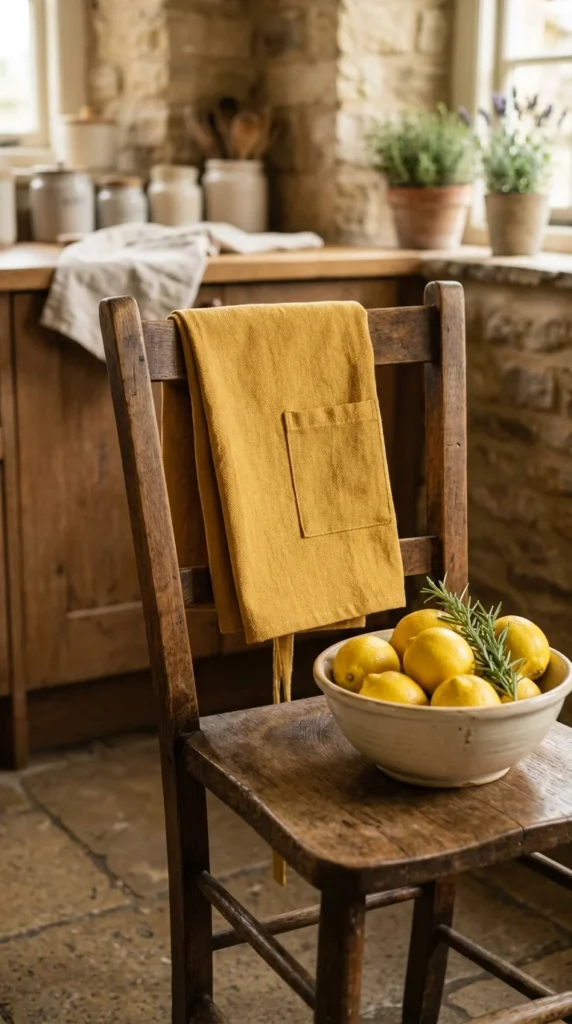
A half apron is a one-evening project that beginners love. It teaches you how to gather fabric, attach ties, and add a simple patch pocket. All useful skills for later projects.
Cut a rectangle of cotton, about 18 by 24 inches. Hem the sides and bottom. Sew long fabric strips for ties. Gather the top edge of the apron and attach it to a waistband strip with the ties built in.
Add a small square pocket on the front for keys, snippers, or a phone.
Budget tip: use heavy cotton from an old tablecloth or curtain panel. The thicker the fabric, the nicer the drape.
Aprons make brilliant gifts for someone who bakes, gardens, or paints. Pair one with a wooden spoon or a packet of seeds and it feels like a thoughtful, handmade present without spending much.
5. Reversible Pet Bandana
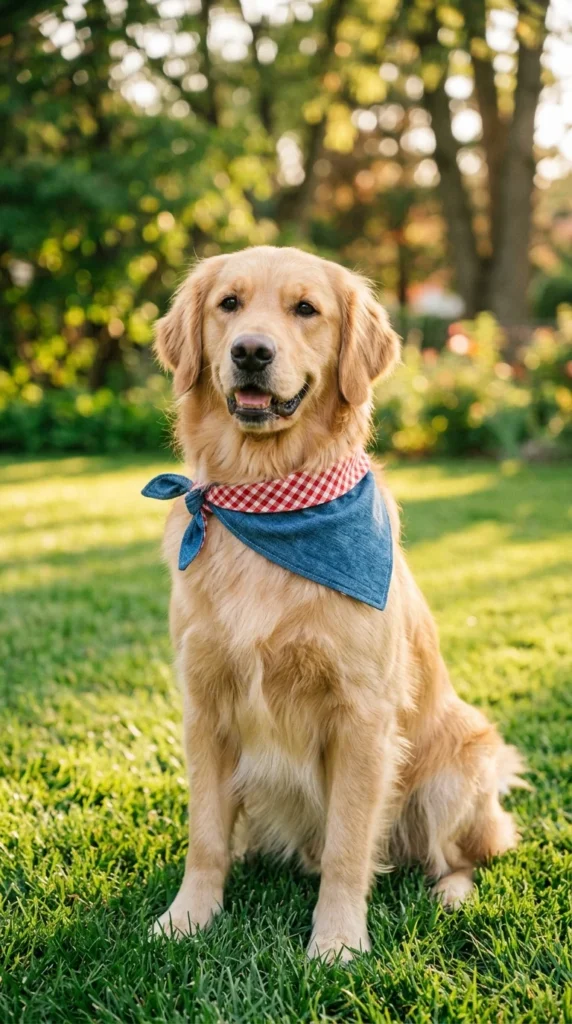
Pet bandanas are quick, cheap, and almost impossible to mess up. Cut two triangles of cotton, each about 14 inches on the long side. Lay them right-sides together, sew around the edges, leave a small gap, turn it inside out, and topstitch.
Slip a strip of fabric through the top fold to use as a tie.
Use scraps for these. A single fat quarter of fabric can make two or three.
Pet bandanas are also a generous community project. Many local shelters welcome donated bandanas because dogs wearing them get adopted faster. You can knock out ten in a weekend.
For your own dog or cat, make a few in different prints. Holiday fabric, plaid, or florals all look adorable on a pet.
If you sell at small craft fairs, pet bandanas usually sell quickly because they are affordable, useful, and easy to gift.
6. Soft Baby Bib
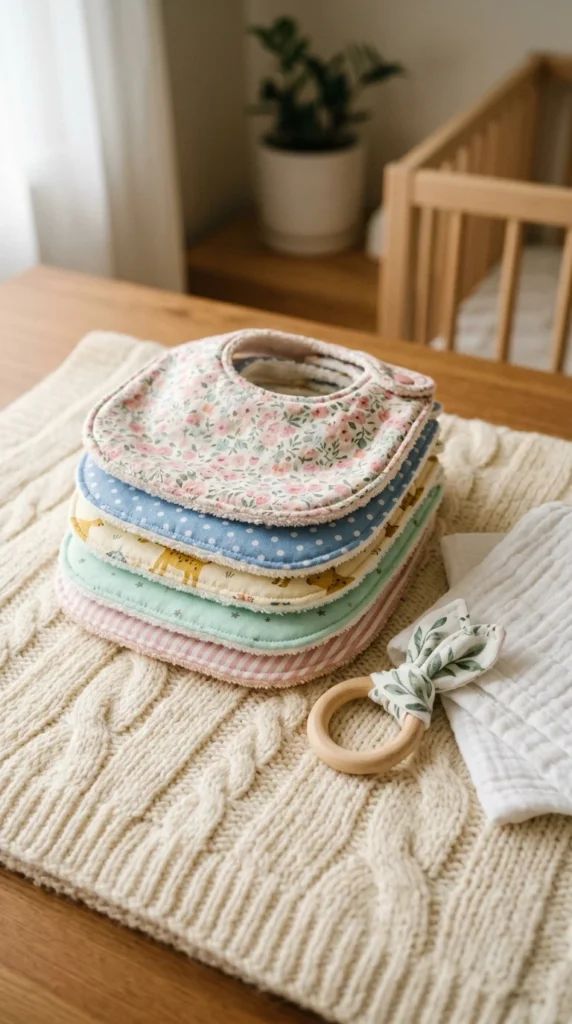
Baby bibs are simple, useful, and always appreciated at baby showers. Trace around a bib you already own to make your pattern, or print a free one. Cut one piece of cotton and one piece of terry cloth or flannel for the back.
Sew the two layers right-sides together, leave a small gap, turn it inside out, and topstitch.
Add a snap or a Velcro tab at the neck.
Budget tip: terry cloth from an old plain towel works perfectly as backing. You only need a small piece per bib.
Use playful prints like dinosaurs, fruit, or tiny animals. New parents love bibs that match outfits or seasons.
Make a set of five and tie them with twine. That single gift looks far more expensive than it actually cost to make.
7. Lavender Eye Pillow
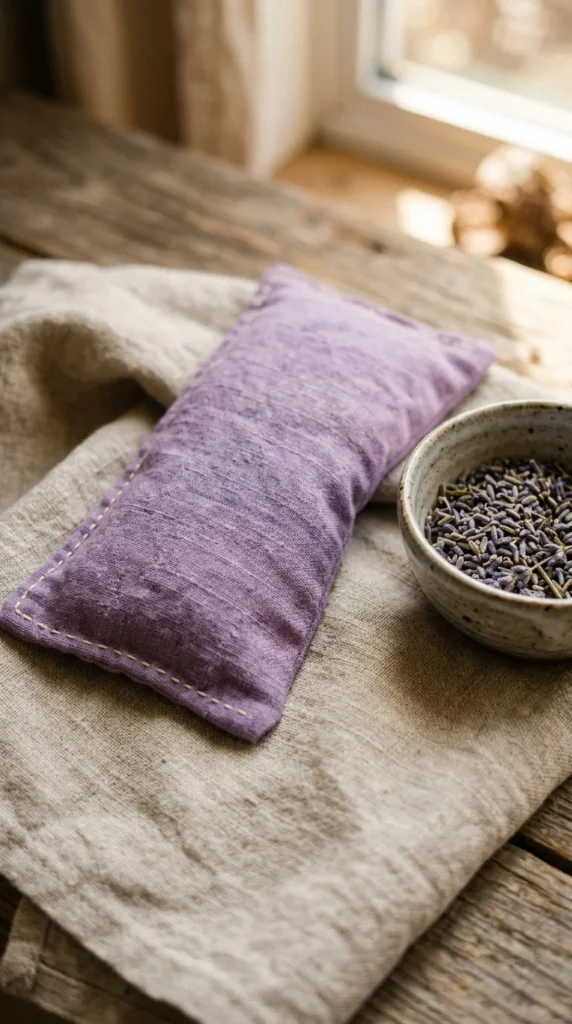
An eye pillow is one of those small handmade gifts that feels far more special than it should. Cut two rectangles of soft cotton, around 4 by 9 inches. Sew three sides together, turn it inside out, fill with dried lavender and rice or flaxseed, and stitch the last side closed.
It works as a warm or cool compress. Pop it in the freezer for headaches or microwave it for sore eyes.
Budget tip: buy dried lavender in bulk online, or use rosemary and dried mint instead. A small bag goes a long way.
Use soft fabric like flannel or cotton so it feels nice against skin. Avoid scratchy textures.
These make beautiful gifts paired with a cup of tea or a candle. Wrap one in tissue paper with a small tag and it instantly looks like a boutique product.
8. Drawstring Gift Pouch
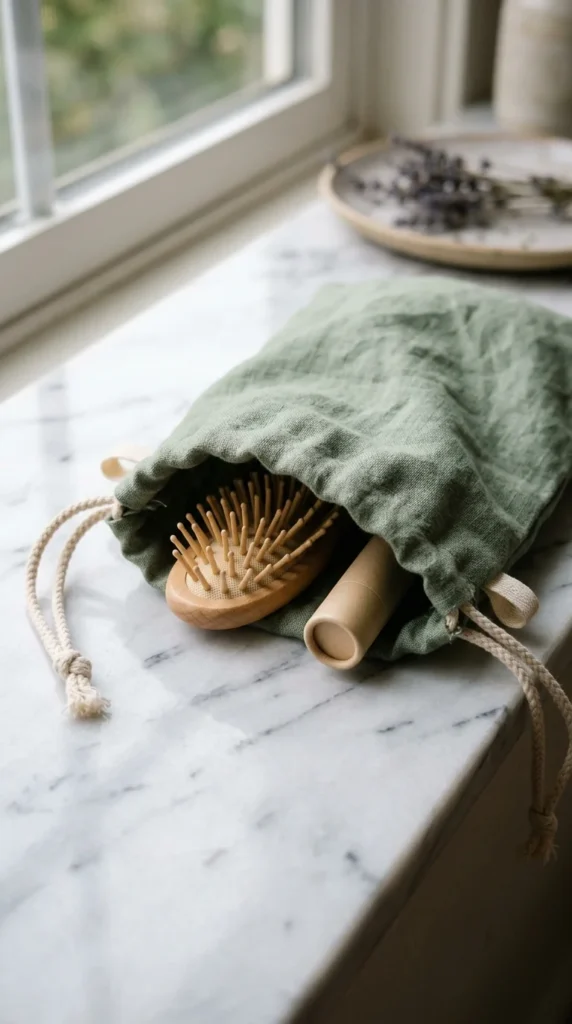
A drawstring pouch is the project you will use again and again. Cut two squares of fabric, about 8 by 10 inches. Hem the top edges and create a small channel near the top for the drawstring. Sew the sides and bottom, leaving the channels open at the corners.
Thread a ribbon, cord, or shoelace through the channel. Pull tight.
Use these as gift wrap, makeup pouches, jewelry bags, or travel bags for small items.
Budget tip: cut shoelaces from old sneakers or use leftover ribbon from gift wrapping. You probably already have what you need.
For weddings or baby showers, sew a batch of matching pouches as party favors. Fill them with chocolates, seeds, or small soaps.
The drawstring channel is also a great place to practice straight stitching. If your seams wobble a little, the fabric folds hide it well.
9. Patchwork Pot Holder
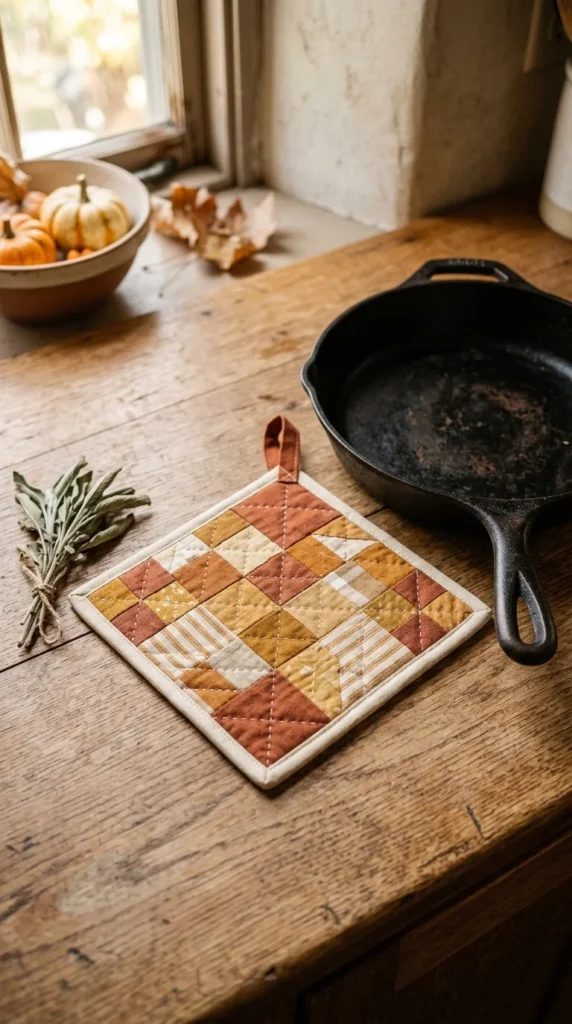
Pot holders are a smart way to use up small fabric scraps. Cut several squares, around 3 by 3 inches each, in coordinating prints. Sew them together in a grid to make a 9 by 9 inch patchwork square.
Layer the patchwork with cotton batting and a plain back fabric. Quilt simple straight lines across it. Bind the edges with a strip of cotton folded over.
The whole project teaches you patchwork, basic quilting, and binding. All in one small piece.
Budget tip: use scraps from earlier projects. Even tiny squares add up.
Make a matching pair as a housewarming gift. Pair them with a loaf of homemade bread and they feel like a heartfelt, useful present.
If you want more practice, scale the same technique up later to make table runners, placemats, or even a small baby quilt.
10. Reusable Makeup Remover Pads
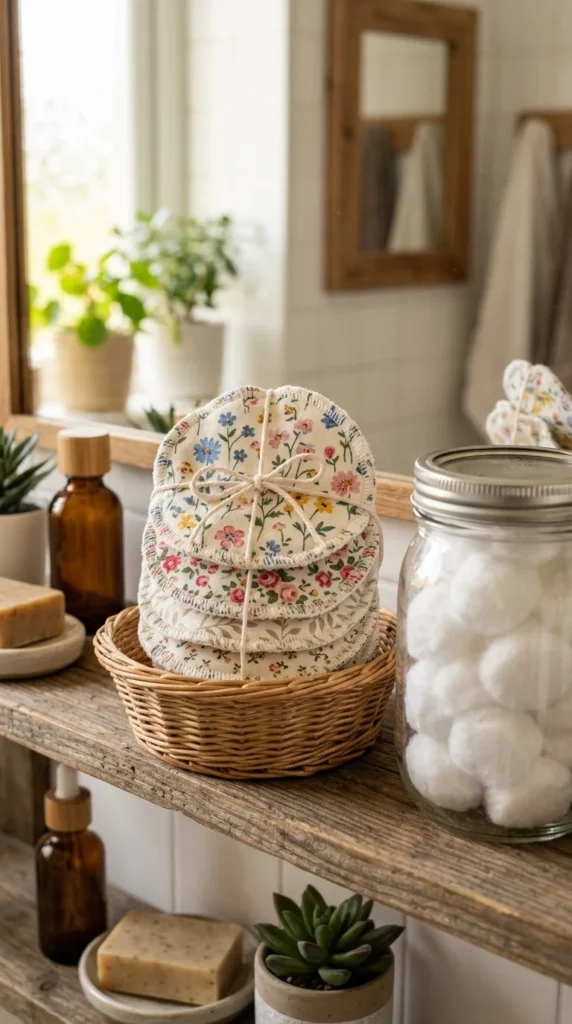
Reusable makeup pads are a small but satisfying eco-friendly project. Cut circles, about 4 inches across, from cotton flannel and soft terry cloth. One of each per pad.
Place them right-sides together. Sew around the edge with a zigzag stitch, or use a sewing machine on a slow setting to follow the curve.
Make a matching small drawstring pouch to hold the clean ones, and a jar for used ones.
Budget tip: cut up an old plain towel for the terry side. One bath towel makes dozens of pads.
A set of 10 pads replaces hundreds of disposable cotton rounds over a year. That saves money and reduces waste.
These are popular handmade gifts and a quick seller at small markets. People appreciate practical sustainable swaps that actually work in everyday routines.
11. Cozy Infinity Scarf
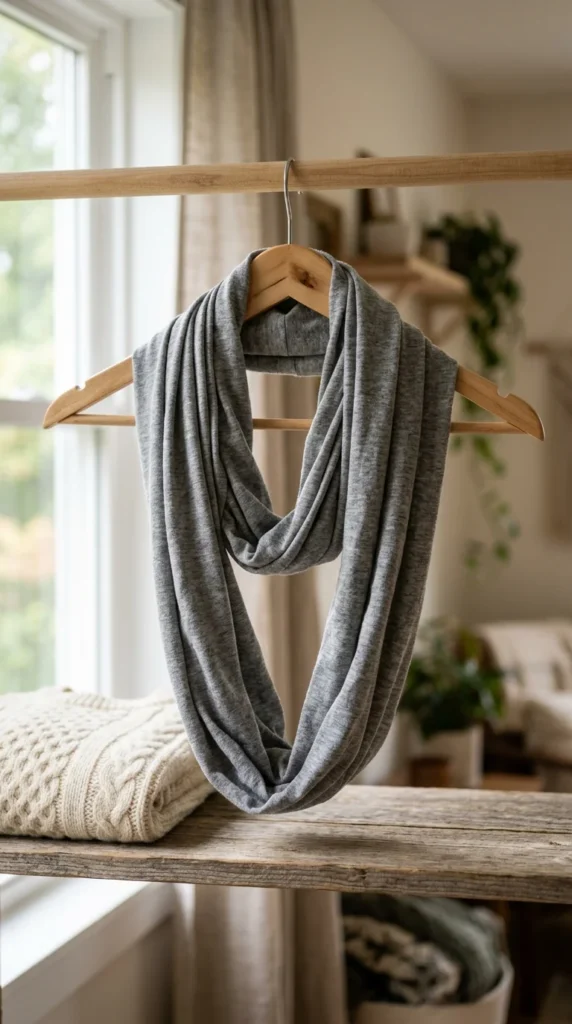
An infinity scarf is one of the few clothing items that beginners can finish in under an hour. You need about 1.5 yards of soft knit fabric like jersey or fleece.
Fold the fabric in half lengthwise. Sew the long edge to form a tube. Turn it right-side out. Bring the two short ends together, tuck one inside the other, and sew them closed.
That circle of fabric becomes a scarf you can loop twice around your neck.
Budget tip: thrifted jersey skirts or oversized t-shirts give you stretchy fabric without buying anything new.
Knit fabric does take some practice because it stretches. Use a ballpoint needle if you have one, and go slow. Even with a small mistake, the loose drape of an infinity scarf hides almost everything.
Make a few in neutral colors like grey, black, and cream. Add one bright print for a pop. They make solid winter gifts.
12. Kids Superhero Cape
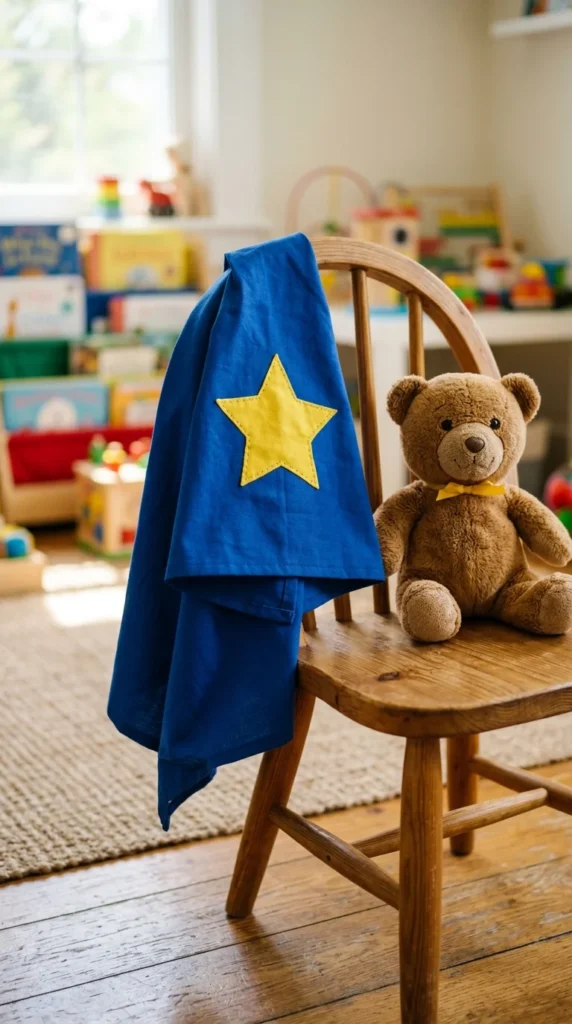
A superhero cape turns scrap fabric into hours of imaginative play. Cut a rectangle of bright cotton, about 24 by 30 inches for a small child. Round the bottom two corners.
Hem all the edges. Sew a wider strip across the top for the neck tie, with long fabric ties on each end.
Add a felt star or a simple appliqué initial on the back. Use fabric glue if you do not feel ready to sew curves.
Budget tip: old bedsheets in bold colors work perfectly. You get plenty of fabric for multiple capes.
Capes are popular birthday gifts, party favors, and dress-up presents. Make a set of three in different colors and you have a small batch ready for nieces, nephews, or your kids’ friends.
Use Velcro instead of ties if the cape is for a very young child. It is safer and easier to take off quickly.
13. Padded Book Sleeve
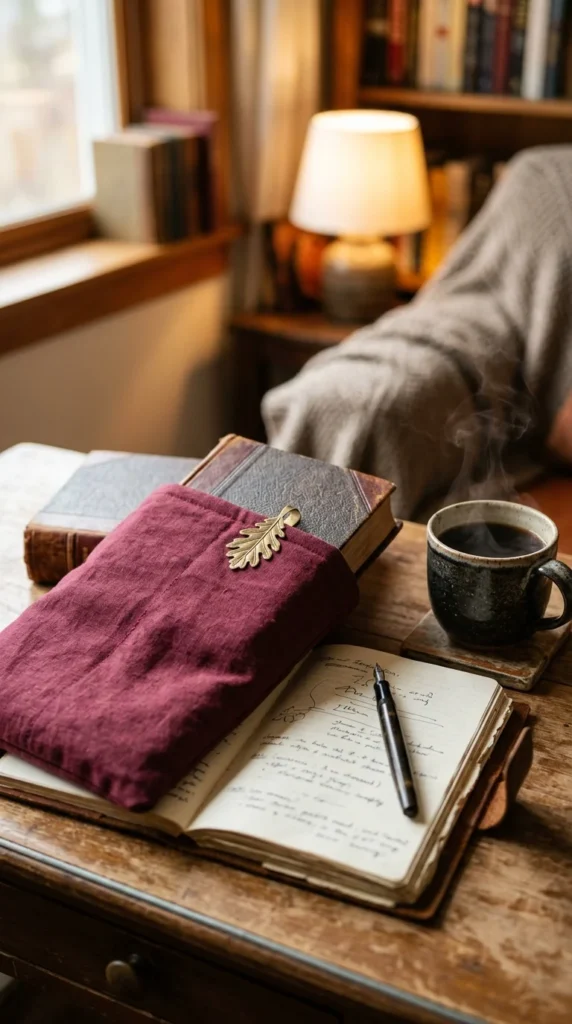
A padded book sleeve is a thoughtful gift for any reader. Cut two pieces of outer fabric and two pieces of cotton batting, sized about an inch larger than the book on all sides. Add two lining pieces in a soft cotton.
Layer outer fabric and batting, quilt simple lines across each. Sew the lined sleeve together with the quilted outer pieces, leave a small gap, turn it inside out, and topstitch the top edge.
The result is a soft cover that protects books inside a bag.
Budget tip: use fabric scraps for the outer pieces and an old pillowcase for the lining.
Personalize the front with a small fabric label or an iron-on patch with the recipient’s initial.
Readers love these because they keep paperbacks from getting bent corners or stained covers. They take about an hour to make and use very little fabric, which makes them ideal for using up small leftover prints.
14. Quilted Fabric Coasters
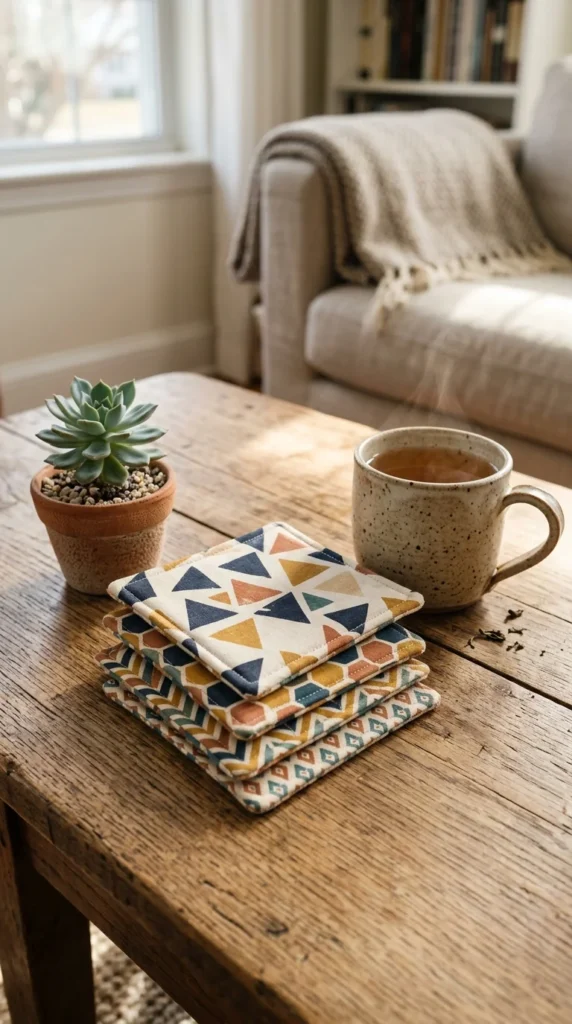
Fabric coasters are tiny, fast, and a smart use for the smallest leftover scraps. Cut two squares of cotton, about 5 by 5 inches, and one square of cotton batting the same size.
Layer batting between the two cotton squares with right sides facing out. Sew around the edges with a zigzag or a decorative stitch. Trim the edges with pinking shears for a clean finish.
You can finish a set of four in well under an hour.
Budget tip: mix prints within the same color family. Even mismatched scraps look intentional when the colors blend.
Make a matching set for housewarming gifts. Tie four coasters with twine and add a small handwritten tag.
For a slightly more advanced version, quilt diagonal lines across each coaster before binding the edges. The texture looks beautiful and the layered fabric absorbs condensation from cold drinks better than a flat coaster.
15. Padded Laptop Sleeve
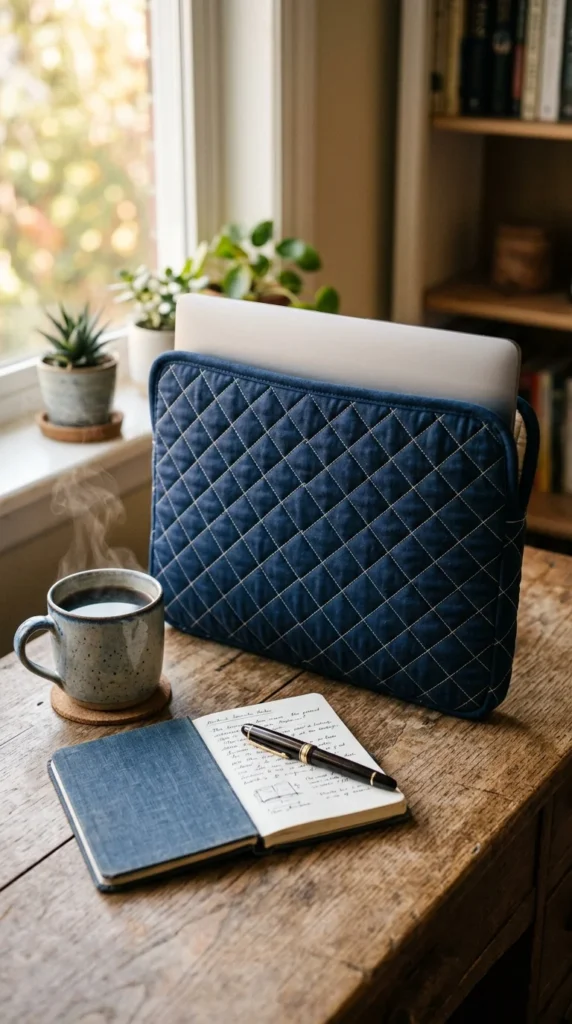
A laptop sleeve is a useful upgrade from a basic tote project. Measure your laptop and add an inch on all sides. Cut two outer pieces, two batting pieces, and two lining pieces to that size.
Sandwich the batting between the outer and lining for each panel. Quilt simple lines across them for structure. Sew the two padded panels together with the lining facing in.
Add a strip with a button or Velcro at the top to close it.
Budget tip: use an old denim jacket or a thrifted thick canvas bag for the outer. The fabric is already sturdy and gives the sleeve real protection.
A handmade laptop sleeve looks far nicer than most generic ones in stores. It also lasts for years if you use strong fabric.
For practice, make a smaller version first for a tablet or e-reader. Same method, less fabric, faster results.
16. Knotted Fabric Headband
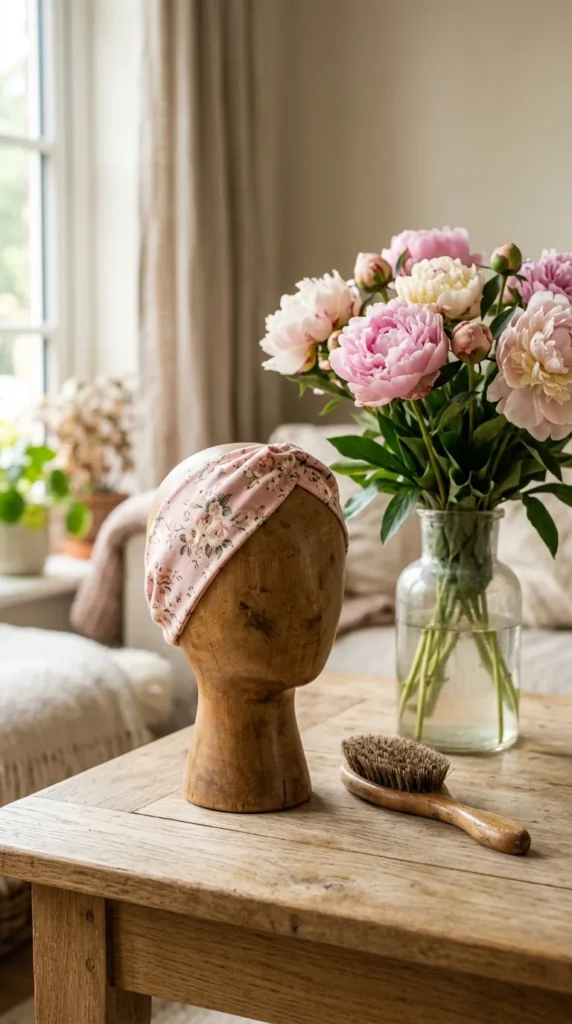
A knotted headband is a stylish way to use a small piece of fabric. Cut two strips of cotton, each about 4 inches wide and 18 inches long. Sew them into tubes, turn them right-side out, and tie them together in a knot at the center.
Attach the ends to a thin elastic at the back so it stretches over the head.
Budget tip: cut strips from outgrown clothes or fabric scraps. Even a quarter yard makes two or three headbands.
These pair well with the matching scrunchies from earlier in this list. A small gift set of one headband and two scrunchies in coordinating prints looks polished.
Try different fabrics for different seasons. Linen for summer, flannel for autumn, velvet for winter.
If you sell handmade goods, headbands are a low-cost item that fills a stall and attracts impulse buys at craft fairs.
17. Reversible Bucket Hat
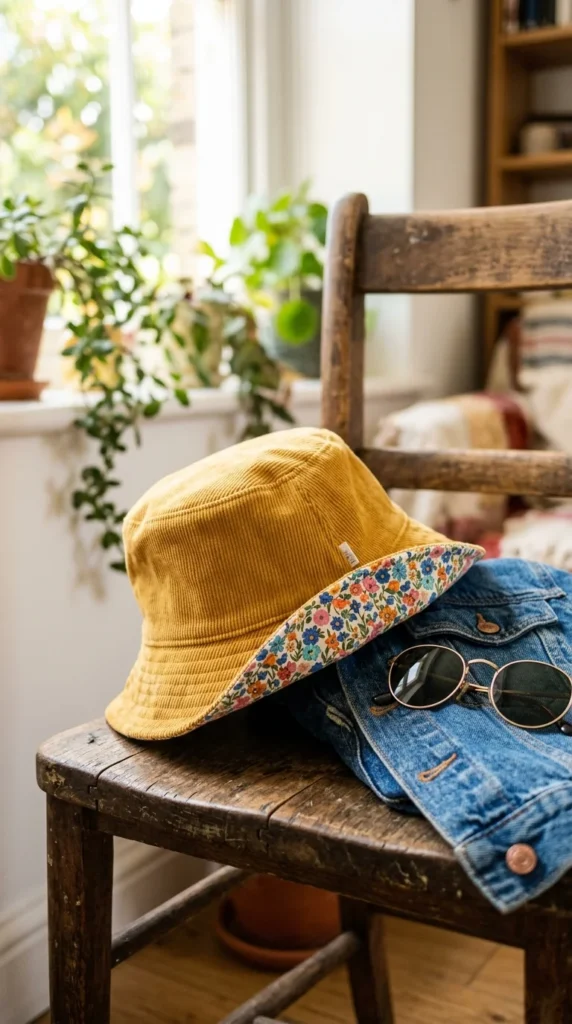
A reversible bucket hat is a trending project that looks much harder than it actually is. Free printable patterns are widely available online. You cut a top circle, a side band, and a brim, twice over in two different fabrics.
Sew each layer separately. Then put one inside the other, sew around the brim, and topstitch.
Flip it inside out to switch the look.
Budget tip: use an old cotton shirt for one side and printed fabric scraps for the other. You get two hats out of one piece of fabric.
Bucket hats are popular with Gen Z, festival-goers, and travelers. They are also good gifts because one hat actually feels like two.
Topstitching the brim is the only slightly tricky step. Go slow and use plenty of pins. If the stitches wobble, hand-stitch a small fabric flower over the spot. Problem solved.
18. Muslin Burp Cloth
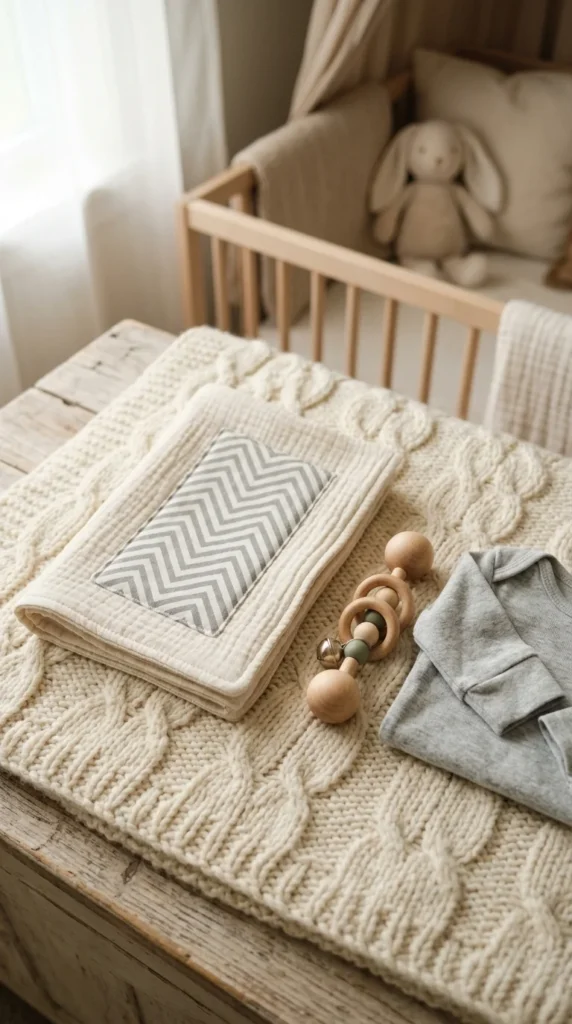
Burp cloths are another fast, useful baby gift. Cut two rectangles of soft fabric, around 9 by 16 inches. Use cotton on one side and absorbent muslin, flannel, or terry cloth on the other.
Sew them right-sides together, leave a small gap, turn inside out, and topstitch all the way around.
For extra absorbency, add a layer of cotton batting in the middle.
Budget tip: cut burp cloths from old soft towels or worn muslin swaddles. Babies do not care about brand-new fabric.
Make a set of five in coordinating prints. Roll them up, tie with twine, and you have a beautiful baby shower gift.
The shape is forgiving, so wobbly stitches barely show. This makes burp cloths a great early project to practice sewing curves and topstitching. By the time you finish a set, you will feel much more confident on your machine.
19. Simple Linen Placemats
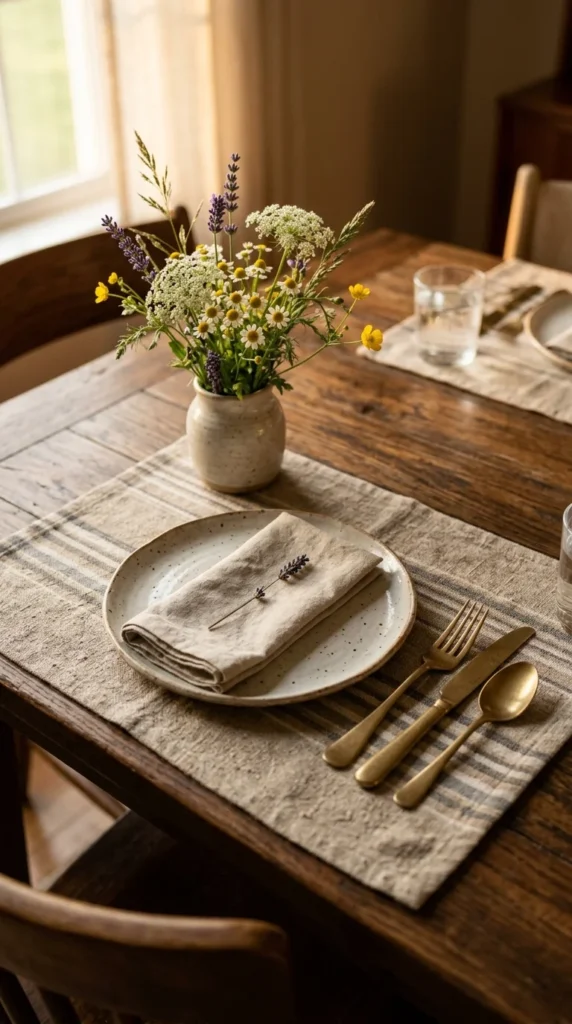
Placemats turn a regular dinner table into something that looks intentional. Cut rectangles of linen or cotton, about 14 by 18 inches. Fold the edges over twice and topstitch all the way around.
That is the entire project.
For a slightly fancier version, layer two pieces of fabric with cotton batting between them and quilt simple lines across the surface.
Budget tip: linen-look cotton from the clearance bin works perfectly. You can also cut placemats from a single thrifted tablecloth.
Make a set of four or six in the same fabric. Matching place mats instantly upgrade any dinner.
Try seasonal versions. Soft cream for spring, terra cotta for autumn, deep green for winter. Swapping placemats is cheaper than redecorating, and they all store flat in a drawer.
These also make a popular wedding or housewarming gift, especially paired with a set of fabric coasters in matching prints.
20. Fabric Storage Basket
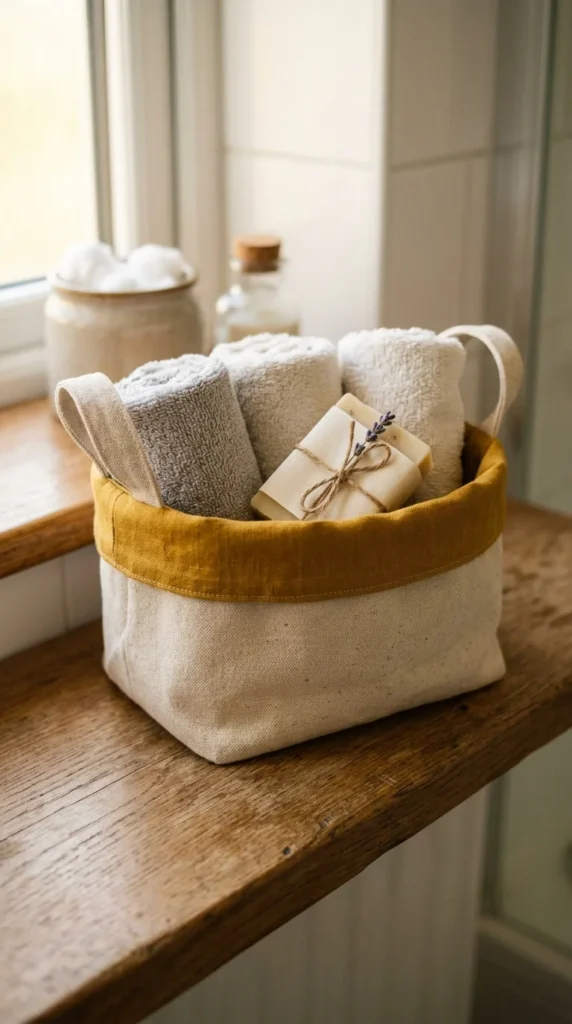
A fabric basket is brilliant for organizing small spaces. Cut a square base and four side panels from sturdy cotton canvas or denim. Cut a matching set in lining fabric.
Sew the outer panels together to form an open box. Do the same with the lining. Slide the lining inside the outer, fold the top edge over to form a cuff, and topstitch around the top.
Budget tip: use an old canvas tote or a pair of worn jeans for the outer fabric. Denim baskets look modern and they last for years.
Use the baskets for craft supplies, kids’ toys, bathroom storage, or sewing scraps. They fold flat when empty and stand up when filled.
Make a few in different sizes that nest inside each other. A large one for laundry sorting, a medium for toys, and a small one for desk clutter. The same pattern works for all three. Just scale the measurements up or down.
21. Upcycled Denim Patchwork Pillow
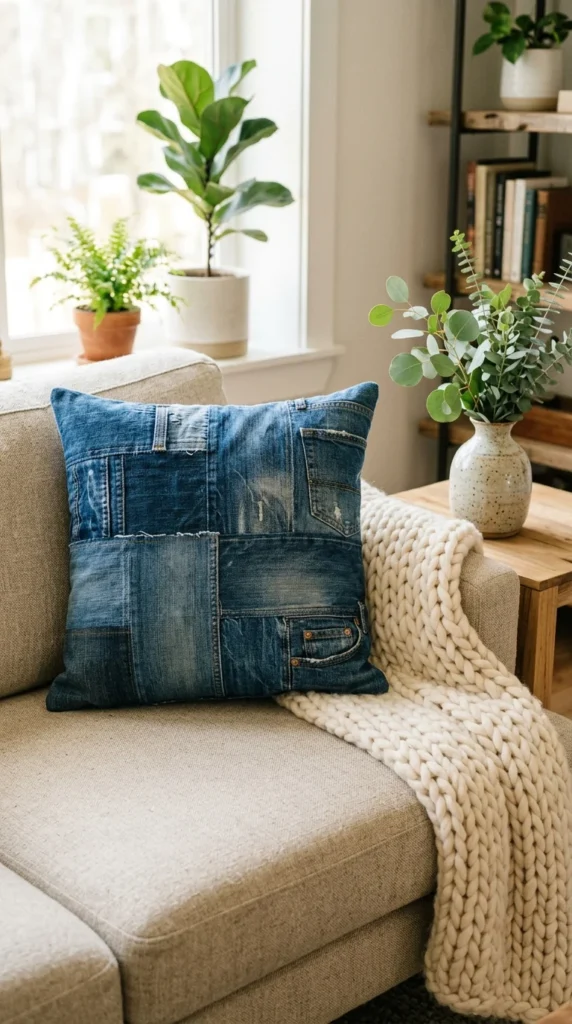
Old jeans piling up? Turn them into a sturdy patchwork pillow. Cut squares from the legs of three or four pairs of jeans, about 5 by 5 inches each. Mix light, medium, and dark washes for visual interest.
Sew the squares into a grid the size of your pillow front. Use a plain backing fabric, leave one side open, insert the pillow form, and stitch the opening closed.
Budget tip: denim is everywhere in thrift stores for a few dollars a pair. One pair of jeans gives you enough fabric for a full pillow.
Denim is heavier than cotton, so use a stronger needle if your machine has one. Otherwise go slow and your regular needle should manage.
These pillows fit perfectly in living rooms, reading corners, or outdoor benches because denim is tough. Pair one with a soft knit throw for a cozy contrast in textures.
22. Fabric Holiday Ornaments
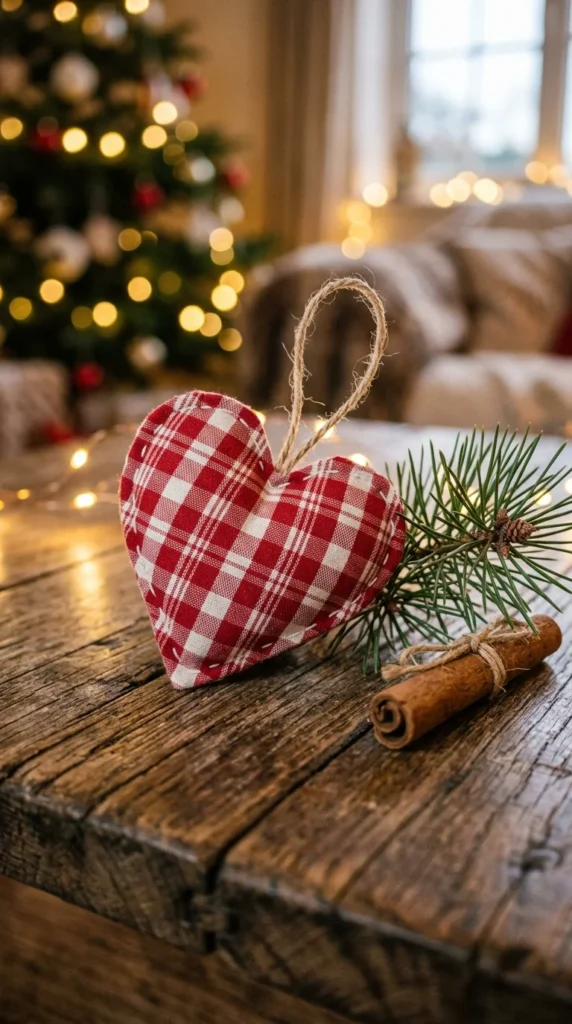
Fabric ornaments are a sweet way to finish off your scrap stash at the end of the year. Cut two identical shapes from cotton fabric, such as a heart, star, or simple tree. Sew them right-sides together, leave a small gap, turn it inside out, and stuff with a little fiberfill or fabric scraps.
Stitch the gap closed and add a small loop of twine at the top.
Budget tip: use leftover fabric from earlier projects, plus any worn-out clothes in festive colors. Old plaid shirts and red flannel are perfect.
Make a set of six or eight in coordinating prints. Tie them with twine in a small bundle for a charming homemade gift.
These also work as gift toppers instead of bows, drawer fresheners with a few drops of essential oil inside, or year-round décor in different prints. Hearts in pink for spring, stars in cream for summer, leaves in autumn shades, and snowflakes for winter.
Conclusion
You do not need a fancy machine, a sewing room, or years of practice to make beautiful handmade things. Every project in this list uses simple straight lines, basic cotton fabric, and supplies you can find in thrift stores or your own closet. Start with a scrunchie or a pillowcase to build confidence, then work your way up to bags, hats, and quilted pieces as your skills grow. Pick one project this weekend, gather your scraps, thread your machine, and just begin. The first stitch is always the hardest one.