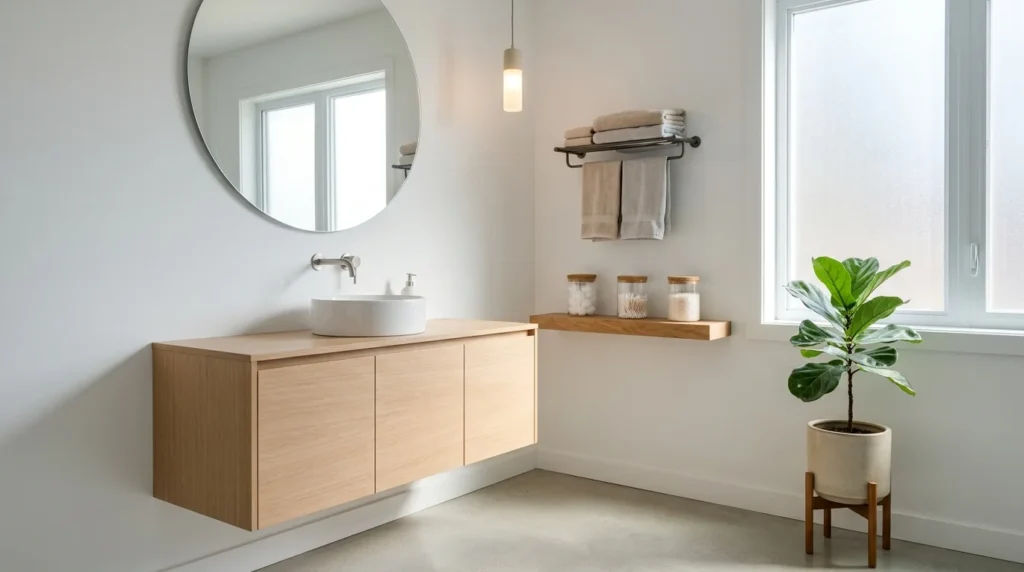
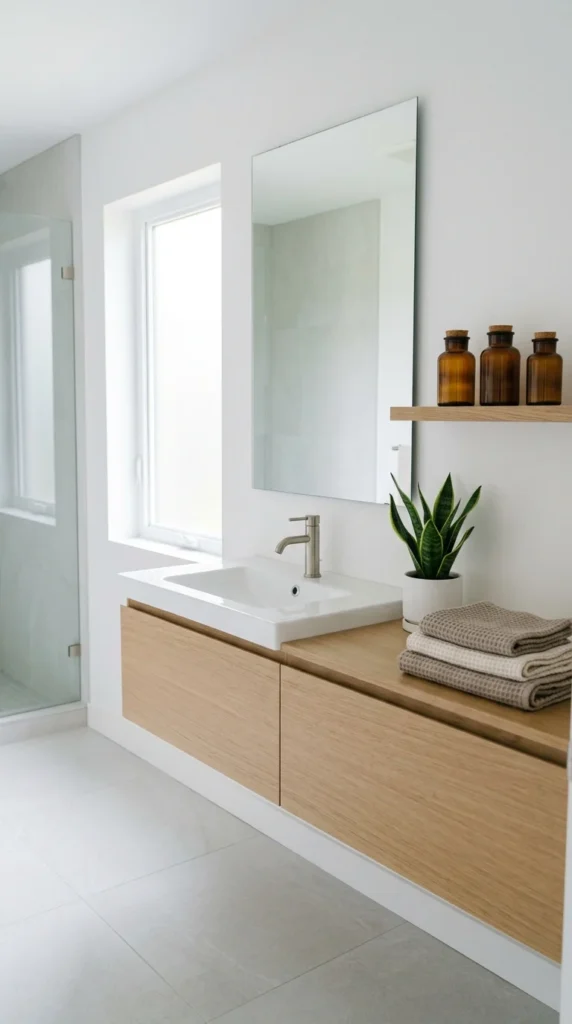
A minimalist bathroom combines calm visuals with practical storage. Clean lines, hidden storage, and neutral colors help create a clutter-free environment. The key is keeping only essentials visible, using wall-mounted vanities, floating shelves, small baskets, and closed cabinets. Thoughtful storage choices let even small bathrooms feel open, light, and organized. Simple strategies like drawer dividers, hooks, and under-sink solutions keep products accessible without crowding surfaces.
1. Wall-Mounted Vanity with Floating Shelf
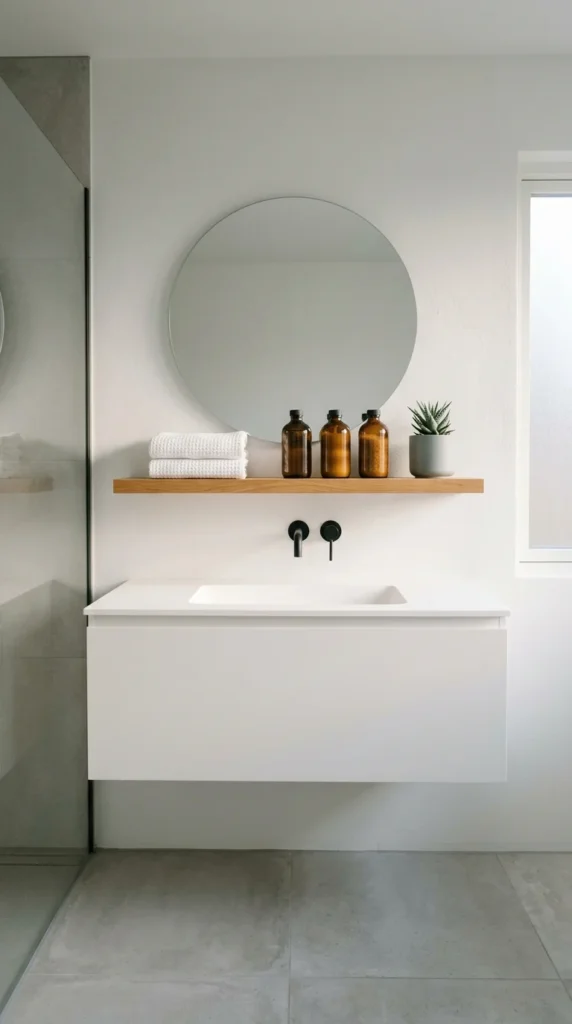
A wall-mounted vanity opens floor space and keeps the bathroom feeling airy. Pair it with a floating shelf above to store essentials like towels, soap dispensers, or a small plant. Opt for neutral materials like white or light wood. Use containers that match to maintain visual consistency. For a DIY option, install a basic pine board with sleek metal brackets. Keep fewer than five items on display to retain a clean, minimalist feel. This setup works in compact bathrooms as well as larger ones. It allows easy cleaning beneath the vanity and provides a streamlined look without sacrificing storage. Use baskets or bins on the shelf for small items like toothbrushes or cosmetics. Regularly declutter to keep surfaces clear. Minimal hardware or handle-free drawers enhance the smooth appearance. By combining a wall-mounted vanity and a floating shelf, you gain practical storage while reinforcing a calm, open aesthetic.
2. Closed Cabinet Storage
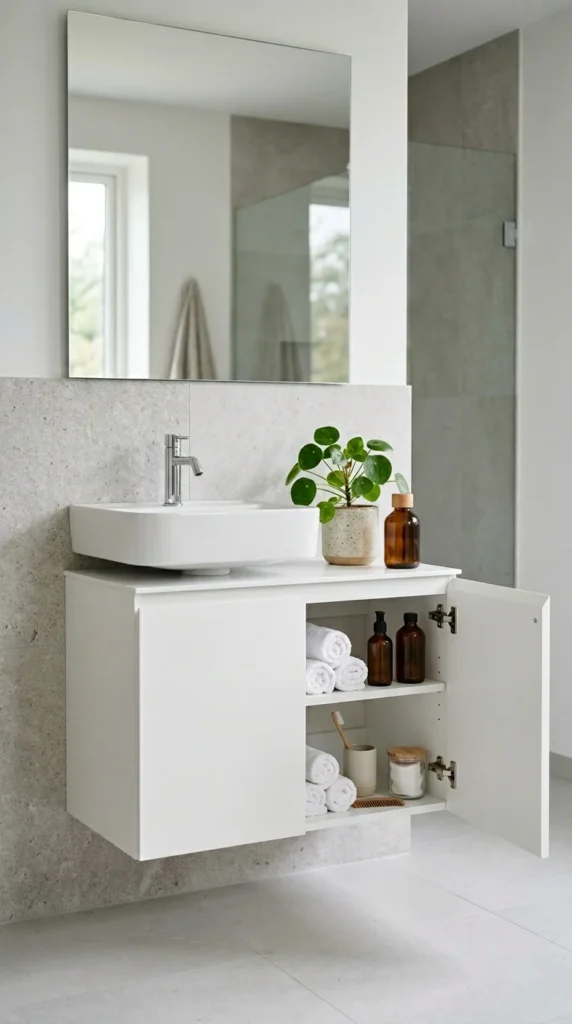
Closed cabinets are essential for a truly minimalist bathroom. They hide clutter and keep visual distractions to a minimum. Place everyday items like cleaning supplies, extra toiletries, and backup towels inside. Use pull-out bins or small baskets for better organization. Choose handle-free or subtle hardware for a seamless look. Lined drawers prevent spills or leaks from creating a mess. Neutral colors such as white, taupe, or soft gray work best. Avoid overfilling; keep only what’s necessary for easy access. If possible, use dividers inside drawers to categorize items like dental, skincare, or hair products. This method makes retrieval simple and maintains a tidy aesthetic. A clean cabinet line keeps surfaces open, reinforcing the calm, clutter-free atmosphere that defines minimalist design.
3. Counter-Kit with Pretty Containers
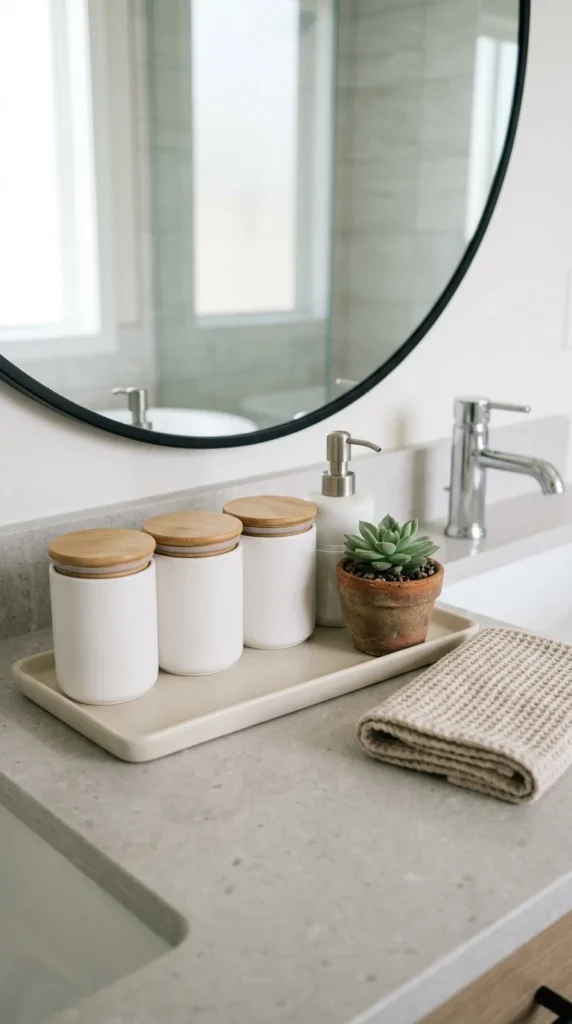
Keeping countertops minimal is key. Limit displayed items to 3–5 essentials. Use matching jars or dispensers for items like cotton pads, cotton swabs, and soap. A neutral tray can group objects to avoid scattered items. Select containers that are uniform in color and height to enhance symmetry. Small plants or a candle can add warmth without clutter. Reserve decorative items for visual impact, not function. Regularly evaluate the counter, removing unused or extra products. This approach makes the bathroom appear tidy and organized while keeping everything within reach.
4. Under-Sink Storage with Drawers
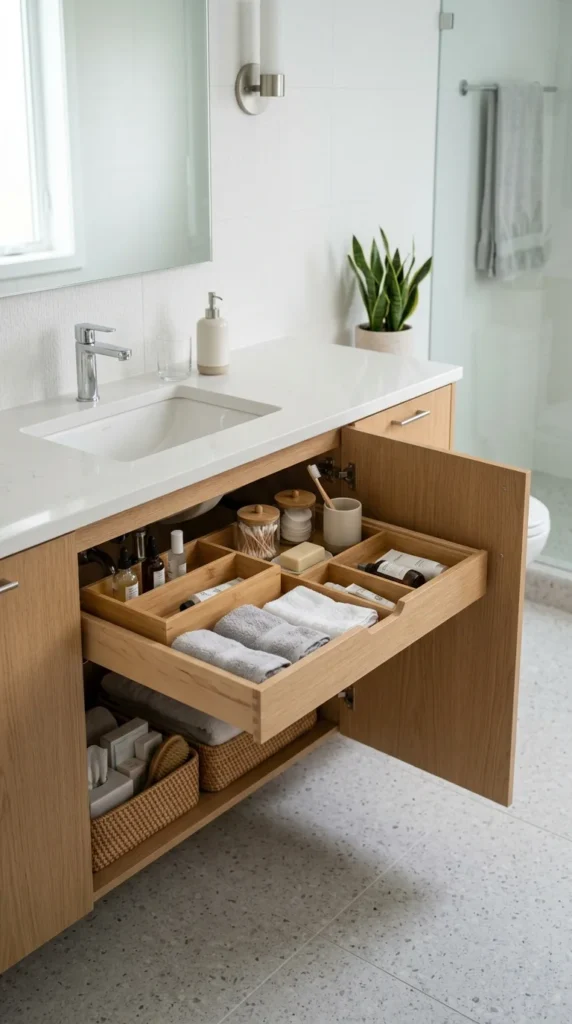
Under-sink storage is practical and keeps items hidden. Use drawers with dividers to separate categories: skincare, dental, hair tools. Slim baskets inside cabinets prevent small items from rolling around. Stack essentials efficiently and keep heavier items at the bottom. For compact bathrooms, use sliding bins or stackable boxes. Maintain a “one-in-one-out” approach to avoid accumulation. Clear containers help identify contents quickly. Regular checks prevent expired or unused items from cluttering the space. This storage strategy keeps daily-use products accessible while maintaining a smooth, minimalist exterior.
5. Shower Niche Only Storage
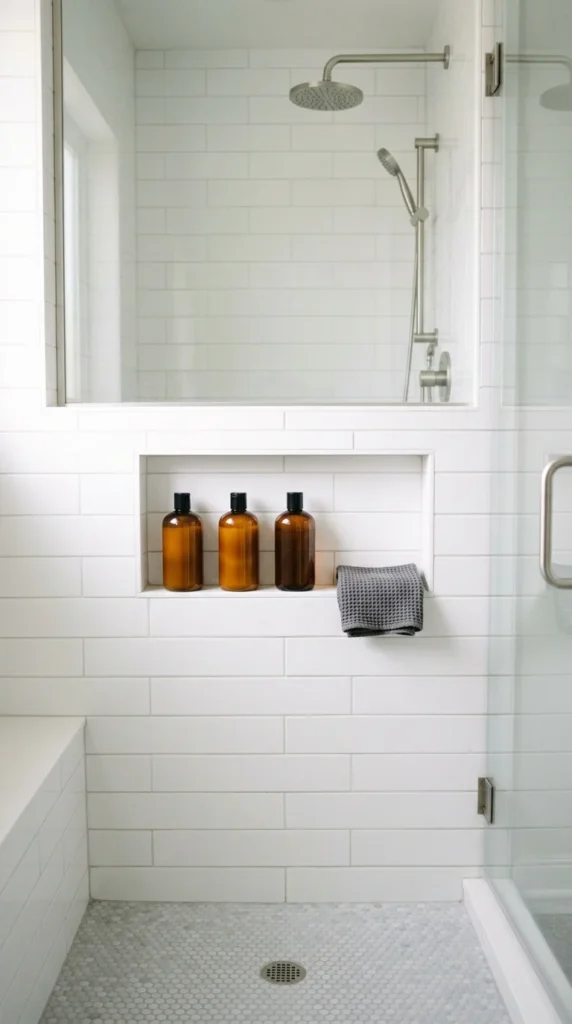
Shower niches keep products off edges and prevent clutter. Install one or two recessed niches for shampoo, conditioner, and body wash. Use matching bottles to maintain uniformity. Avoid extra accessories inside the niche. Keep it clean by wiping weekly. If the shower is small, a single niche may suffice. Niche storage keeps surfaces clear, enhancing the open feel of a minimalist bathroom.
6. Slim Floating Shelf for Small Spaces
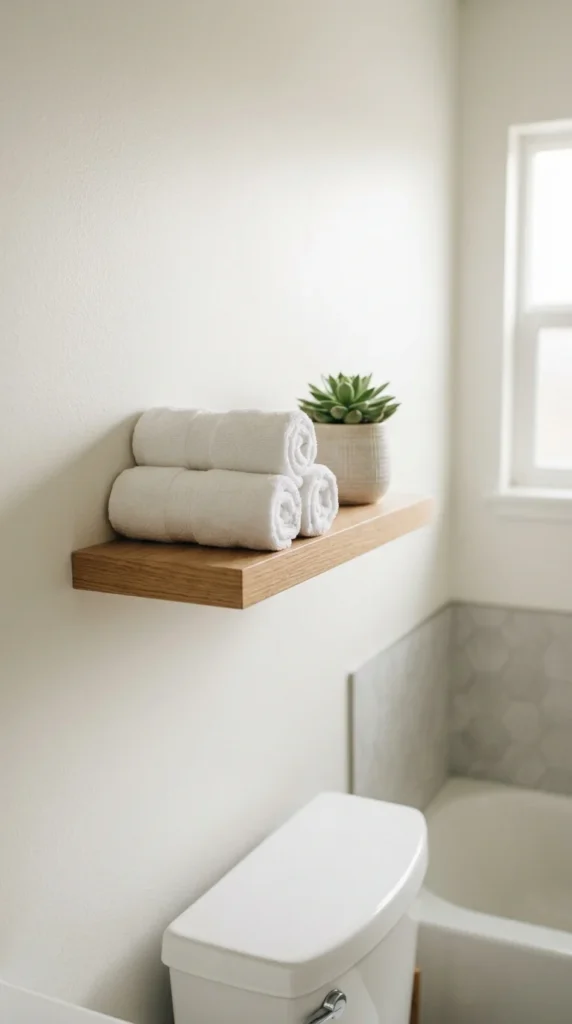
Narrow floating shelves maximize vertical space. Use them for towels, hand soap, or small decor. Limit displayed items to maintain a calm visual. Wall anchors ensure stability. Choose light-colored wood or painted finishes to blend with walls. Regularly rotate items to keep the shelf uncluttered. Slim shelves are ideal for tight bathrooms where counter space is limited.
7. Pedestal Sink with Wall Storage
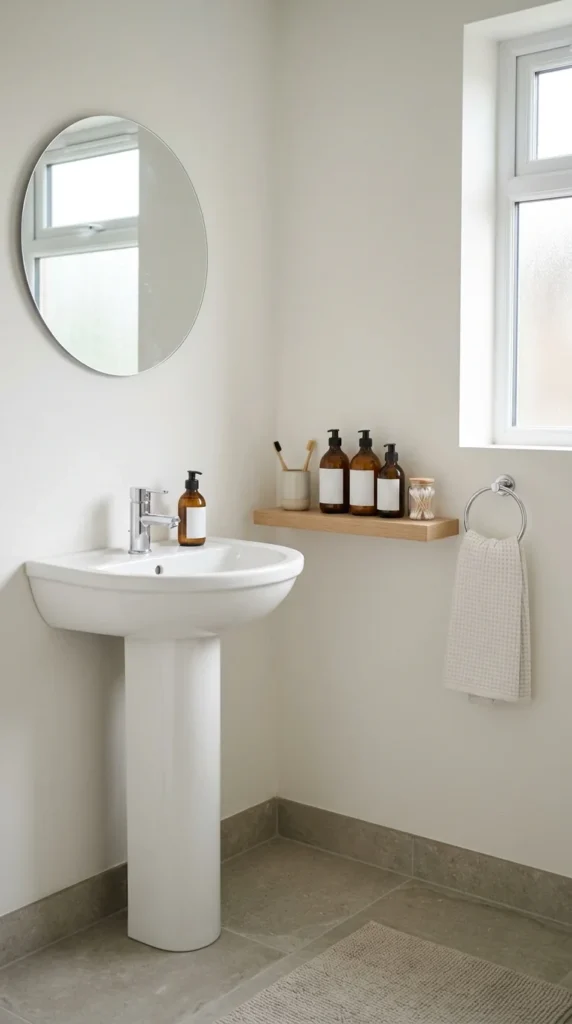
Pedestal sinks free floor space but offer minimal storage. Add a wall-mounted shelf or small cabinet beside it. Store daily items in uniform containers. Hooks can hold towels or brushes. Keep the surface clear. Use vertical storage to compensate for lack of cabinet space. This combination maintains openness while keeping essentials accessible.
8. Framed Mirror with Shelf
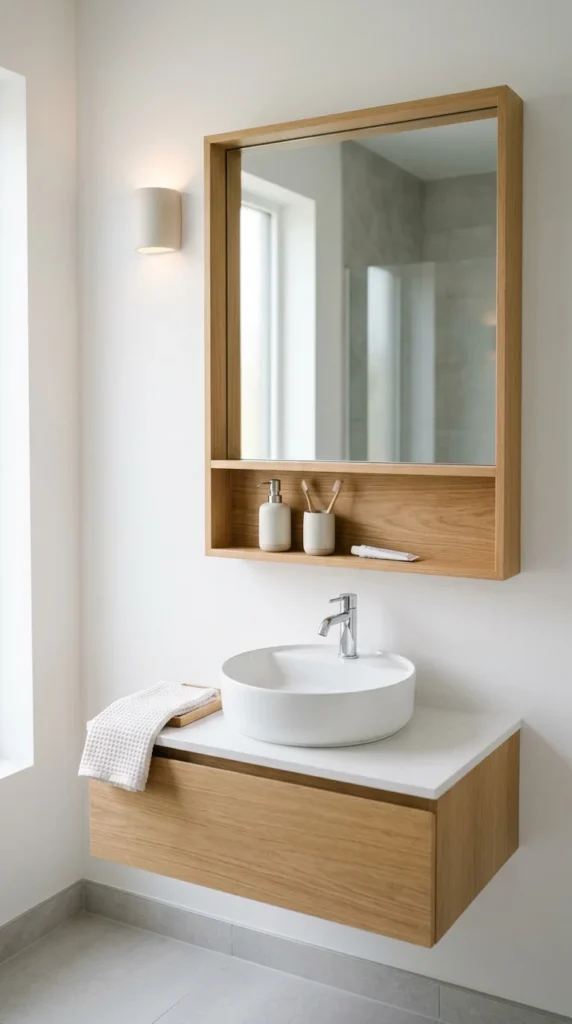
Mirrors with integrated shelves provide hidden storage without extra furniture. Place soap, toothbrushes, or small jars on the shelf. Choose a frame that matches other accents. Keep items limited to maintain a clean line. This approach combines reflection and storage elegantly.
9. Basket-Lined Cabinet Drawers
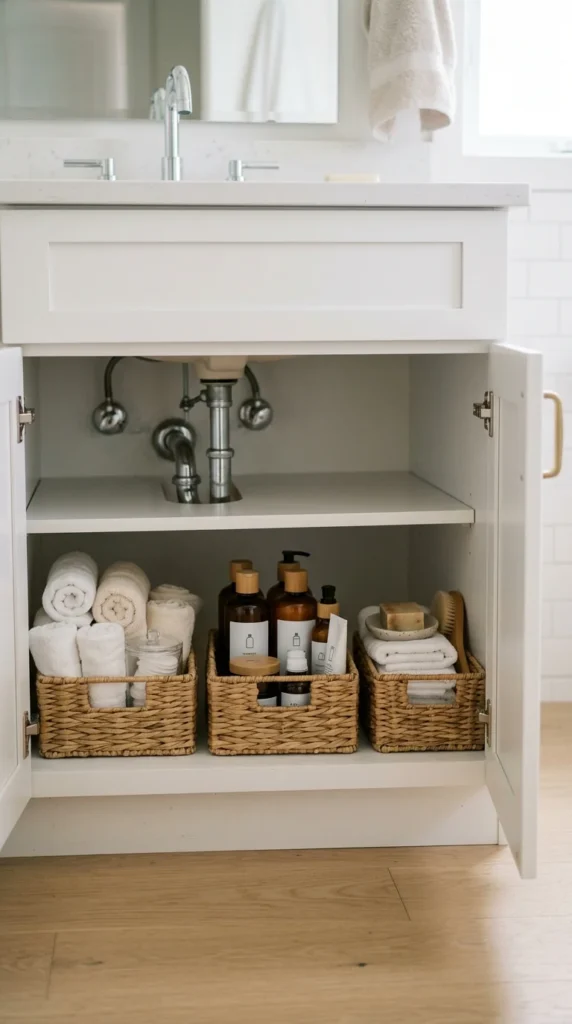
Line drawers with small baskets to group items. This prevents clutter inside cabinets. Assign baskets for categories: skincare, hair, dental. Maintain uniformity in basket color or size. This strategy simplifies access and keeps the minimalist look intact.
10. Hooks and Rails Instead of Racks
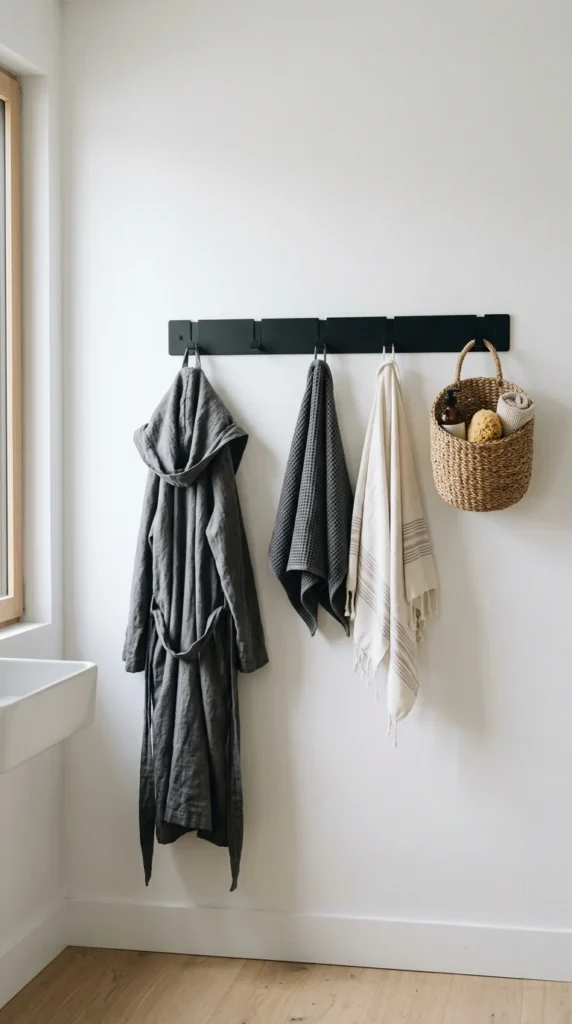
Hooks and rails are minimalist alternatives to bulky racks. Place them near the shower or vanity. Limit items to prevent visual clutter. Choose simple finishes like black or chrome. This saves space and keeps towels off counters.
11. Only Keep Essentials Visible
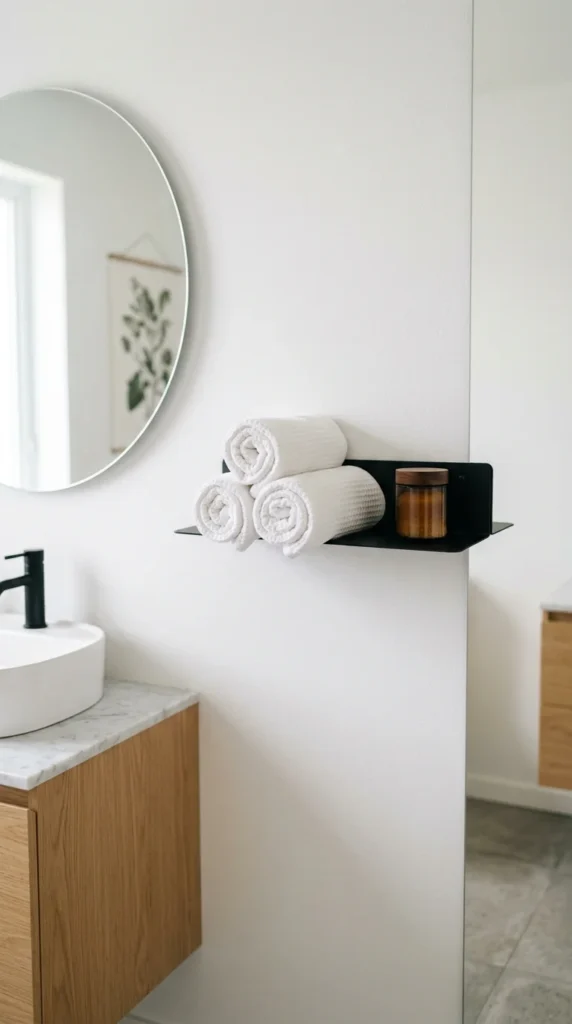
Display only 3–5 essential items per surface. Store extras in drawers or cabinets. This maintains openness and tranquility. Use uniform containers for any visible items. Rotate as needed to keep the look minimal and calm.
12. Slim Wire or Metal Shelves
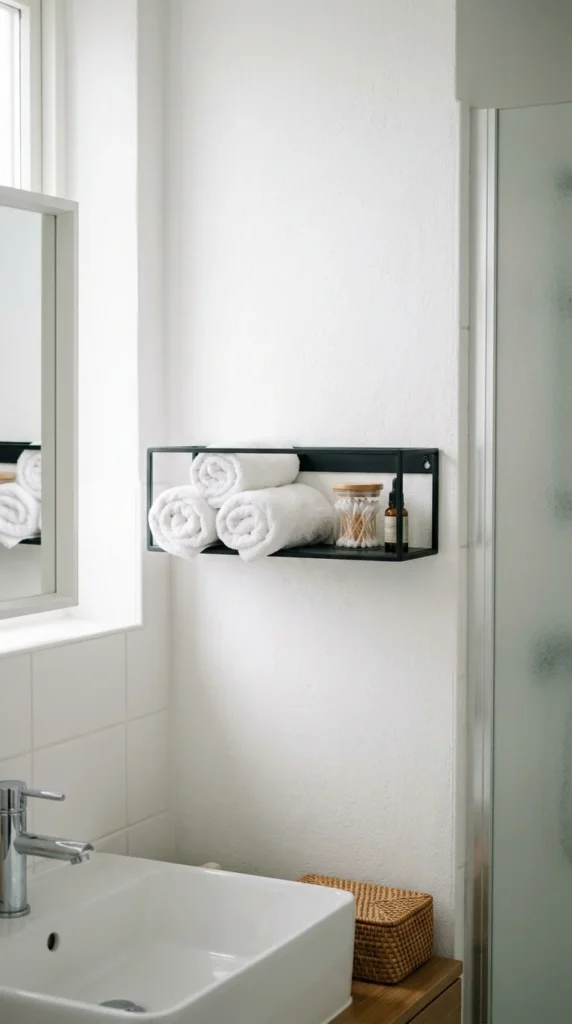
Thin wire or metal shelves provide storage without bulk. Place them above the toilet or beside the sink. Keep items minimal. Use baskets or containers for organization. Ensure secure mounting. Perfect for small spaces.
13. Under-Toilet Storage Slide-Outs
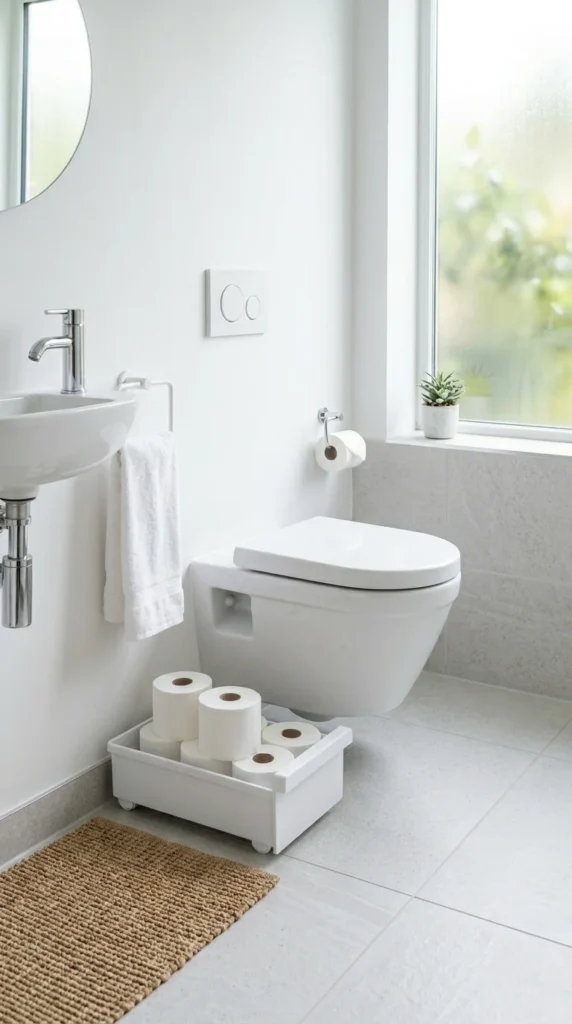
Slide-out bins under the toilet hide extra products. Keep only what fits. This approach keeps supplies accessible but invisible. Ideal for compact bathrooms.
14. Drawer Compartment Dividers
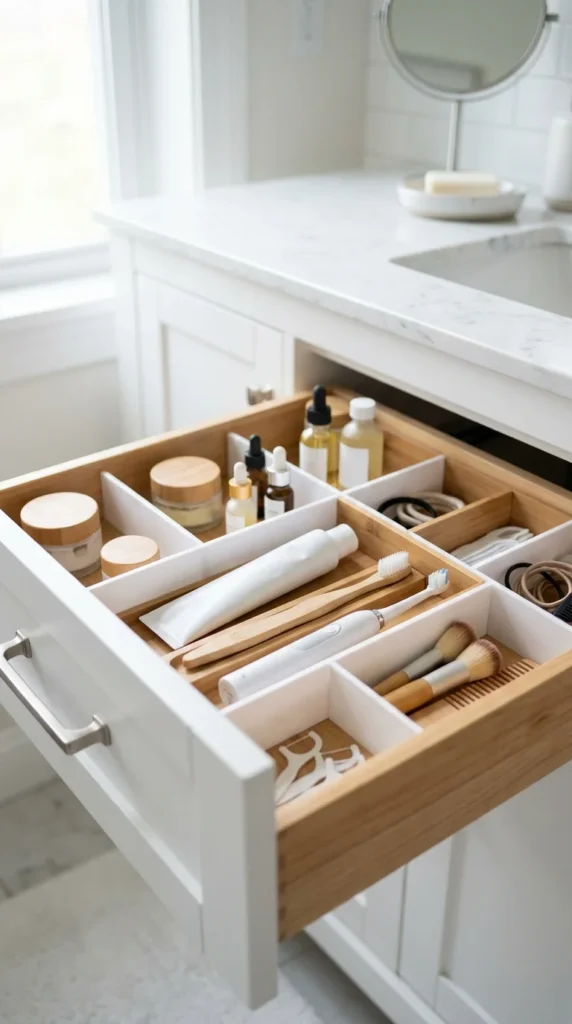
Use dividers to categorize items inside drawers. This maintains order and keeps the minimalist look. Customize dividers to fit container sizes.
15. Neutral Monochrome Palette
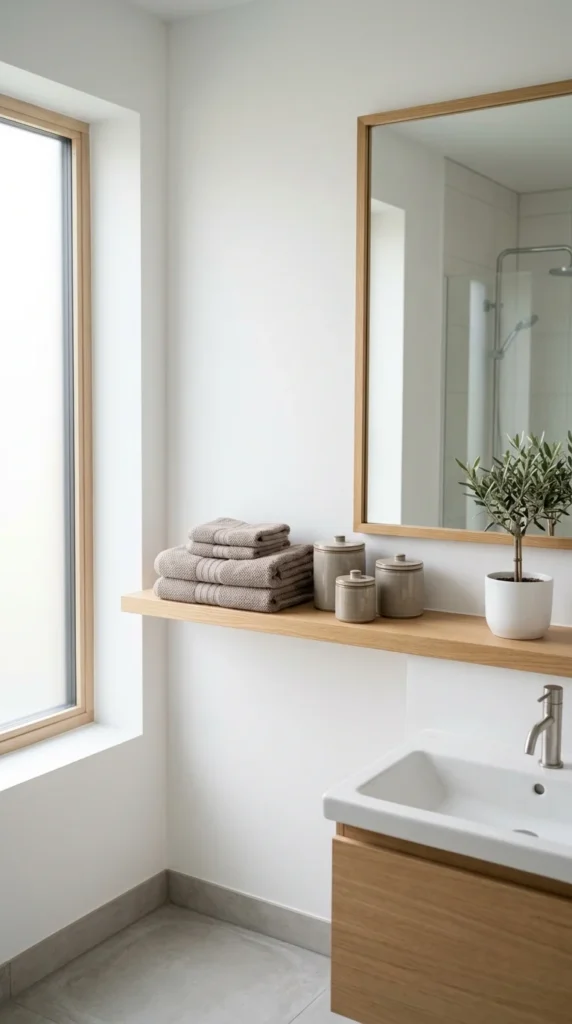
Stick to whites, taupe, gray, or soft beige. Limit color accents. This creates a calm backdrop. Match towels, containers, and surfaces for consistency.
16. “Caps” Rule for Each Surface
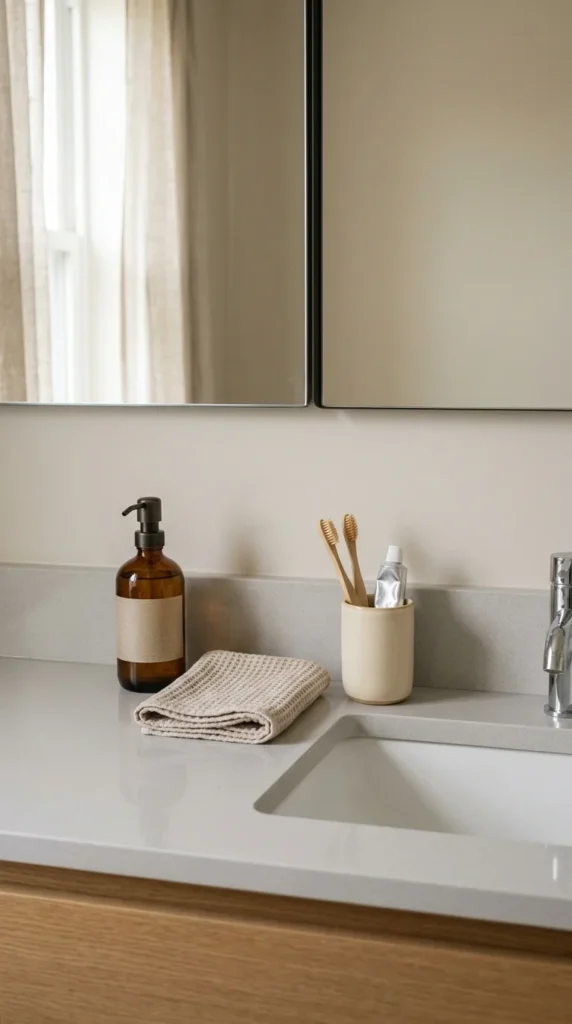
Apply a limit on items per surface. Typically 3–5 for counters, one per shelf. This maintains clean lines. Remove excess products immediately.
17. Pretty Uniform Containers
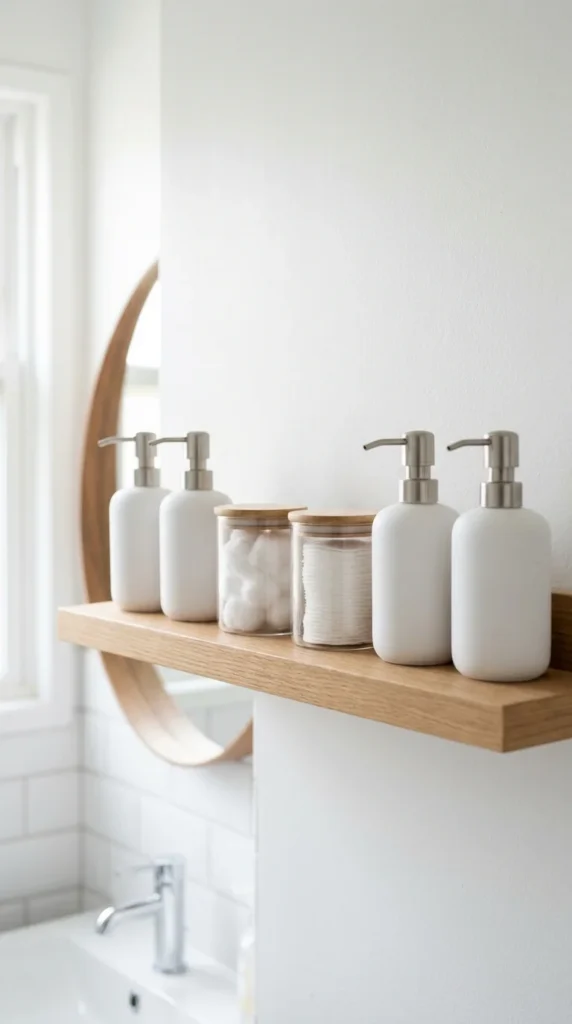
Match containers in style and color. Keeps surfaces tidy and visually calm. Ideal for open shelves or vanity tops.
18. One-in-One-Out Rule
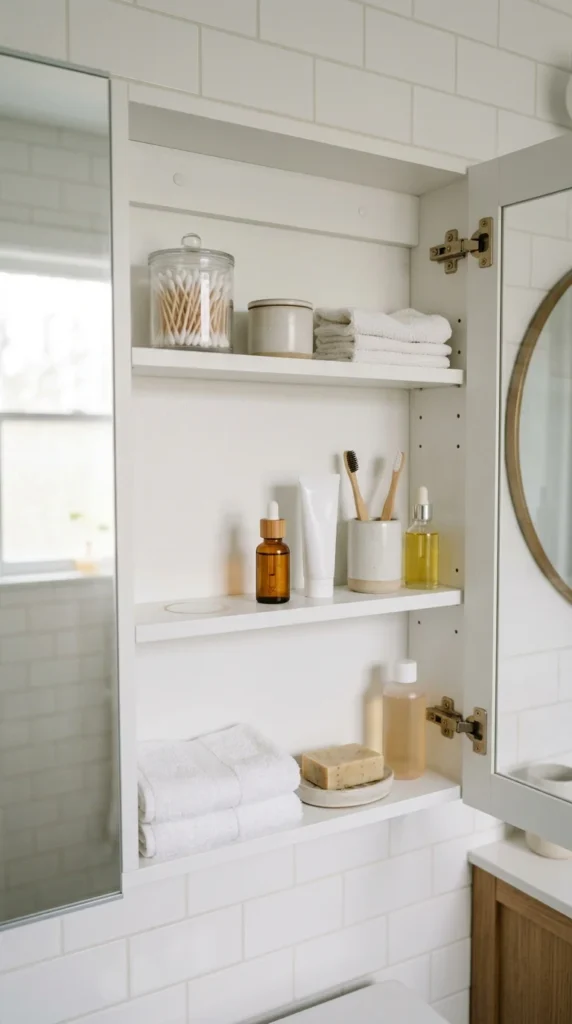
Replace an item only when a new one is added. Prevents accumulation. Keeps storage lean and functional.
19. Small-Bathroom Specific Layouts
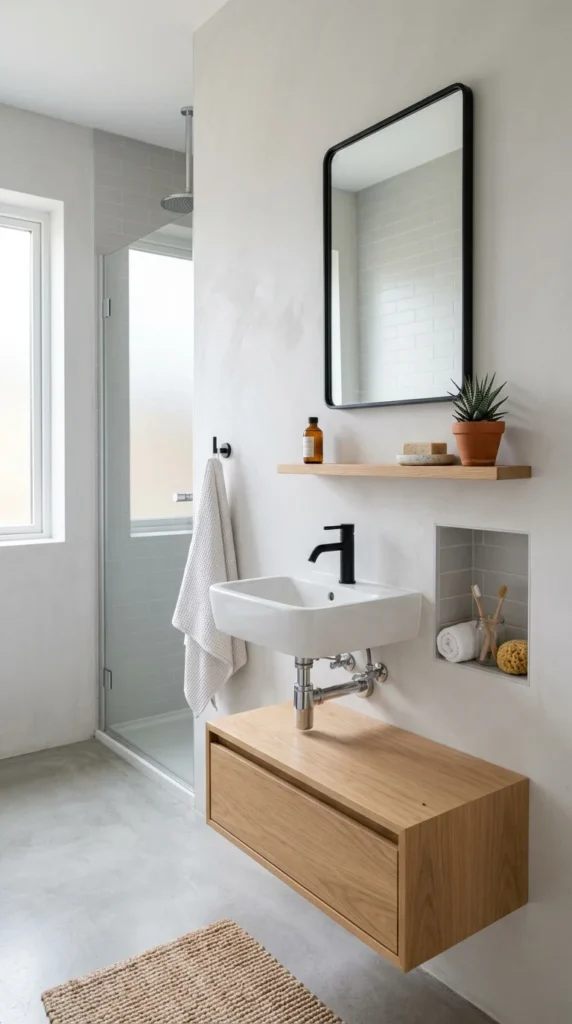
Focus on space-efficient storage. Use wall-mounted and niche solutions to maximize floor space. Keep visible items minimal.
20. Maintenance Routine for Minimalism
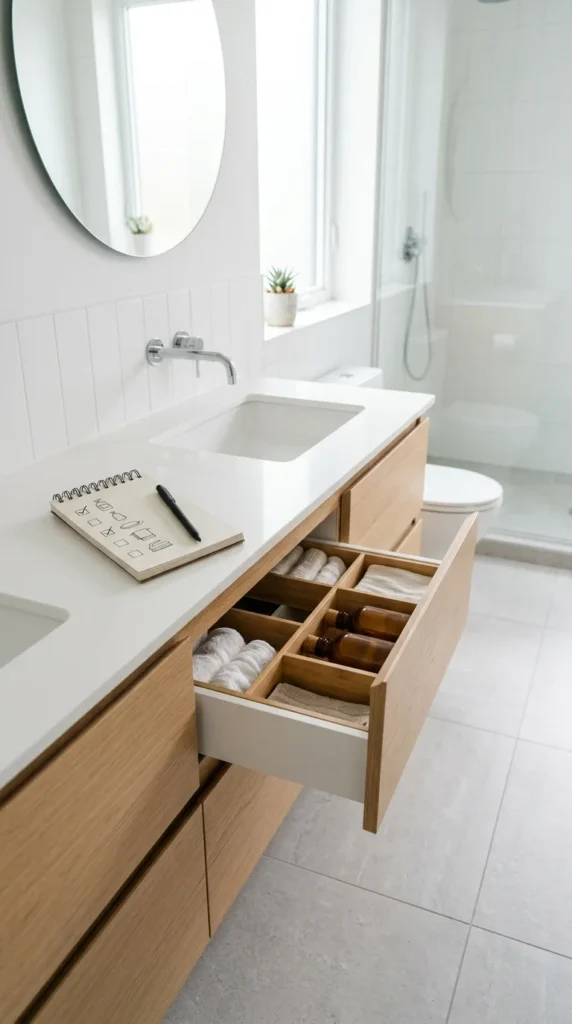
Schedule monthly declutters. Check expiration dates, unused products, and drawer order. Maintain minimalist storage systematically.
21. Framed Mirror with Hidden Storage
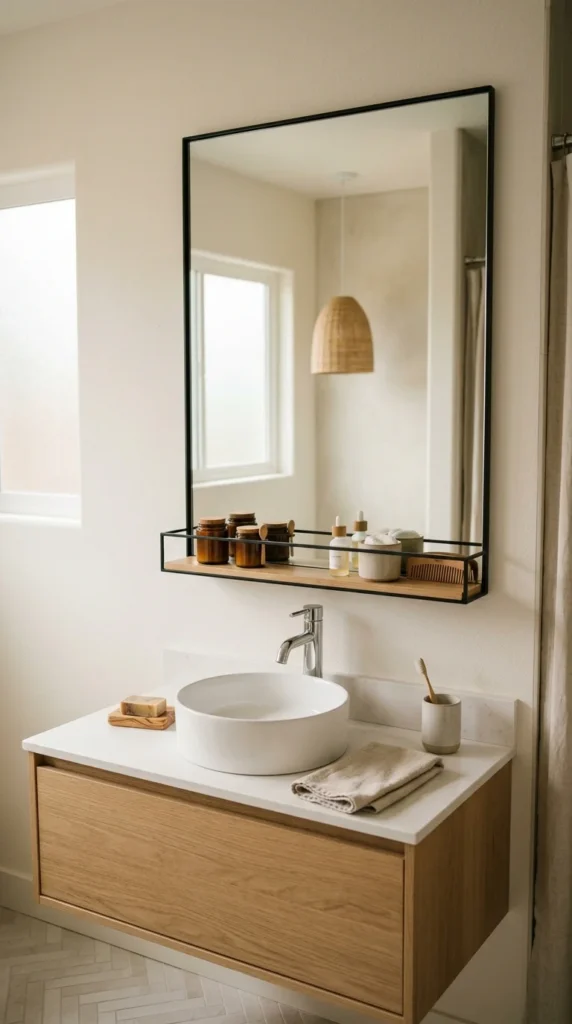
A framed mirror with storage combines functionality and style. Use it for small daily-use products. Keeps counters and shelves clear. Select a frame that complements existing accents.
Conclusion
Minimalist bathroom storage is about simplicity, functionality, and calm aesthetics. By using wall-mounted vanities, floating shelves, closed cabinets, drawer dividers, and limited visible items, you can achieve a clutter-free space. Consistent neutral palettes, uniform containers, and small-bathroom-friendly layouts help maintain tranquility. Regular maintenance and strategic item limits keep your bathroom organized, accessible, and visually restful, turning even compact spaces into serene, minimalist retreats.