Rainy afternoons, quiet hours before nap time, or just a break from the tablet — every parent knows the search for something simple to hand a toddler. The good news is that the best toddler crafts don’t need a trip to the craft store. Paper plates, popsicle sticks, toilet paper rolls, and a handful of crayons already sitting in your kitchen drawer can turn into an hour of happy, sticky-fingered fun. Each idea below is picked for low prep, minimal mess, and real fine motor practice — the kind of small movements that help little hands grow stronger for holding pencils, buttoning shirts, and everything else ahead. Whether you’re chasing a screen-free afternoon or just want a keepsake for the fridge, these 20+ toddler crafts use things you probably already have at home.
1. Paper Plate Sun Catchers
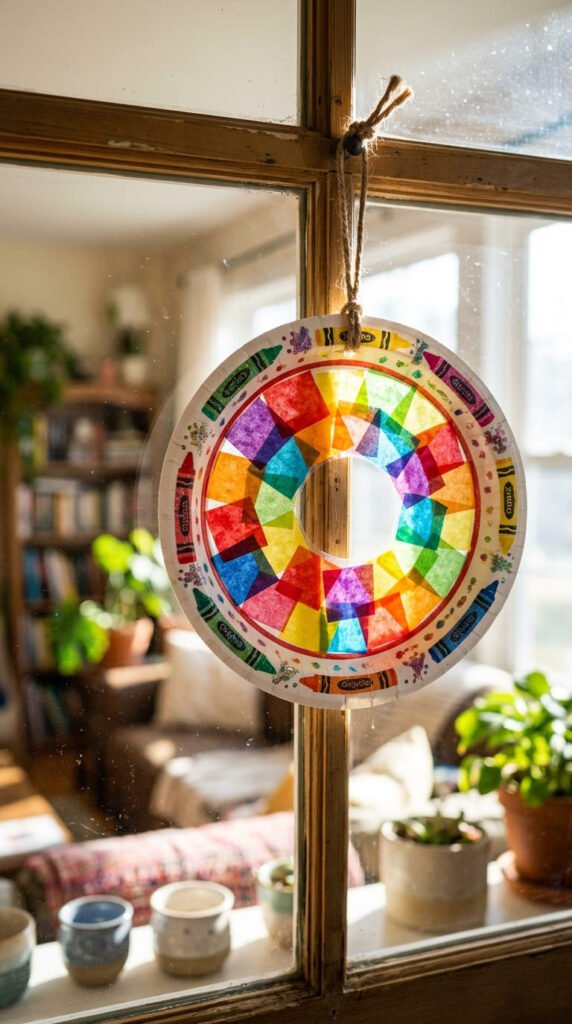
Grab an old paper plate and cut a circle out of the middle. Cover the hole with clear contact paper, sticky side facing your toddler. Let them press small tissue paper squares onto the sticky surface — no glue needed. This is a taste-safe, low-mess craft since there’s no wet paint or glue to touch. Once it’s full of color, tape a second piece of contact paper on top to seal it in. Hang the finished sun catcher in a window and watch the light shine through. Budget tip: save tissue paper scraps from gift bags instead of buying a new pack. This craft also doubles as color-naming practice. Ask your toddler what color they’re picking each time. It keeps their hands busy and their vocabulary growing at the same time. Cleanup takes seconds since nothing drips or smears. It’s a great pick for toddlers who still put things in their mouth, since there’s no paint or glue involved. Store extra contact paper sheets for a repeat project next week.
2. Popsicle Stick Puppets
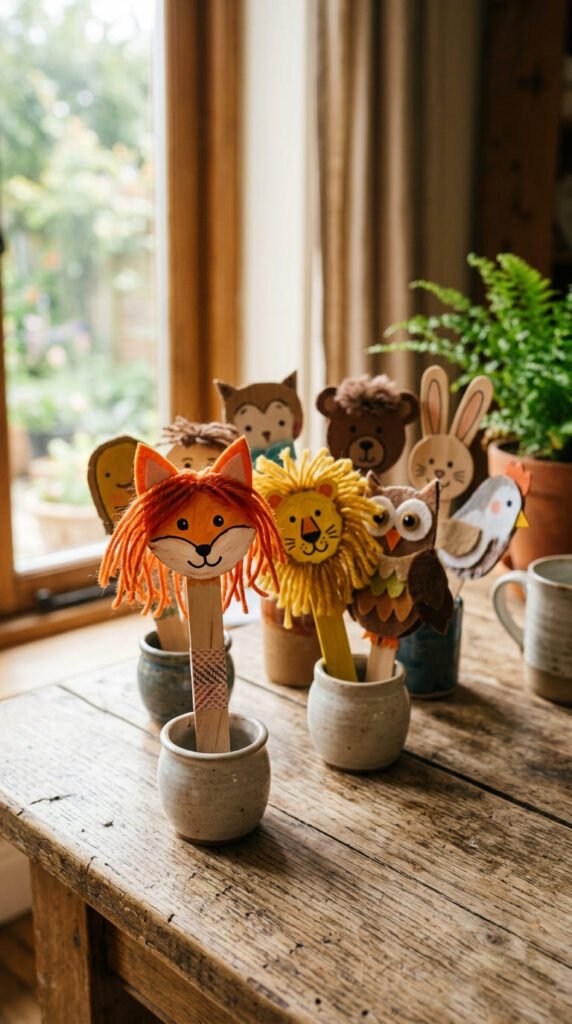
Popsicle sticks are cheap, and a bag of a hundred lasts for months. Draw a simple face on paper — an animal, a person, anything your toddler likes — then glue it onto the stick. Toddlers can help by coloring the face first with crayons before it gets attached. Once dry, the puppet becomes a toy, not just art. That’s the real value here: one craft turns into an afternoon of pretend play. Put on a two-minute puppet show together after it’s finished. Budget tip: reuse sticks from ice pops you already ate. If you don’t have googly eyes, a black marker dot works just as well. This craft is short — about ten minutes — so it fits well into a toddler’s short attention span. Keep a few blank sticks on hand so you can make a matching puppet if your toddler loses interest halfway and wants to switch characters. Store finished puppets in a shoebox for a rainy-day puppet theater later.
3. Handprint Keepsake Art
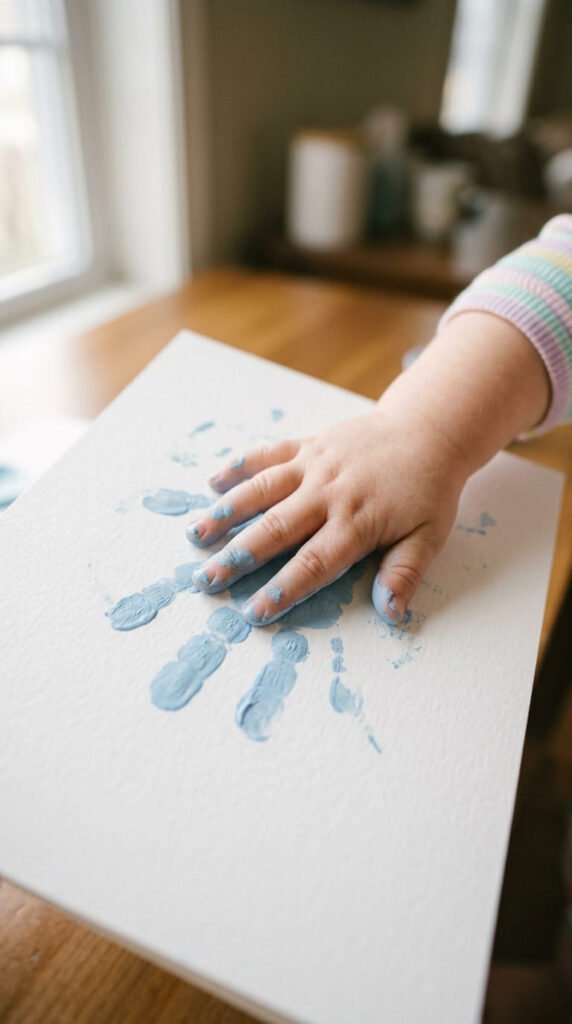
Handprint crafts are a classic for a reason — they make a keepsake in under five minutes. Pour a small amount of washable paint onto a paper plate. Use a sponge or brush to coat your toddler’s palm, then press it firmly onto cardstock. Wipe hands right away with a damp cloth to keep mess contained. Turn the print into something seasonal: a turkey in fall, a flower in spring, or a heart shape for a card. Budget tip: washable paint is worth the extra dollar since it comes off skin and clothes easily. This is also a simple way to track growth — hands get bigger every year, so a yearly handprint card becomes a small archive of size and time. Let your toddler pick the paint color themselves; small choices like this build a sense of independence. Once dry, laminate it or slide it into a page protector to keep it from smudging over the years.
4. Toilet Paper Roll Animals
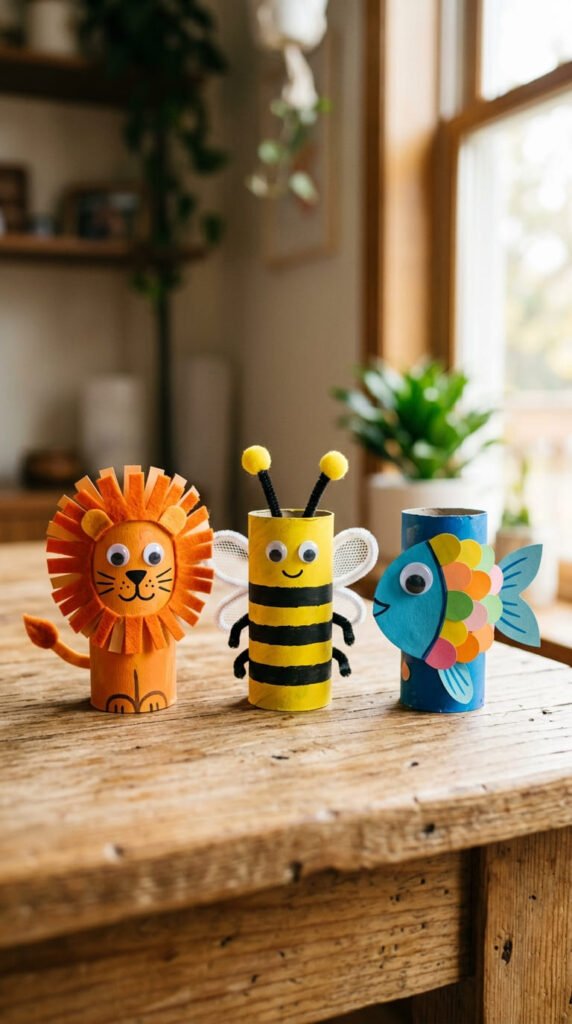
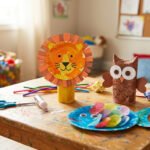
Save your empty toilet paper rolls instead of tossing them. Paint the outside a solid color, then let your toddler glue on paper ears, googly eyes, or pipe cleaner legs. A yellow roll becomes a bee, an orange one becomes a lion with paper mane strips. This craft is completely free since it uses trash you already have. It also teaches basic shape and animal recognition as you talk through what each piece represents. Budget tip: keep a small box in the pantry just for saving rolls so you always have supplies ready. Let your toddler squeeze the glue bottle themselves for extra hand-strength practice, even if it’s messy at first. These finished animals make great shelf decorations or characters for pretend play afterward. If your toddler isn’t ready for scissors, pre-cut the ears and legs the night before so setup takes seconds the next day.
5. Contact Paper Sticky Wall
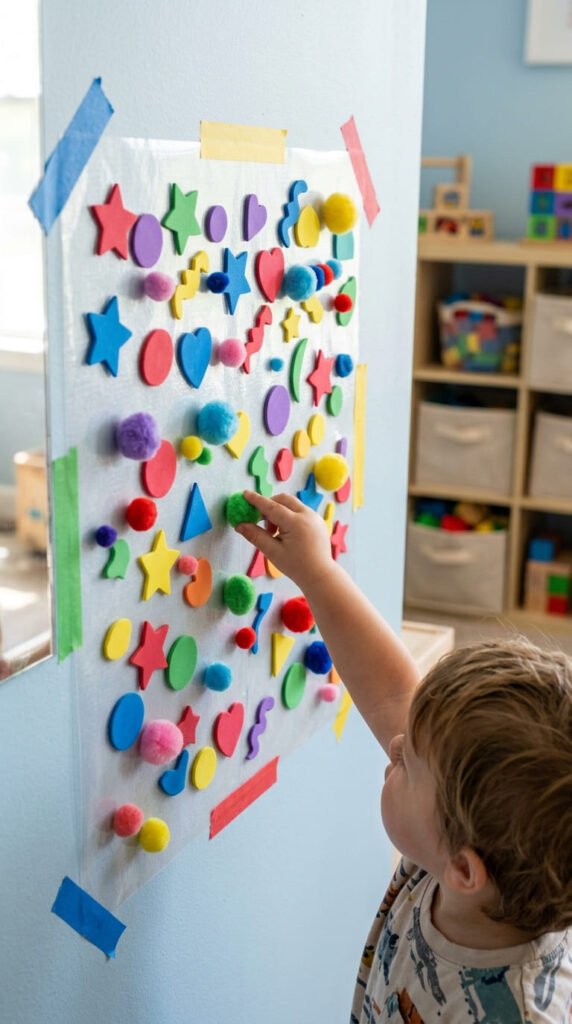
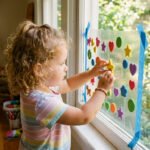
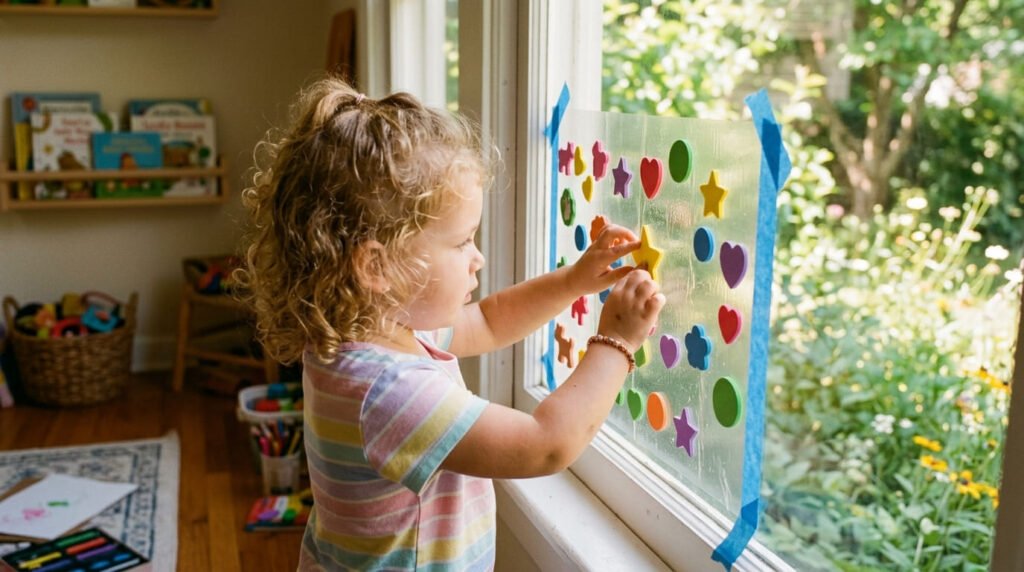
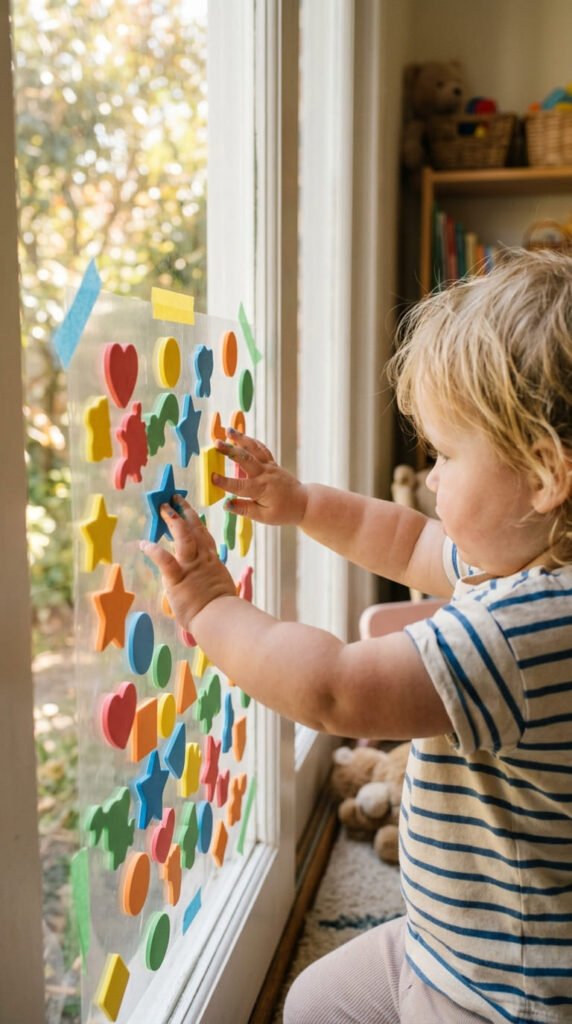
Tape a big sheet of contact paper to a low wall, sticky side out. Give your toddler a basket of foam shapes, pom poms, or cut paper scraps to press on. There’s no glue, no paint, and nothing to spill — just pure sticking and peeling. This is one of the best no-mess crafts for toddlers who like to touch and rearrange things. It can stay up for days, letting your toddler return to it whenever they’re bored. Budget tip: buy a roll of contact paper once and reuse the same sheet for weeks by simply gently peeling pieces off and starting over. This activity is also great for practicing pincer grip, since picking up small pom poms strengthens the same muscles used for writing later. Set it up in a spot where your toddler can reach it independently, so it becomes a go-to quiet-time activity without needing you to supervise every second.
6. Cereal Necklace Counting Craft
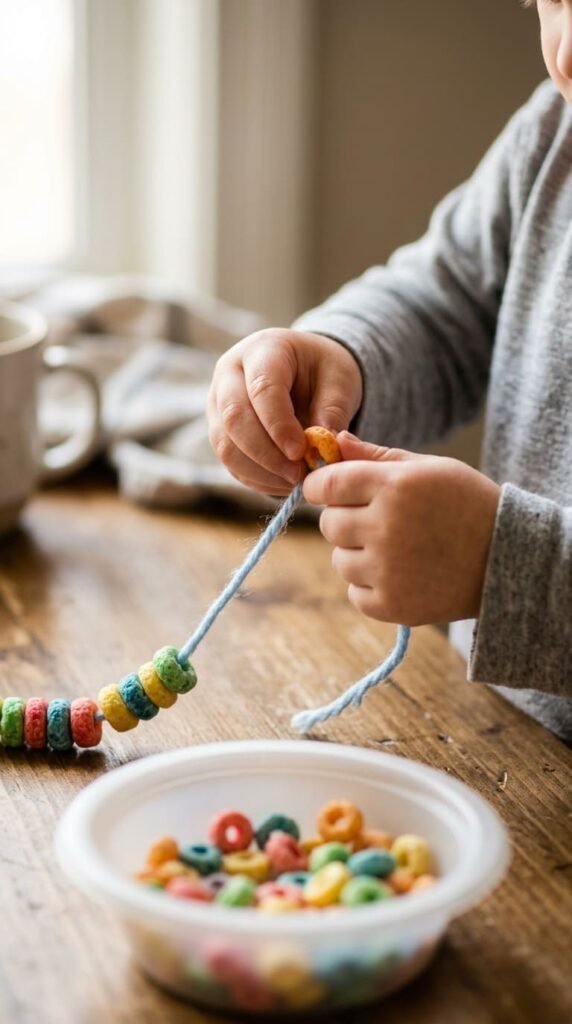
Tie a knot at one end of a piece of yarn or shoelace, then let your toddler thread round cereal pieces onto it one by one. This is a taste-safe craft, which makes it a good pick for younger toddlers who still put things in their mouth. Count each piece out loud as it goes on the string. By the end, your toddler has a wearable necklace and a little counting practice too. Budget tip: use whatever round cereal is already in the pantry instead of buying a specific brand. If threading is tricky at first, wrap a small piece of tape around the yarn’s tip to make it stiffer, like a shoelace end. This craft is naturally short, which suits a toddler’s patience level, and it doubles as a snack if a few pieces don’t make it onto the string. Tie off the finished necklace and let your toddler wear it around the house for the rest of the day.
7. Paper Plate Weather Wheel
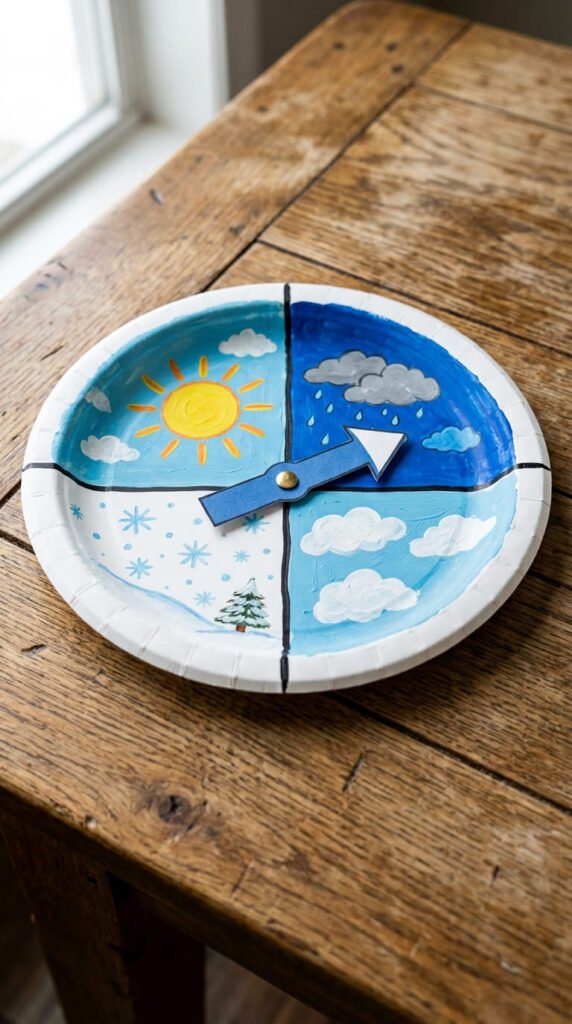
Split a paper plate into four sections with a marker. Let your toddler paint or color each one to match a weather type: yellow for sun, blue for rain, gray for clouds, white for snow. Attach a paper arrow to the center with a brass fastener so it spins. This becomes a small daily routine — check the weather outside, then spin the wheel to match. It’s a craft that keeps giving value long after it’s finished. Budget tip: brass fasteners cost very little and can be reused across many future craft projects. This is also a gentle way to build a daily habit and simple vocabulary around weather words. If your toddler isn’t ready to paint fine sections, use stickers instead for each weather symbol. Keep the wheel on the fridge at toddler height so they can spin it themselves each morning as part of a simple routine.
8. Foam Paint Texture Play
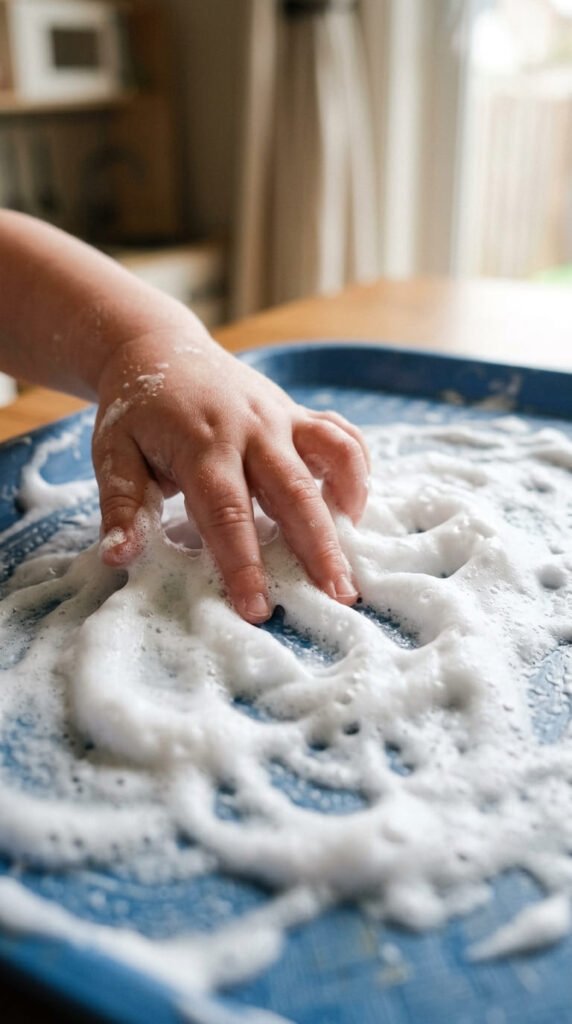
Mix shaving cream with a few drops of washable paint for an easy foam paint your toddler can spread with their hands. Pour it onto a tray or cookie sheet so there’s a clear boundary for the mess. This is pure sensory play — the value is in the process, not a finished product. Let your toddler swirl, poke, and drag their fingers through the texture for as long as they’re interested. Budget tip: a cheap can of shaving cream stretches across several sessions and costs less than specialty sensory kits. If you want a keepsake, press a piece of paper into the foam before it dries to make a marbled print. Do this activity somewhere easy to wipe down, like a highchair tray or outdoor table. It’s a strong pick for toddlers who need a hands-on outlet after a long day indoors.
9. Egg Carton Caterpillar
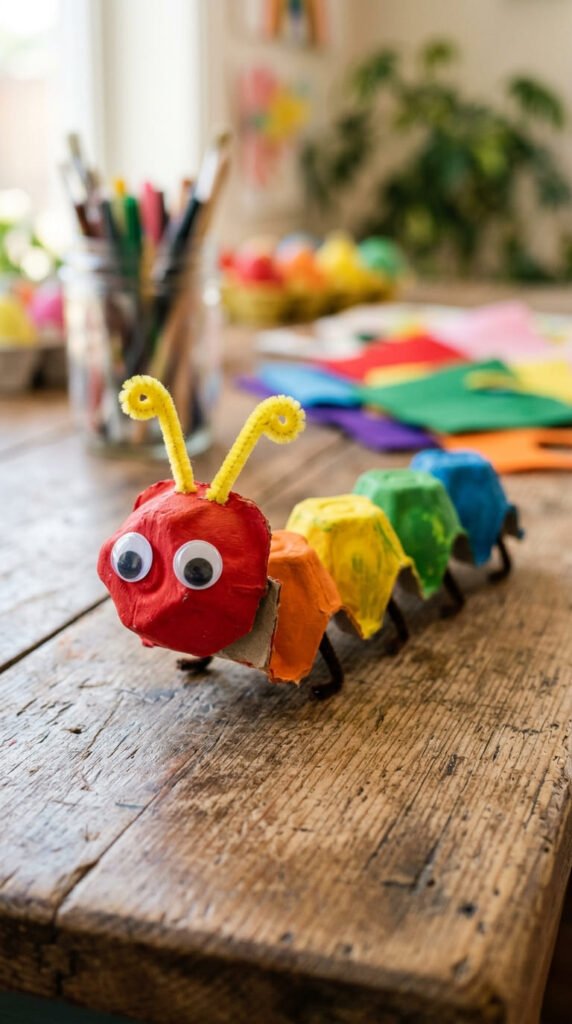
Cut a strip of four or five cups from an empty egg carton. Let your toddler paint each cup a different color, then add googly eyes and a pipe cleaner antenna to one end. This turns a piece of recycling into a colorful caterpillar in under fifteen minutes. Budget tip: this craft costs nothing beyond paint you likely already own. Talk through the color order as your toddler paints — red, then blue, then green — for a light pattern-recognition lesson. If painting feels too slow for a wiggly toddler, use markers or crayons instead for a faster version. This craft pairs well with reading The Very Hungry Caterpillar beforehand, giving the project a story connection your toddler will recognize. Once finished, the caterpillar can sit on a shelf or become a prop for pretend play, crawling across the table during story time.
10. Paper Bag Puppets
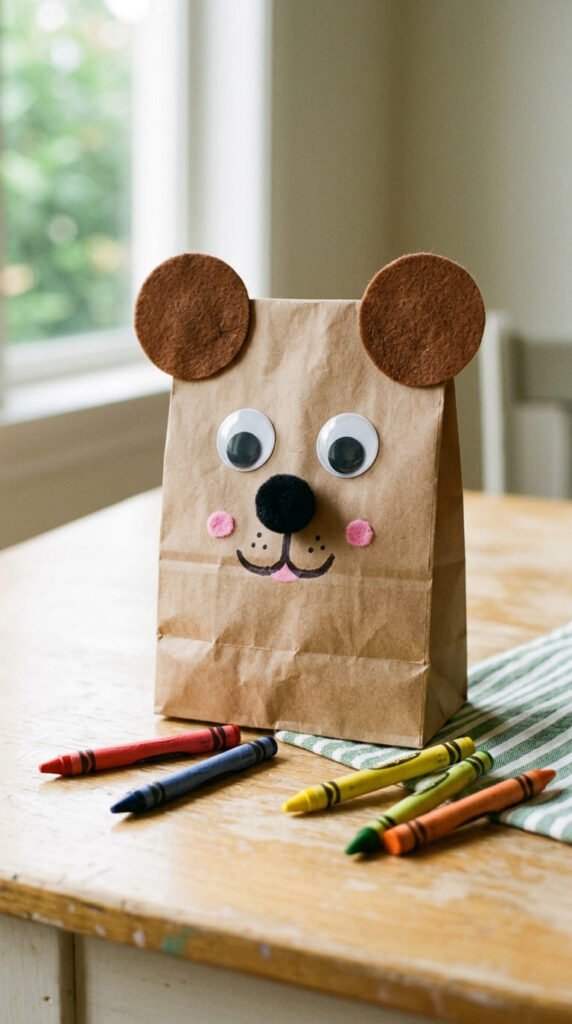
A plain paper lunch bag becomes a puppet with just crayons and a few paper scraps. Draw or glue on eyes, a nose, and a mouth near the folded bottom flap, which acts as the puppet’s mouth when your toddler puts their hand inside. This craft is fast, cheap, and endlessly repeatable, since paper bags cost pennies. Budget tip: buy a large pack of plain lunch bags and keep a few on hand for whenever you need a five-minute activity. Let your toddler choose the puppet’s personality — silly, scary, or friendly — and encourage them to talk in a puppet voice afterward. This builds language and imagination alongside the craft itself. If scissors aren’t part of your toddler’s routine yet, pre-cut felt or paper shapes ahead of time so all they need to do is glue and decorate.
11. Pom Pom Sorting and Gluing Craft
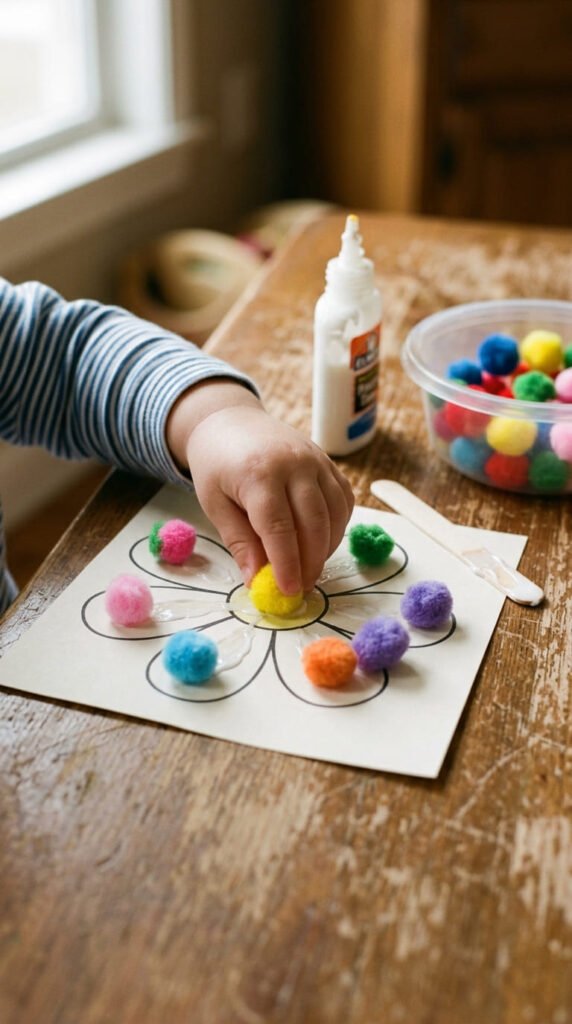
Draw a simple shape on paper — a flower, a caterpillar, or a rainbow — and let your toddler glue colorful pom poms inside the outline. Before gluing, have them sort the pom poms by color into small cups first. This adds a quick sorting lesson before the craft even begins. Budget tip: a bag of pom poms lasts through dozens of projects since they’re reusable if you skip the glue and just sort them instead. This is a strong pick for fine motor practice, since picking up small pom poms with fingers strengthens the same grip used for holding a pencil. If your toddler struggles with glue bottles, use a glue stick instead for more control. Once the shape is filled in, let it dry flat overnight before hanging it up. This craft works well as a quiet independent activity once your toddler understands the gluing motion.
12. Painted Rock Bugs
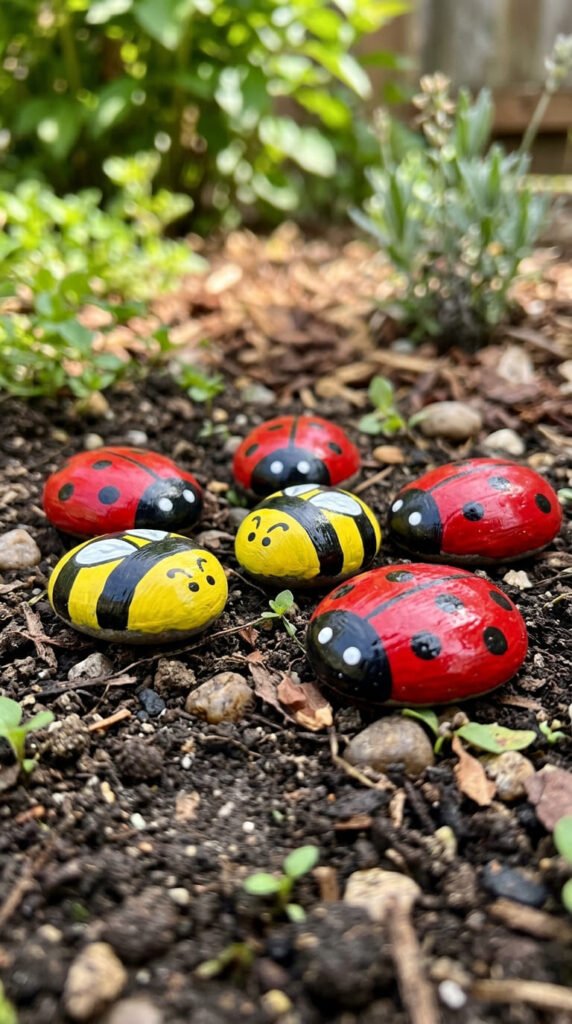
Collect a handful of smooth rocks from the yard or a nearby park. Paint them as ladybugs, bees, or simple faces using washable paint. This is a free outdoor craft that doubles as a nature walk beforehand. Budget tip: skip buying rocks entirely and let the collecting be part of the fun. Once painted and dry, these rocks can decorate a garden bed or become tiny characters for pretend play. This craft works well outside, so spills and drips land on grass or dirt instead of your floor. Talk about the bugs your toddler is painting — how many spots does a ladybug have, what color are bees — for a light educational layer. If your toddler is still mouthing objects, supervise closely since rocks are a choking hazard, and keep the activity seated and supervised the whole time.
13. Paper Plate Octopus
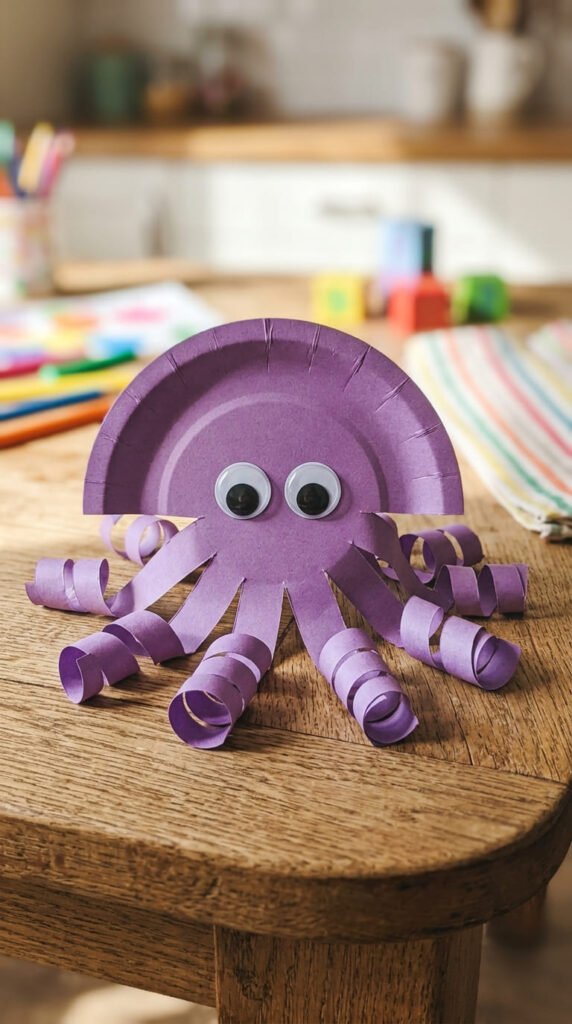
Cut a paper plate in half, then slice the flat edge into eight strips to make octopus legs. Let your toddler paint the whole thing one color first, then curl each leg around a pencil once dry for a 3D effect. Glue on googly eyes to finish it off. Budget tip: one paper plate makes two octopuses if you use both halves, so buy a pack once and stretch it across several sessions. This craft combines painting, waiting for dry time, and a simple curling motion that’s good hand-strength practice. If curling the legs is tricky for small hands, do it together, guiding their fingers around the pencil. This is a fun ocean-themed pick to pair with a trip to an aquarium or a beach day, giving the craft a real-world connection your toddler will remember.
14. Sticker Shape Matching
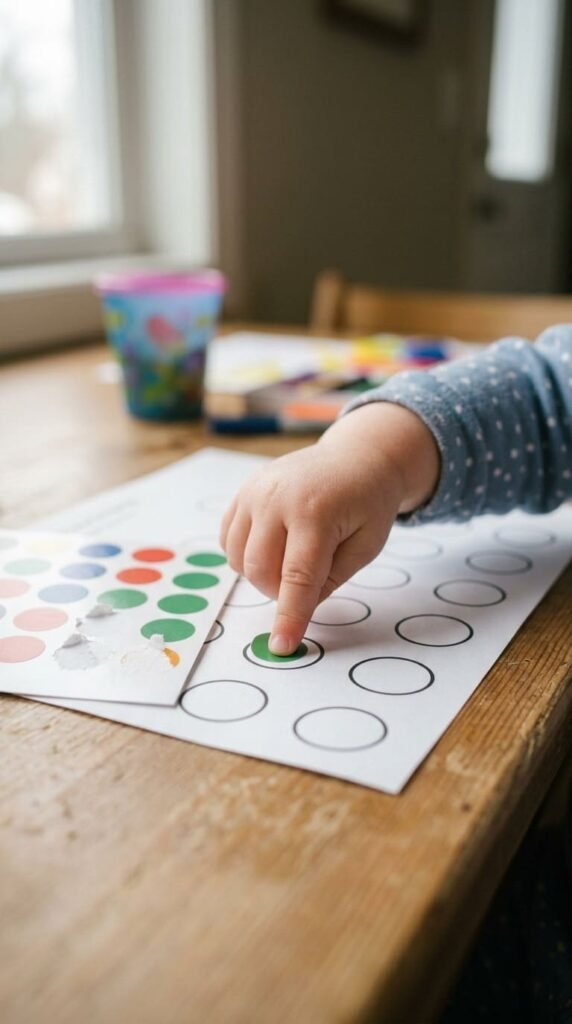
Draw simple shapes on paper — circles, squares, triangles — and give your toddler a sheet of matching stickers to place inside each outline. Peeling and placing stickers is real fine motor work, even though it feels like play. Budget tip: dollar-store sticker sheets last across many sessions since a single sheet holds dozens of stickers. This craft is quiet, low-mess, and needs almost no setup, making it a good pick for waiting rooms or car rides. As your toddler places each sticker, name the shape out loud for a light learning boost. If peeling stickers is still tricky, pre-lift the edge of each one so your toddler only needs to pull and place. This activity also works well as a calm wind-down before nap time since it doesn’t involve any wet materials or big movements.
15. Cardboard Box Playhouse
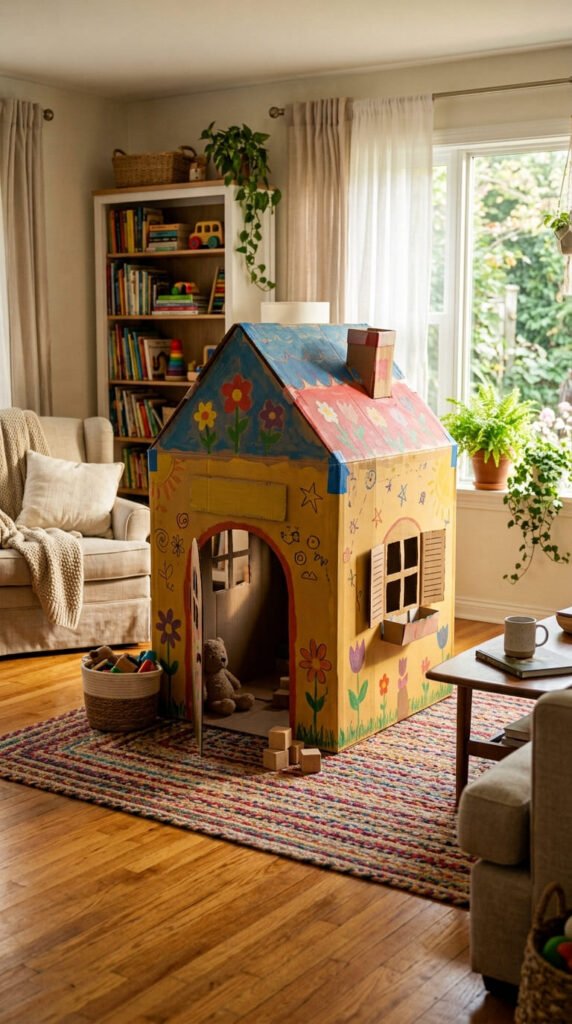
Save a large cardboard box from a delivery instead of recycling it right away. Cut a door and a window, then let your toddler decorate the outside with crayons, markers, or paint. This craft takes longer than most on this list, but it turns into a reusable toy, not just a one-time project. Budget tip: this costs nothing beyond materials you already have, since the box itself is free. Spread the project across two days if your toddler loses interest — decorate one side today, the rest tomorrow. Once finished, the playhouse becomes a spot for pretend play for weeks, which makes the time investment worth it. This is a good pick for toddlers who love big, physical, whole-body play rather than sitting still at a table. Store leftover cardboard scraps for a future box car or tunnel project.
16. Paper Plate Sunflower
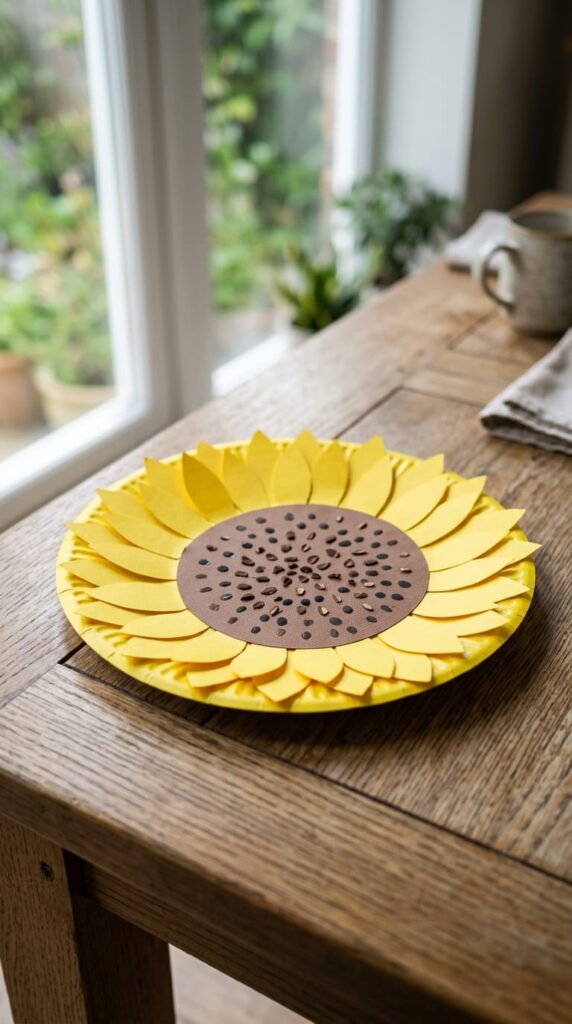
Cut triangle petals from yellow paper and glue them around the edge of a paper plate. Let your toddler color or paint the center brown, then add a few black dot stickers or fingerprints inside for seeds. This is a simple spring or summer craft that only needs paper, glue, and a plate. Budget tip: yellow construction paper is inexpensive and one sheet makes several petals. If your toddler isn’t ready for gluing small triangles, pre-glue the base of each petal so they only need to press and stick. This craft pairs well with planting a real sunflower seed afterward, giving your toddler a chance to watch something grow over the following weeks. Hang the finished sunflower on a wall or window for a bright, cheerful decoration that holds up well over time without fading indoors.
17. Yarn Wrapped Sticks
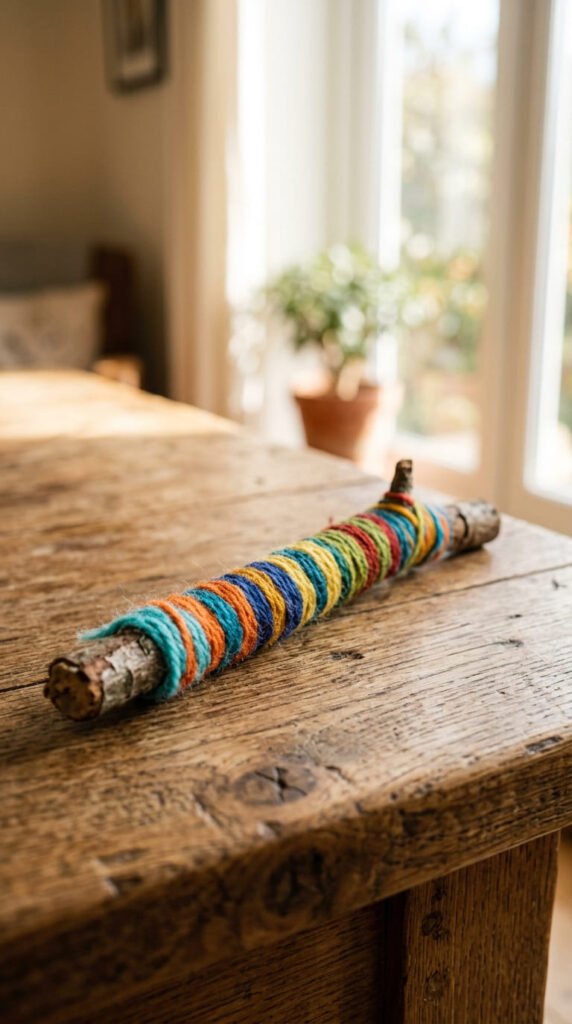
Find a sturdy stick outside, then let your toddler wrap colorful yarn around it in a loose spiral. Tie one end first so it doesn’t unravel, then guide their hands through the wrapping motion. This craft builds a repetitive hand motion that’s great for coordination, even though it looks simple. Budget tip: a single ball of yarn wraps dozens of sticks, so this project costs almost nothing per craft. If wrapping feels too tricky at first, let your toddler simply hold the stick while you wrap, then switch roles once they get the motion. Finished sticks make a nice bundle for a vase or a nature-table display at home. This is also a good outdoor pairing activity, since finding the stick becomes part of the fun before the craft even starts.
18. Handprint Butterfly
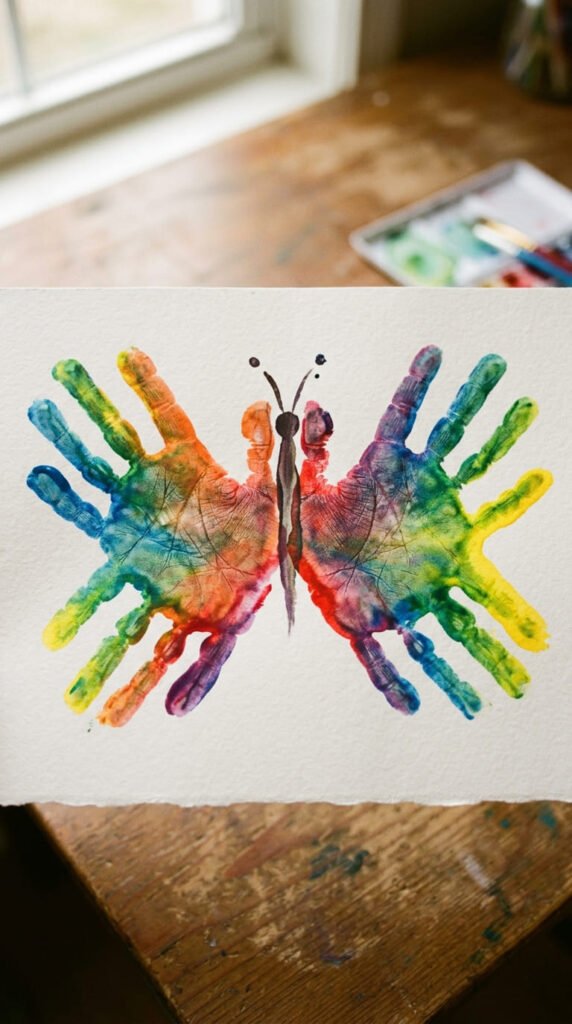
Paint your toddler’s palms and press both hands onto paper, thumbs touching in the middle, to form butterfly wings. Add a body and antennae with a marker once it dries. This keepsake craft takes minutes but creates something worth framing. Budget tip: washable paint in two or three colors is enough to make several butterflies for gifts or grandparents. Let your toddler choose the wing colors themselves, mixing if they want to experiment. Wipe hands with a damp cloth right after pressing to keep the mess contained to the paper. This is a strong pick for holidays like spring celebrations or Mother’s Day cards, since it doubles as a gift. Once dry, laminate it or slip it into a frame so the colors stay bright and don’t smudge over time in a drawer.
19. Paper Tearing Collage
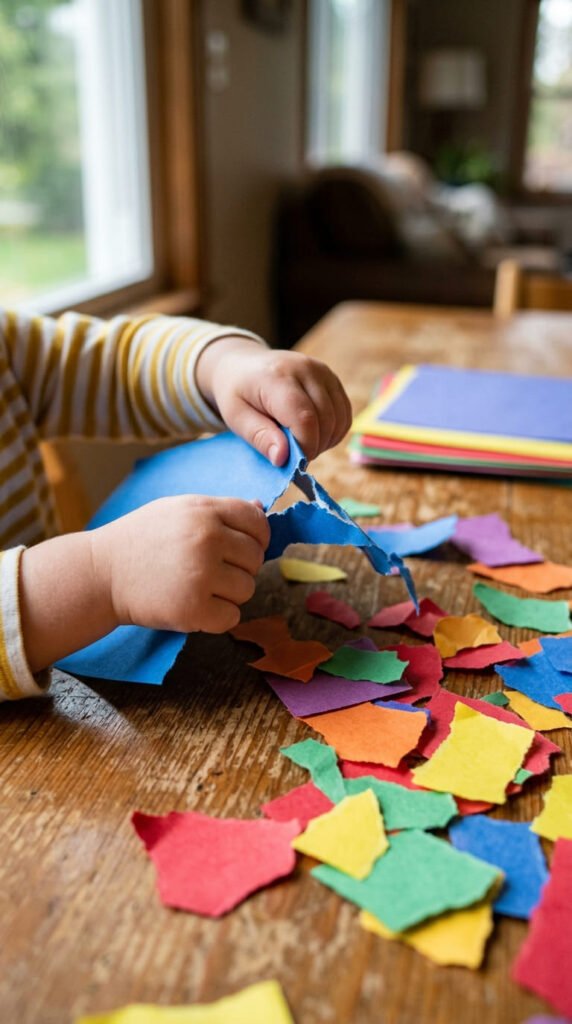
Give your toddler a stack of old construction paper or magazine pages and let them tear it into pieces — no scissors needed. Glue the torn scraps onto a blank sheet to make an abstract collage. Tearing paper is genuine fine motor work, since it uses a pinching and pulling motion toddlers don’t often practice elsewhere. Budget tip: use paper you’d otherwise recycle, so this craft costs nothing at all. There’s no wrong way to do this, which makes it a good pick for toddlers who get frustrated with more structured crafts. Let them glue the pieces wherever they land instead of guiding placement. This activity is also naturally calming, since the repetitive tearing motion gives toddlers a simple, satisfying task. Keep a basket of scrap paper on hand so this craft is always ready with zero setup time.
20. Ice Cube Painting
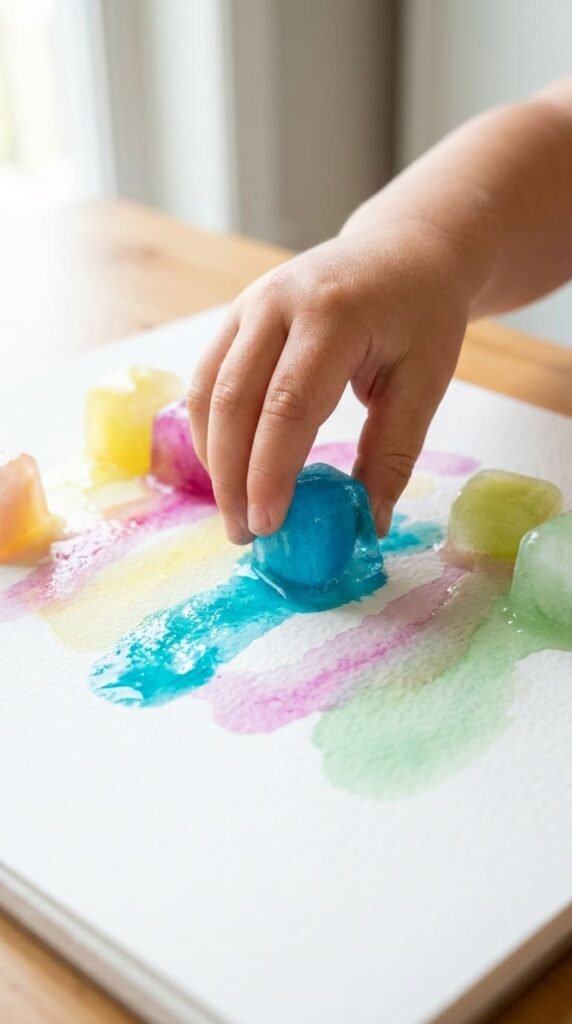
Mix washable paint with water and freeze it in an ice cube tray the night before. Give your toddler the frozen cubes to slide across paper, watching the color melt and streak as they go. This is a sensory-rich, low-mess craft since the cold cube keeps hands cleaner than wet paint would. Budget tip: an old ice cube tray works fine, so there’s no need to buy anything new. This activity is especially good for warm days, since the melting ice feels refreshing to hold. Lay a towel underneath the paper to catch any drips as the cubes melt. Talk about how the colors blend together as two cube trails cross on the page. Once the painting dries, it often has a soft, watercolor-like texture that looks different from typical toddler art, making it a nice one to display.
21. Play Dough Stamping
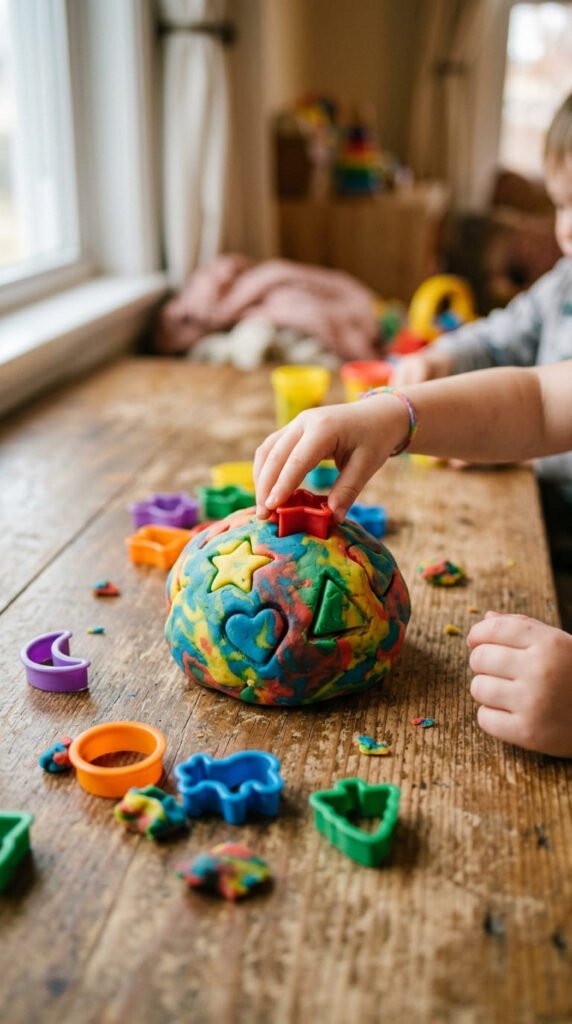
Roll out a ball of play dough flat, then let your toddler press small objects into it to make stamps — a fork, a bottle cap, a toy animal foot. This isn’t a keepsake craft, but it’s strong process-based sensory play that builds hand strength through squeezing and rolling. Budget tip: homemade play dough costs less than a dollar using flour, salt, and water, and lasts for weeks in an airtight container. Let your toddler pick which household objects to use as stamps, since exploring texture is part of the fun. This activity works well at a table with an easy-to-wipe surface, since play dough doesn’t stain like paint. Rotate in new stamping objects every few sessions to keep it interesting. Store the dough in the fridge between uses so it stays soft and ready for the next quiet-time session.
22. Paper Plate Jellyfish
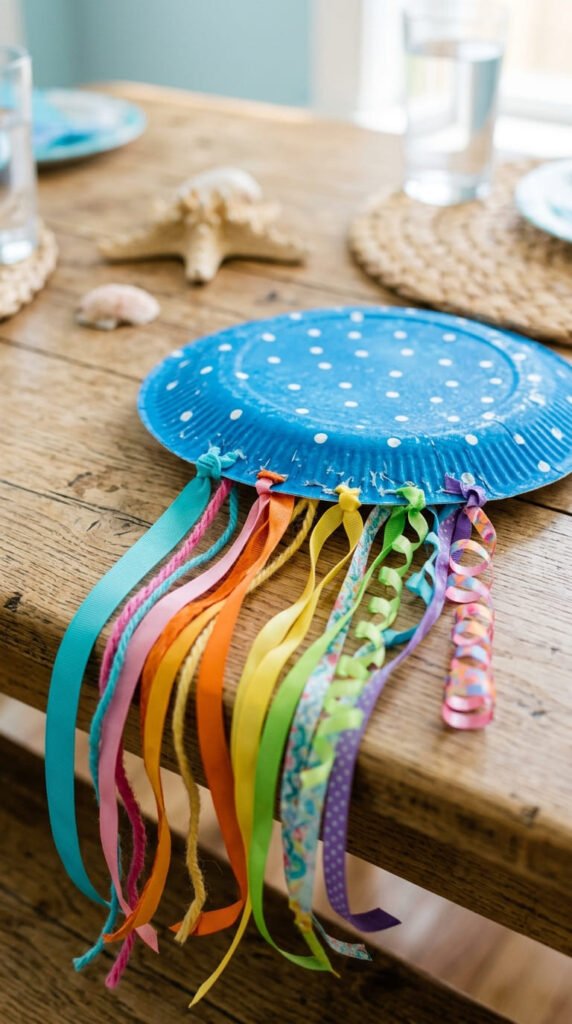
Paint a paper plate blue, then punch small holes around the edge and tie on strips of ribbon or crepe paper to look like tentacles. Your toddler can help pull the ribbon through each hole with a little guidance. Budget tip: leftover ribbon scraps from gift wrapping work just as well as new ribbon. This craft mixes painting with a simple threading motion, giving two types of hand practice in one project. If hole-punching feels tricky, pre-punch the holes the night before so setup is quick the next day. Hang the finished jellyfish from a doorway or ceiling so the tentacles sway when someone walks by, which toddlers tend to find delightful. This is a fun pairing with an ocean-themed book or a trip to see real fish, giving the craft extra context and meaning.
23. Bubble Wrap Stamping
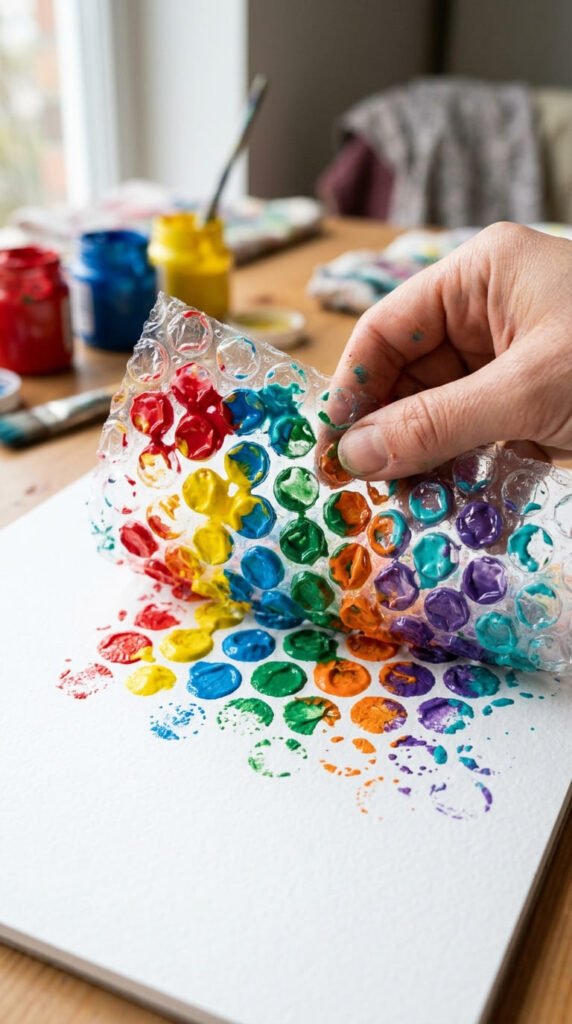
Tape a sheet of bubble wrap to a tray, paint the bumpy side, then press paper on top to reveal a dotted texture print. This is a fast, mess-contained way to make textured art without a paintbrush. Budget tip: save bubble wrap from your next online order instead of buying craft supplies. Let your toddler press with their whole hand for a fun sensory feel as the bubbles squish slightly under the paper. This craft produces a different result every time, so it’s fun to repeat with new paint colors. If you want to extend the activity, cut the dried print into a shape like a flower or turtle shell afterward. Keep a damp cloth nearby, since fingers tend to get a little inky during this one, even though the paper itself stays fairly clean and contained to the tray area.
24. Nature Collage
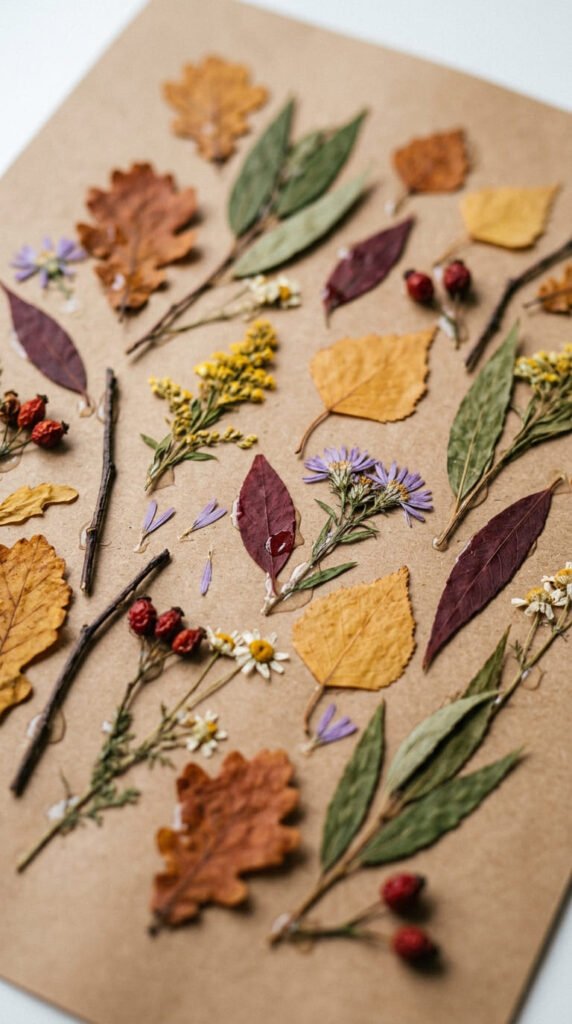
Take a short walk and collect leaves, flowers, or small twigs, then glue them onto paper once you’re home. This craft pairs outdoor time with quiet table time, giving your toddler a full activity instead of just a five-minute task. Budget tip: this costs nothing since nature is the only material needed. Talk about the textures and colors you find during the walk — smooth, bumpy, red, green — to build a bit of vocabulary before the gluing even starts. Let your toddler arrange the pieces however they like instead of guiding a specific design. This is a strong seasonal craft, since fall leaves and spring flowers each give a completely different look. Press the finished collage under a heavy book overnight to flatten it, then hang it up as a small nature-inspired keepsake from that day’s walk.
25. Paper Plate Lion
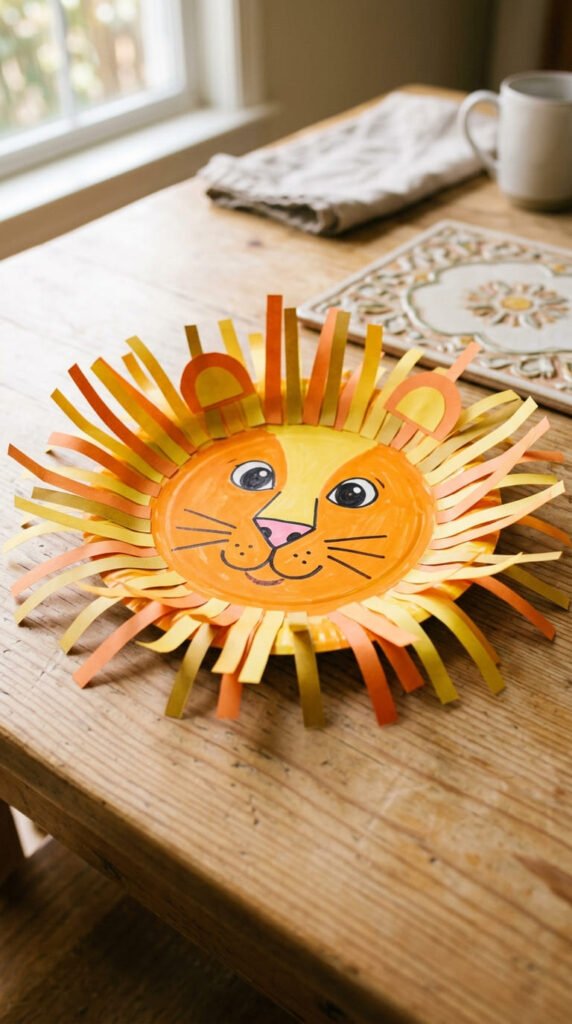
Cut strips of orange and yellow paper and glue them around the edge of a paper plate to make a lion’s mane. Let your toddler draw or glue on eyes and a nose in the center. Budget tip: use scrap paper from other projects instead of buying a new pack just for this craft. Gluing individual strips around the edge is repetitive hand work, which builds patience along with fine motor skill. If your toddler tires out halfway through, glue every other strip together and let them fill in the gaps once they’re ready to continue. This craft pairs well with an animal-themed storybook or a trip to the zoo, giving your toddler a chance to compare their craft lion to a real one. Once finished, it makes a fun mask if you cut out the eye holes, adding a second round of play value.
Conclusion
Twenty-five crafts, and not a single specialty supply required. That’s the point. A paper plate, a handful of pom poms, or a box saved from your last delivery can turn a slow afternoon into real hands-on learning. Pick a few that match what’s already in your kitchen drawer or recycling bin, and keep the rest for later. Rotate them by mess level, by weather, or by how much patience your toddler has that day. The small motions behind each craft — pressing, tearing, threading, gluing — do more than fill time. They build the hand strength your toddler will lean on for years. Start with one today, save the yarn scraps and cereal boxes for next week, and let the pile of finished art on your fridge grow one small project at a time.