Crochet is a relaxing and rewarding craft that lets you create everything from cozy scarves to playful toys. If you’re new, it can feel a little overwhelming—loops, chains, and abbreviations everywhere! But with a step-by-step approach, you’ll be stitching confidently in no time. This guide breaks down the essentials, shares tips for avoiding beginner mistakes, and walks you through techniques that will make your first projects a success.
Gather Your Materials
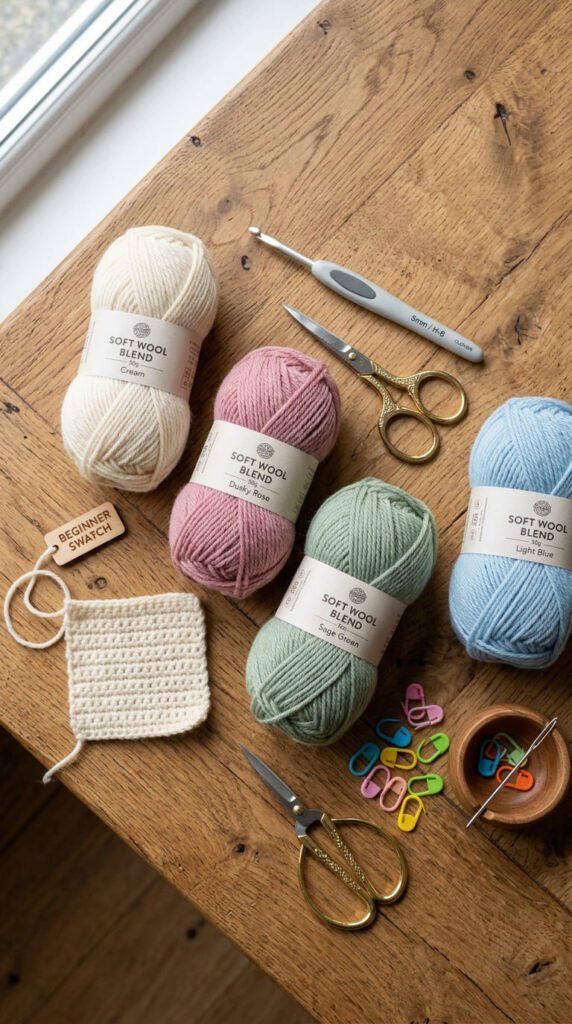
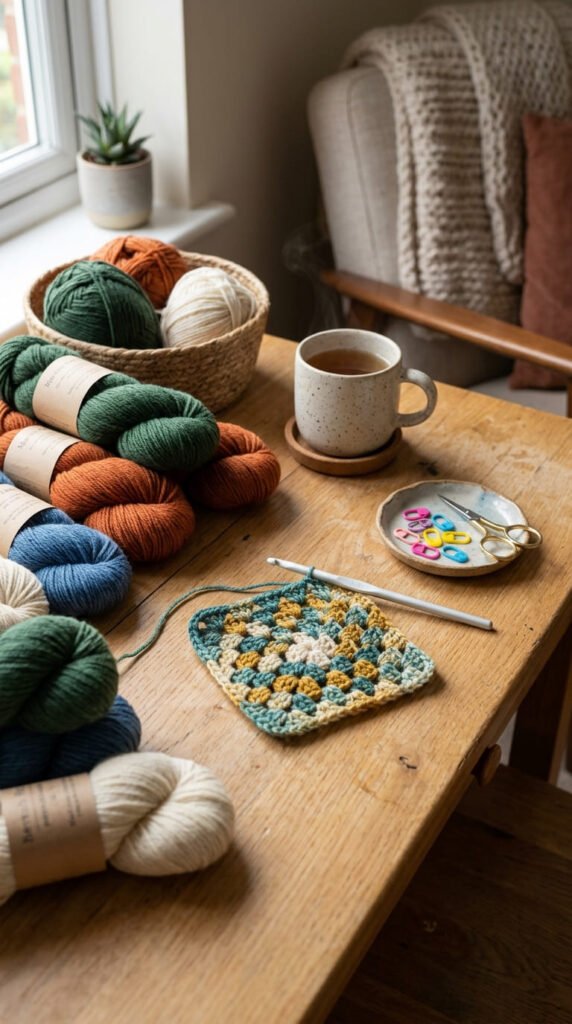
Before you start, assemble everything you need:
- Medium weight (#4) light-colored yarn – easier to see stitches.
- 5mm (Size H) crochet hook – standard beginner-friendly size.
- Stitch markers – to track rows and rounds.
- Yarn needle and scissors – for finishing.
- Comfortable chair and good lighting – to avoid strain.
Having the right tools prevents frustration and keeps you focused on learning the stitches. Light-colored yarn especially helps you see each loop clearly, while stitch markers prevent miscounted rows.
Make a Slip Knot
The slip knot is the universal first step in crochet. It forms the anchor on your hook from which all stitches begin.
- Wrap yarn around your fingers to create a loop.
- Pull a strand through the loop with your hook.
- Tighten just enough so it’s secure but can slide along the hook.
Practice until you can make it quickly. A consistent slip knot lays the foundation for even tension in your work.
Learn the Foundation Chain
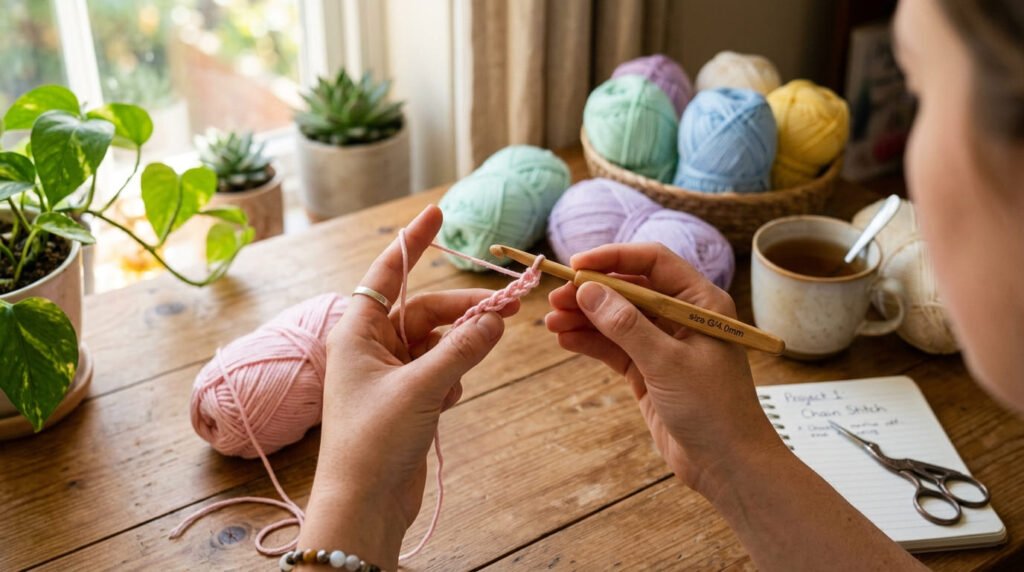
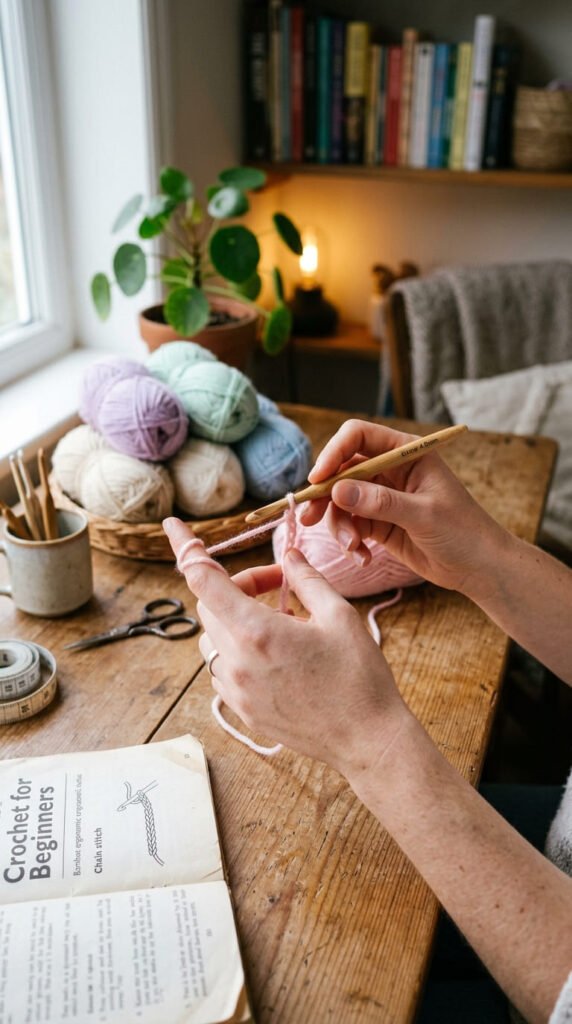
Next, create a chain stitch, which is the base for most projects:
- Yarn over and pull through the loop on your hook repeatedly.
- Count carefully: do not count the slip knot.
- Keep loops consistent—too tight makes stitches hard to work into, too loose creates gaps.
The foundation chain sets the width of your project, so it’s worth practicing a few times to get even tension.
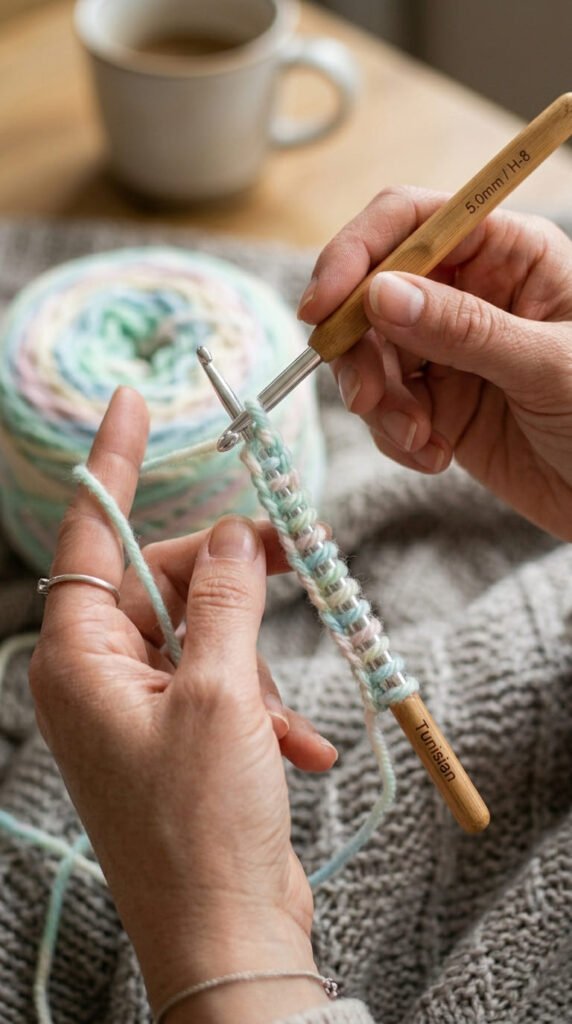
Master the Basic Stitches
There are three essential stitches to start with:
- Single Crochet (sc) – insert hook, yarn over, pull through, yarn over, pull through two loops. Dense, firm fabric.
- Double Crochet (dc) – taller stitch, yarn over first, creates looser texture. Great for scarves and blankets.
- Half Double Crochet (hdc) – mid-height, versatile stitch, perfect for hats and shawls.
Practice each stitch in rows to gain rhythm. Focus on consistent loops and tension. Small swatches are great practice.
Working in Rows vs Rounds
- Rows: Turn your work at the end of each row. Use turning chains to bring your hook to the correct height for the next row.
- Rounds: For hats or coasters, start with a magic ring. Work stitches around the loop and tighten to close the center.
Understanding when to work in rows or rounds expands the types of projects you can create.
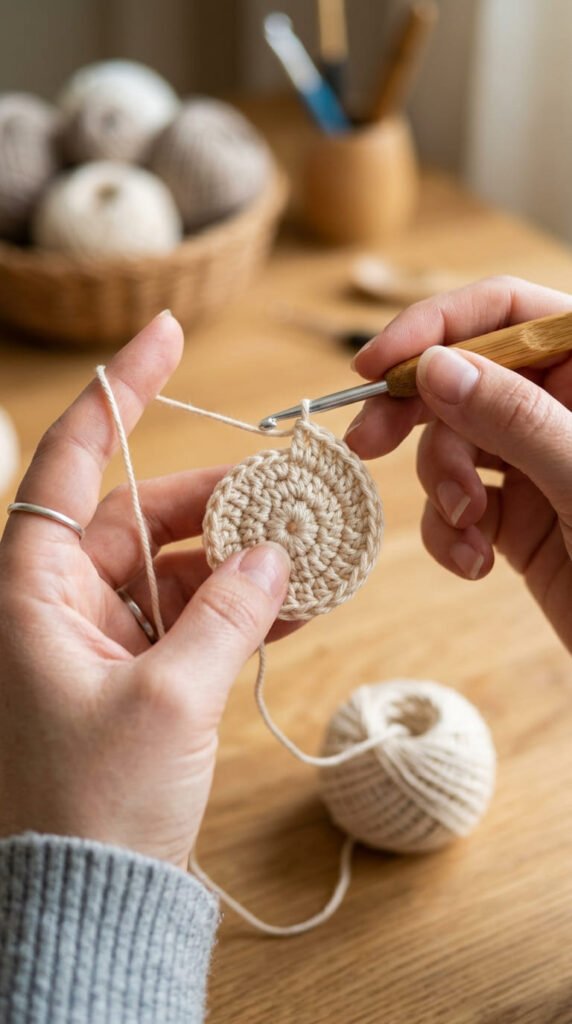
Managing Tension
Tension control is the #1 challenge for beginners:
- Hold yarn over your index finger of the non-dominant hand.
- Squeeze gently—too tight or too loose affects stitch size.
- Practice on swatches before starting real projects.
Consistent tension leads to smoother, even fabric and more professional-looking results.
Reading Patterns and Abbreviations
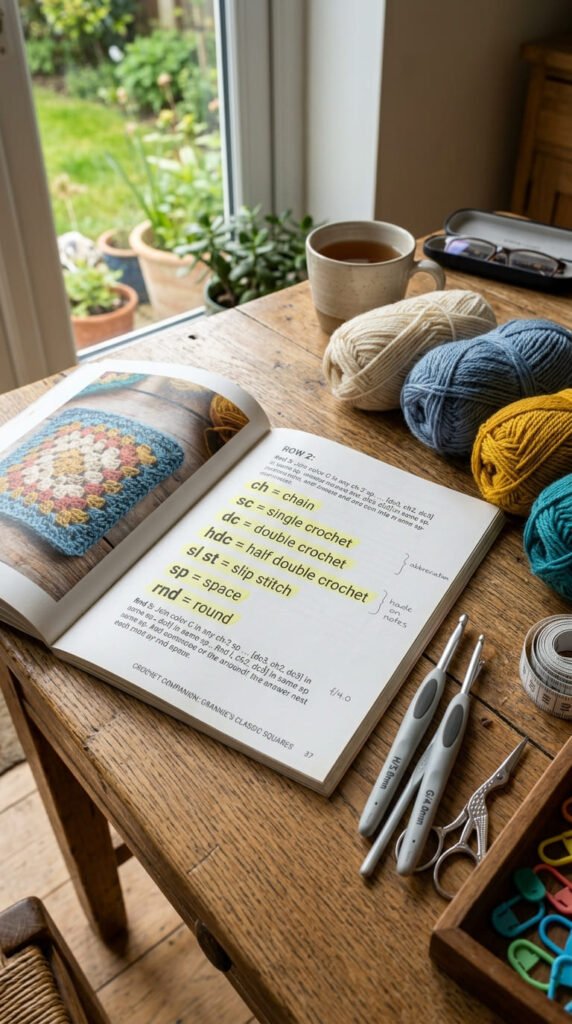
Patterns can look like code at first. Common abbreviations:
- sc – single crochet
- dc – double crochet
- ch – chain
- yo – yarn over
Start with the top 10 abbreviations. Combine written patterns with video tutorials to understand stitch placement and repeats. This unlocks more projects and creative possibilities.
Finishing Techniques
A polished finish makes any project look professional:
- Fasten off: pull the yarn through the last loop and secure.
- Weave in ends: hide tails using a yarn needle.
- Smooth edges and tidy ends enhance the appearance of scarves, hats, or toys.
Tips for Comfort and Safety
Crocheting should be enjoyable:
- Take breaks every 30 minutes.
- Stretch wrists and fingers to prevent strain.
- Maintain good posture: supported back and cushion under arms.
- Use ergonomic hooks if needed.
Small adjustments prevent injuries and keep learning fun.
Explore Variations and Projects
Once you’re comfortable:
- Try foundation single crochet (FSC) as an alternative to chains.
- Practice front loop only (FLO) and back loop only (BLO) for textures.
- Experiment with small projects like dishcloths, scrunchies, or simple scarves.
Start small, then progress to hats, blankets, and amigurumi. Every project reinforces your skills.
Conclusion
Learning crochet is easier than it seems when you follow a clear, step-by-step approach. From the slip knot to mastering sc, dc, hdc, and finishing techniques, beginners can confidently start projects that are both practical and creative. Remember to take breaks, watch tutorials, and enjoy the process. Save this guide and try your first project today—you’ll be amazed at what you can create with just a hook and yarn!