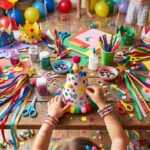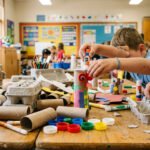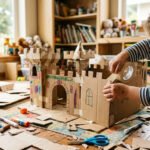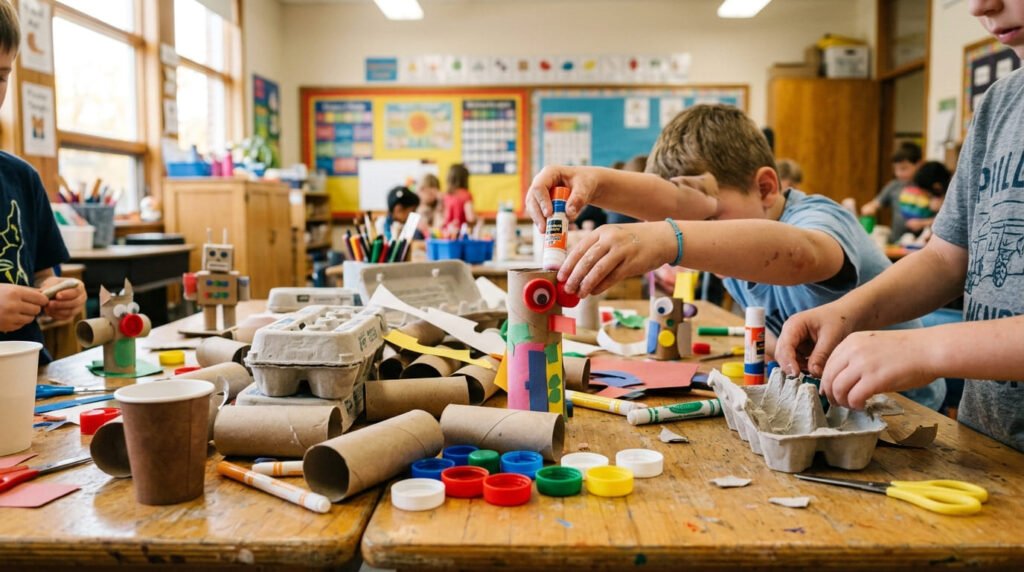
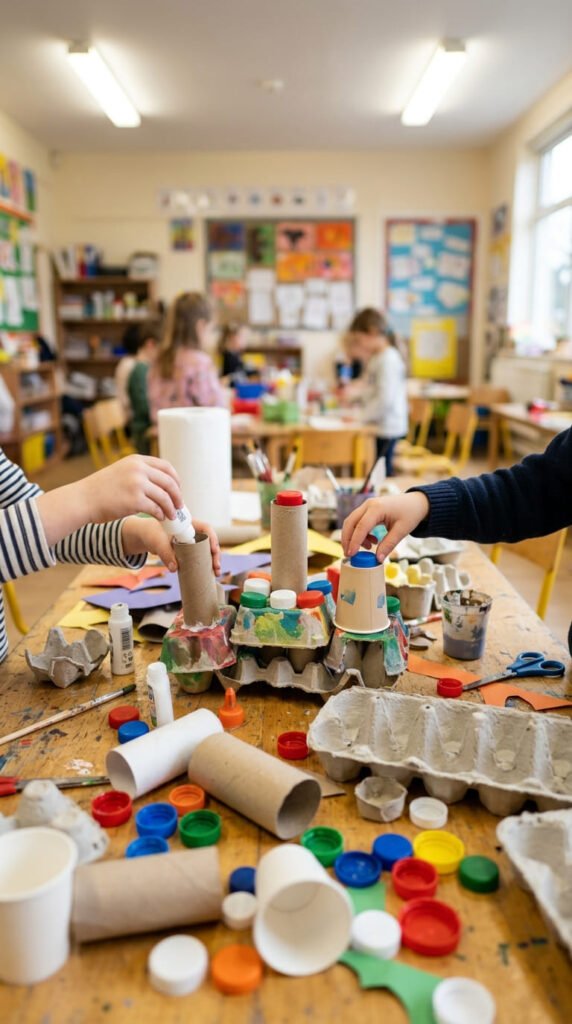
Teachers don’t need a big supply budget to fill a lesson with hands-on making. A collected bin of cardboard tubes, bottle caps, egg cartons, and paper cups can turn into a full class period of learning through craft. This list gathers 22 classroom crafts for kids that use recycled or low-cost materials, pair naturally with science, art, or literacy goals, and scale easily for a whole class. Each idea includes a rough prep note and a budget tip, so lesson planning stays simple. Send a supply request home, save a few boxes from the staff room, and turn ordinary trash into a full afternoon of easy school projects.
1. Cardboard Tube Binoculars for Nature Walks
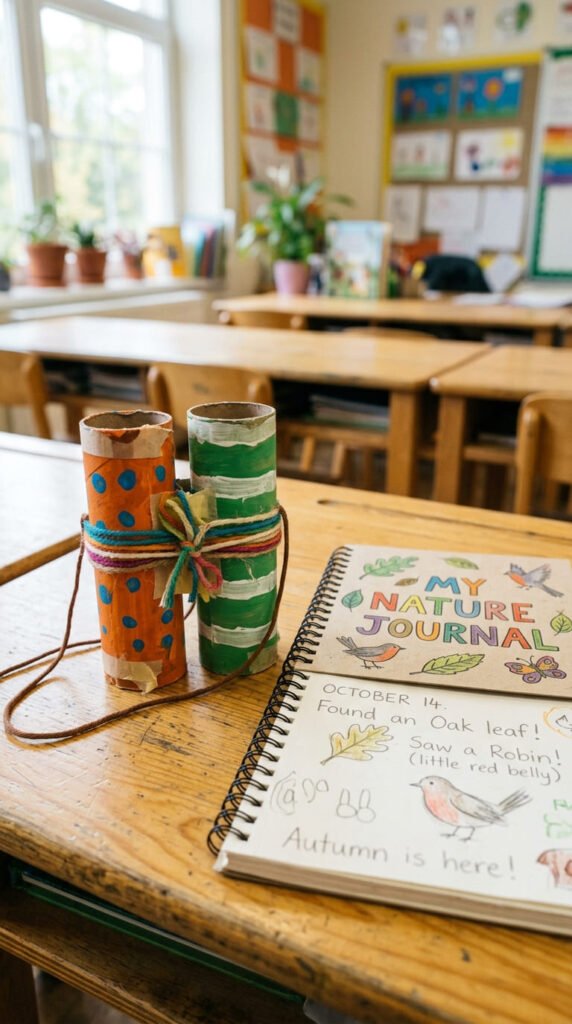
Tape two paper towel tubes side by side and punch a hole near the top of each for a string strap. Students paint or decorate the outside before heading outdoors for a short nature walk. This project pairs directly with a science observation lesson, giving students a simple tool to spot birds, insects, or plant details. Since tubes come from home recycling, this craft costs nothing beyond paint and string, which most classrooms already stock. Prep time runs about five minutes per pair, and building takes another 15. Pass out a simple checklist of things to spot outside to extend the activity into a short scavenger hunt. This works well as a whole-class project, since every student can build their own pair at the same table. Store finished binoculars in a bin near the classroom door for repeat outdoor lessons throughout the season. Send a note home asking families to save extra tubes for a bigger batch.
2. Egg Carton Flower Garden
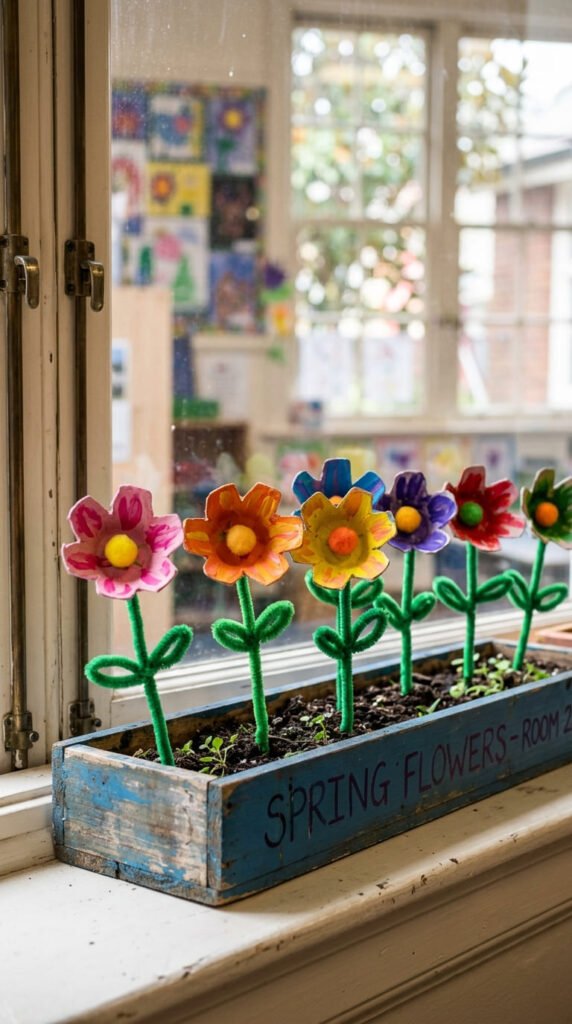
Cut individual cups from an egg carton, trim the edges into petal shapes, and let students paint each one a bright color. Poke a small hole in the bottom and thread a green pipe cleaner through for a stem. This craft turns kitchen waste into a spring display, using materials that would otherwise go straight to the trash. Group finished flowers into a shared classroom planter or vase for a full garden look. Prep takes about ten minutes to cut the cartons ahead of time, and painting adds another 20 minutes of class time. This project works well as a small-group activity, since students can share a few cartons across a table. Pair it with a short lesson on plant parts, labeling the stem, petal, and center on a worksheet. Ask families to send in clean egg cartons a week ahead of time to build up enough supply for the whole class.
3. Bottle Cap Mosaic Art
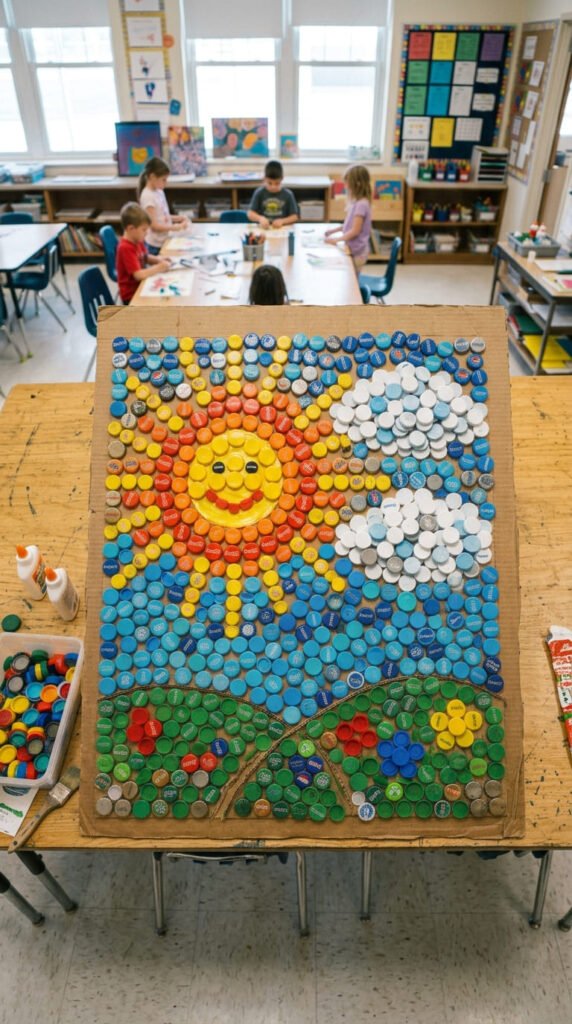
Sort bottle caps by color into small bins, then let students glue them onto a cardboard base to build a picture, one cap at a time. This project works well as a collaborative class mural, since a single design can take dozens of caps and multiple hands to complete. Draw a simple outline first, like a rainbow or a sun, so students know where each color belongs. Collecting enough caps takes a few weeks, so start a caps collection bin early in the term and ask families to save theirs at home. Building time runs about 30 minutes once enough caps are on hand. This craft ties naturally into a math lesson on sorting, counting, and patterns, since students group caps by color before placing them. Display the finished mosaic in the hallway as a visible sustainability project the whole school can see. Store extra caps in labeled containers for future projects.
4. Paper Cup Bird Feeders
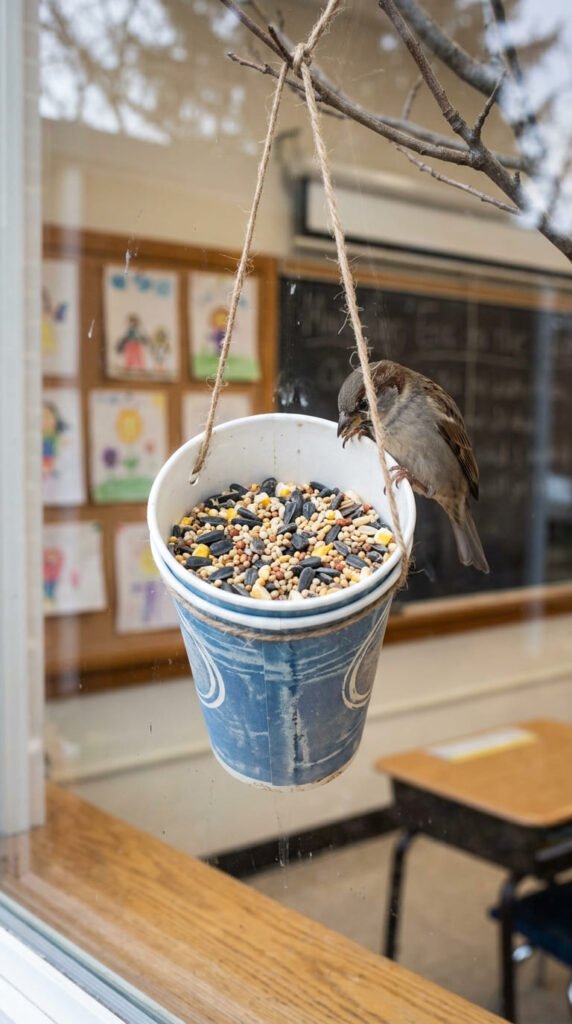
Poke two holes near the rim of a paper cup and thread string through for a hanging loop. Punch a couple of small holes lower on the cup for birds to perch, then fill it with birdseed before hanging it outside a window. This project connects directly to a science lesson on local wildlife, giving students a reason to check back and observe which birds visit over the following days. Paper cups cost very little, and many classrooms already keep a stack for other activities. Building time runs about 15 minutes per student, making this a quick single-period project. Pair it with a simple bird-watching log, where students jot down or sketch what they see each morning. This craft works well near Earth Day or a broader recycling unit, since it reuses a disposable cup instead of tossing it out. Hang several feeders around the building for a visible, ongoing class project.
5. Recycled Robot Sculptures
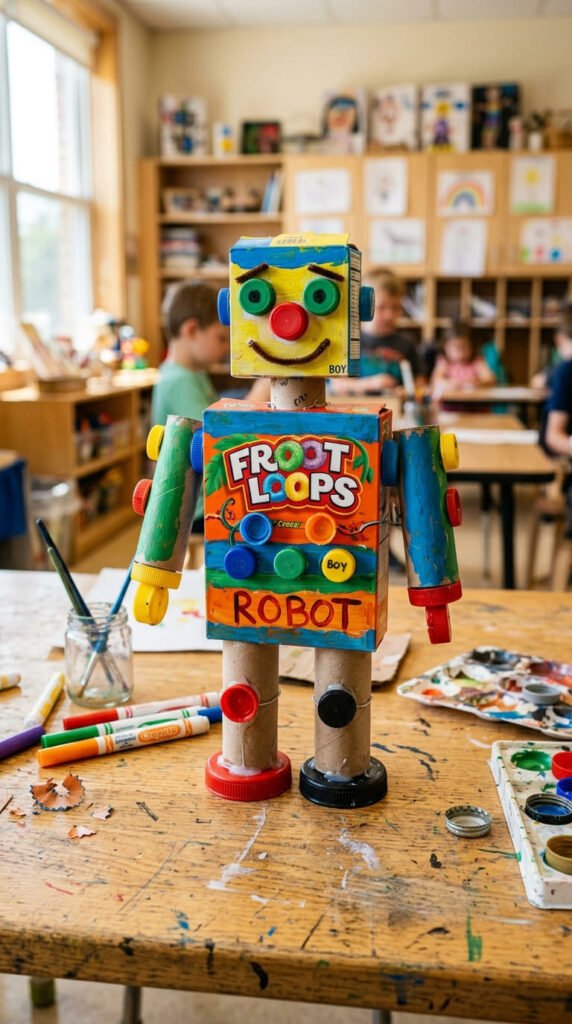
Stack small boxes, tubes, and bottle caps together with hot glue or strong tape to build a robot figure. Students paint the body silver or bright colors, then add caps as buttons and control panels. This project works best as a STEAM tie-in, since students plan their robot’s shape before building, thinking through balance and structure along the way. Set out a supply table with pre-collected recyclables so students can pick and choose pieces that fit their design. Building time runs closer to 30 to 40 minutes, since assembly takes longer than simpler crafts on this list. This craft suits older elementary students who can handle glue guns under supervision, or use strong tape for younger grades instead. Display finished robots along a classroom shelf for a mini robot gallery. Ask families to send in clean recyclables like small boxes and caps a week ahead to build up enough supply for the whole class.
6. Newspaper Weaving Placemats
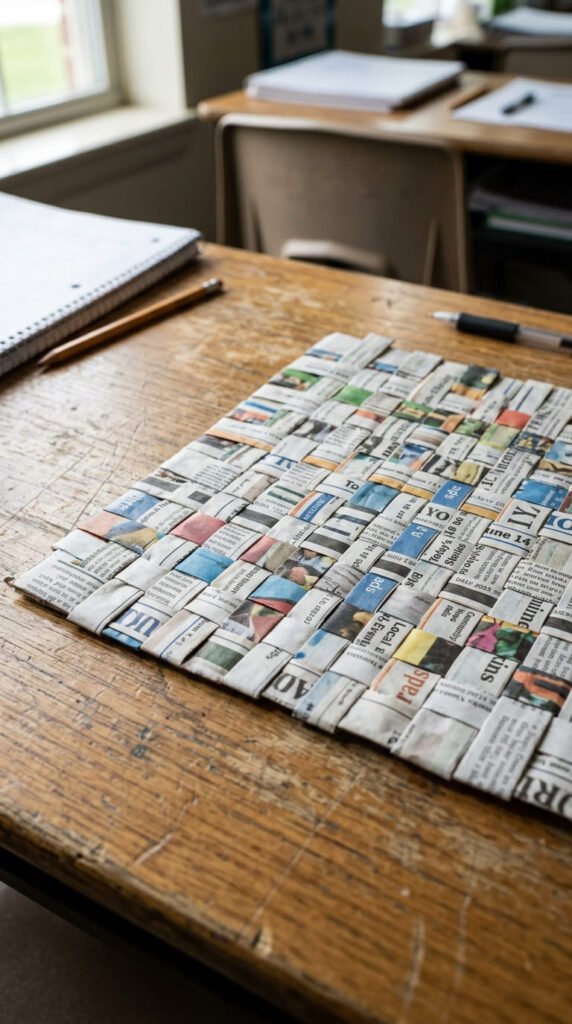
Cut newspaper into even strips, then tape a row of strips down as the base and weave a second set over and under to build a checkered placemat. This project introduces basic weaving and pattern skills without needing store-bought paper, since old newspapers work perfectly and cost nothing. Prep involves cutting strips ahead of time, which takes about ten minutes per student if done in batches. Weaving itself takes 20 to 30 minutes, depending on the size of the mat. This craft pairs well with a math lesson on patterns, since the over-under weave naturally repeats. Students can trim the edges neatly once finished and use the mat at their own desk during snack time. This project works well for a whole class, since newspaper is easy to collect in bulk from home or a staff room recycling bin. Send a note home a week ahead asking families to save old newspapers for the project.
7. Milk Carton Birdhouses
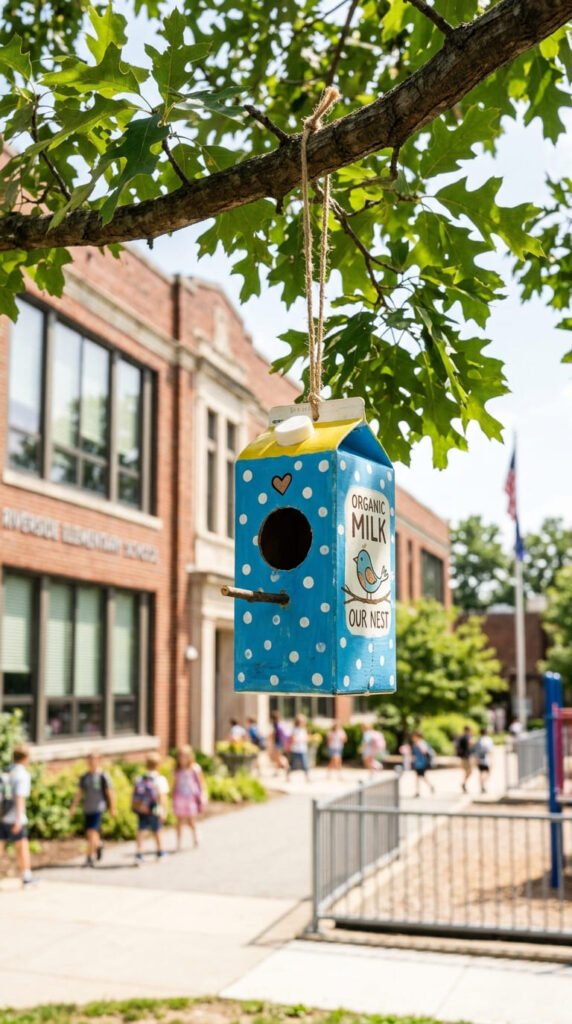
Rinse out a milk carton, cut a round entrance hole on one side, and let students paint the outside before hanging it outdoors with string. This project turns everyday packaging into a functional wildlife shelter, giving students a lasting outdoor project tied to a recycling or nature unit. Prep takes about five minutes to clean and dry each carton ahead of time. Building and painting runs about 25 minutes total. Punch a small drainage hole in the bottom so rainwater doesn’t collect inside. This craft works well as a small-group activity, since cartons can be shared across partners while decorating. Hang finished birdhouses around the school grounds, then track which ones attract nesting birds over the following weeks as an ongoing observation project. Ask families to save clean milk cartons for two weeks ahead of the project to build up enough supply for the full class.
8. Plastic Bottle Planters
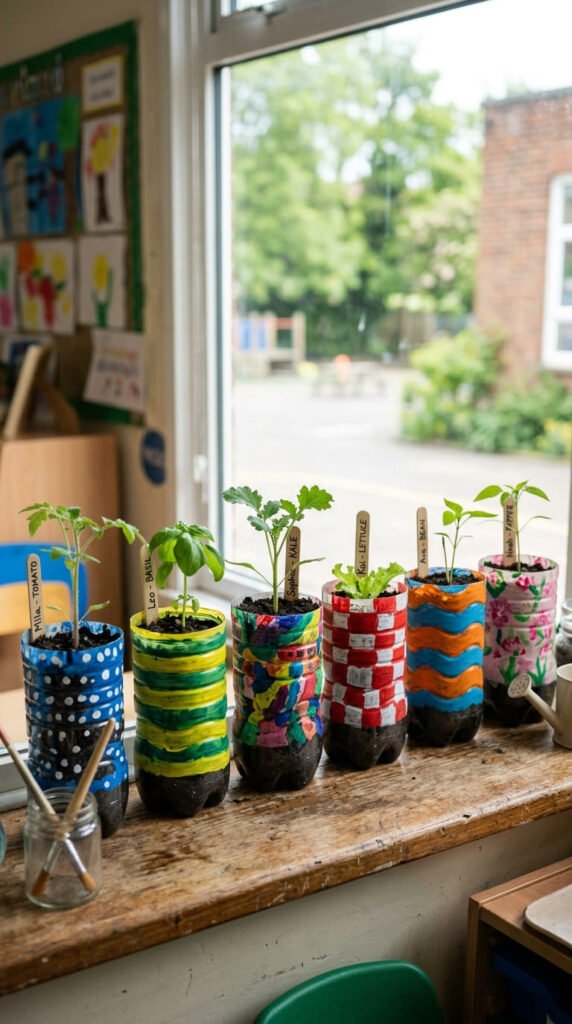
Cut a plastic bottle in half, keep the bottom section, and let students paint or decorate the outside before filling it with soil and a small seed or seedling. This project pairs directly with a plant growth lesson, since students can track root and stem development through the clear plastic sides. Prep takes about five minutes per bottle to clean and cut ahead of time, ideally done by an adult for safety. Painting and planting take another 20 minutes of class time. Line the planters up on a sunny windowsill and assign watering duty on a rotating class schedule. This craft works well as an ongoing project rather than a one-day activity, since students check back weekly to measure growth and record notes in a journal. Ask families to save clean plastic bottles ahead of time, and reuse potting soil from a school garden if one is available to keep costs low.
9. Cereal Box Book Covers
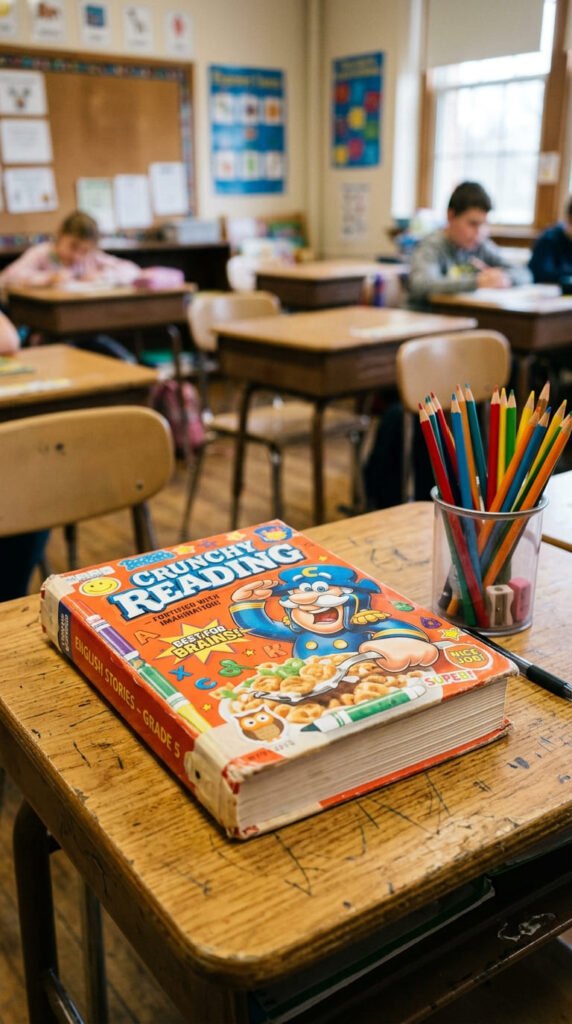
Cut open a cereal box and flatten it, then trim it to size and fold it around a textbook or journal like a protective cover. Students decorate the plain cardboard side with markers, stickers, or a drawn design before sliding it over their book. This project gives books a sturdier cover while reusing packaging that would otherwise be tossed. Prep takes about five minutes per box to flatten and trim ahead of time. Decorating adds another 15 to 20 minutes, depending on detail. This craft works well at the start of a school year, giving each student a personalized cover for a new journal or workbook. It also ties into a lesson on reusing packaging instead of buying new supplies. Ask families to save cereal or cracker boxes for a week ahead of the project, since most households go through a few each week without extra effort required to collect them.
10. Paper Plate Storytelling Puppets
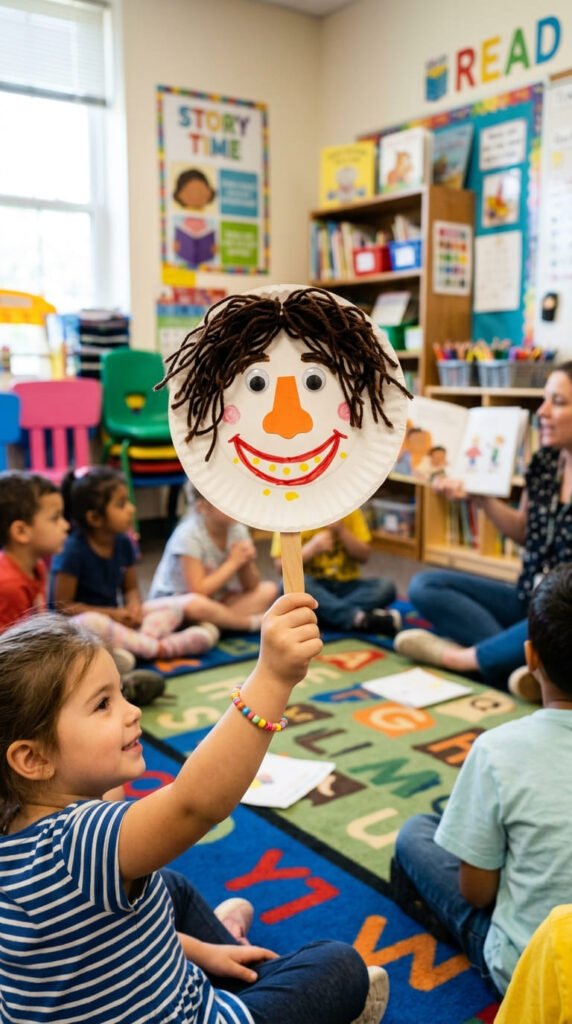
Draw or paint a face on a paper plate, then glue on yarn hair, paper ears, or felt scraps for extra character detail. Tape a craft stick to the back so students can hold the puppet up during a short performance. This project ties directly into a literacy lesson, since students act out a story or retell a book using their puppet as the main character. Prep takes about five minutes to hand out plates and supplies. Building and decorating run about 20 to 25 minutes total. Pair a few finished puppets together for a short group skit, giving quieter students a comfortable way to participate through the puppet rather than speaking directly. This craft works well for a whole class, since paper plates are inexpensive and easy to buy or request as a donation. Store finished puppets in student cubbies for reuse during future storytelling sessions throughout the term.
11. CD Spinner Art
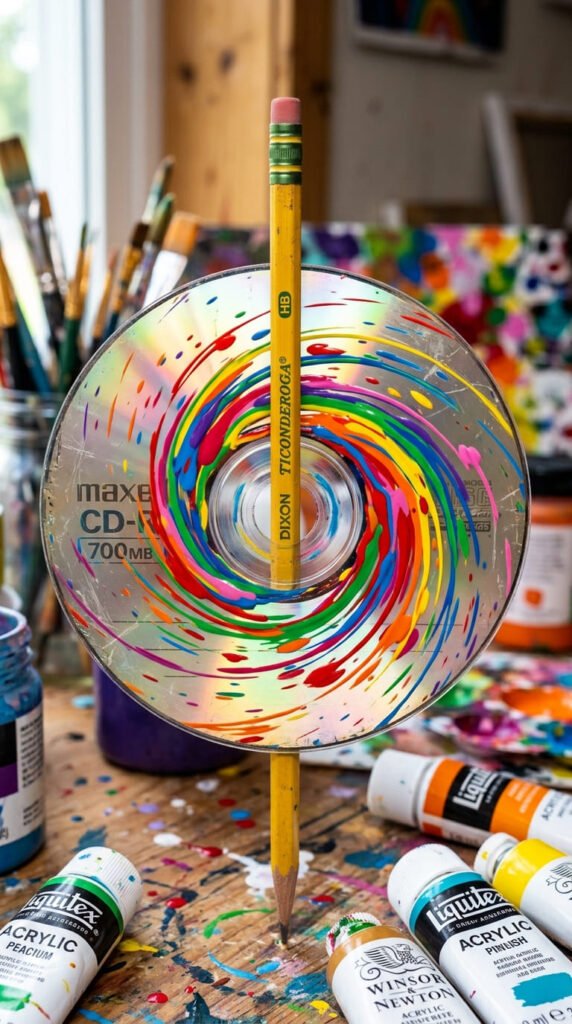
Poke a pencil through the center hole of an old CD, then spin it like a top on a paper plate while dripping small amounts of paint onto the surface. The spinning motion flings the paint outward into a swirling, colorful pattern. This project gives old CDs, which many households no longer use, a second life as an art tool. Prep involves collecting a stash of unused CDs ahead of time, since most classrooms won’t have extras on hand. Building time runs about ten minutes per student, making this a quick activity that fits into a short class period. This craft works well as a station-based rotation, since only one CD spinner setup is needed at a time for small groups to rotate through. Lay down newspaper first, since spinning paint tends to splatter. Ask families to donate old CDs a week ahead, since most homes have a few sitting unused in a drawer.
12. Magazine Collage Portraits
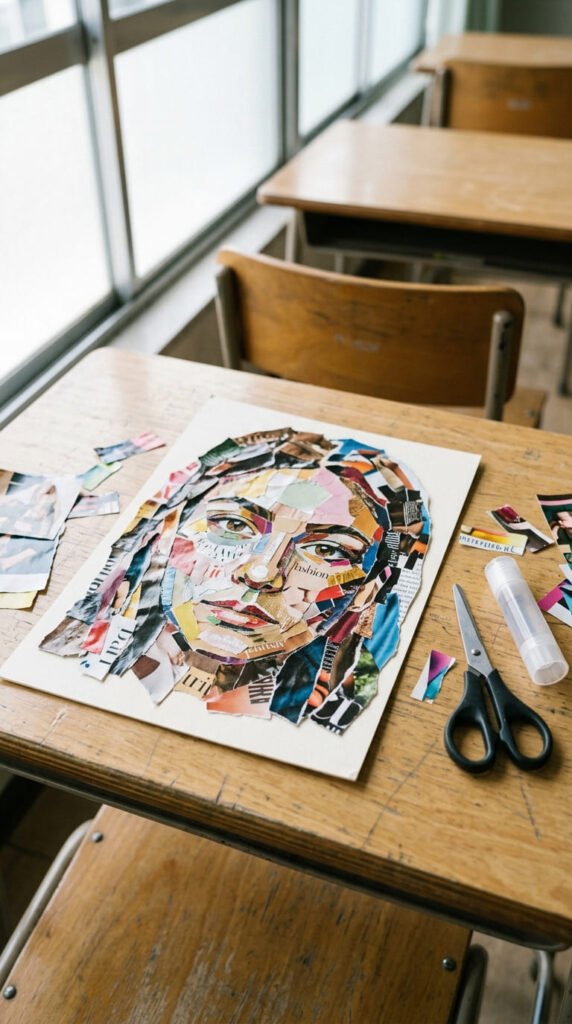
Cut colors, textures, and shapes from old magazines, then arrange the scraps onto paper to build a self-portrait or a themed picture. This project works well as an art and identity lesson, since students choose colors and images that represent themselves or a topic they’re studying. Prep involves collecting a stack of old magazines ahead of time, which many households or waiting rooms are happy to donate. Building time runs about 25 to 30 minutes, since sorting and cutting takes longer than simpler crafts on this list. This craft pairs well with a writing assignment, where students explain why they chose certain colors or images for their collage. It works for a wide range of grade levels, since younger students can focus on color while older students build more detailed, intentional designs. Ask families or local businesses to donate old magazines a few weeks ahead to build up enough supply for the whole class.
13. Recycled Paper Seed Bombs
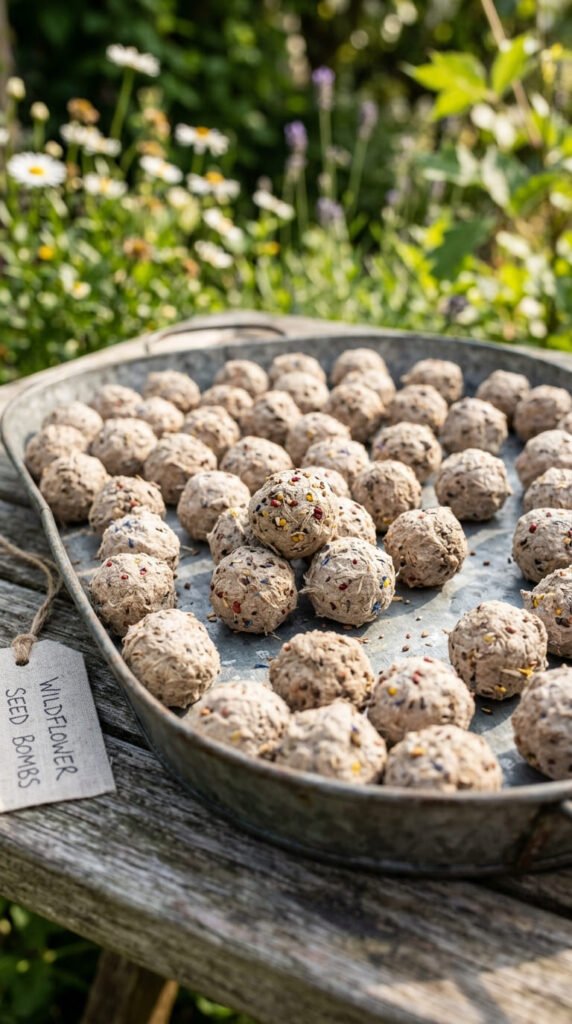
Soak scrap paper in water until it turns to pulp, then mix in a small handful of wildflower seeds and shape the mixture into small balls. Let them dry for a day or two before students take them home to plant in a garden or yard. This project pairs directly with a recycling and plant-life lesson, since students see paper waste turned into something that grows. Prep takes a few minutes to tear and soak paper scraps ahead of time. Building time runs about 20 minutes once the pulp is ready, plus drying time across a couple of days. This craft works well around Earth Day, tying sustainability themes directly into a hands-on activity. Keep a damp towel nearby, since the pulp mixture can get messy on hands. Ask families to save scrap paper for a week ahead, and pick up a small seed packet from a discount store to keep the project budget low.
14. Toilet Paper Roll Flower Bouquet
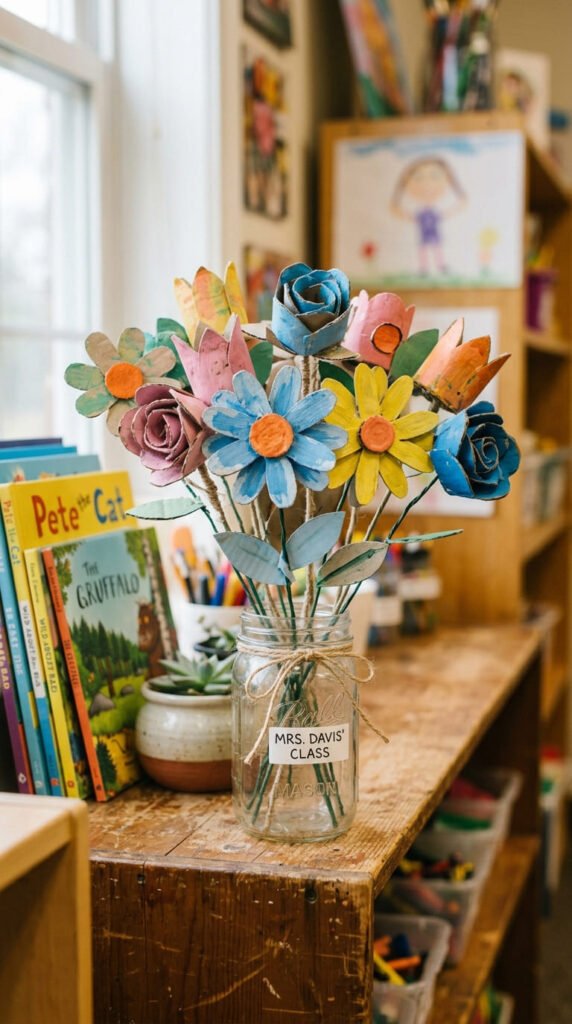
Flatten a toilet paper roll and cut it into rounded petal shapes, then fan them out and glue them onto a paper circle to build a flower. Students paint each petal a bright color before assembly. This project reuses classroom recycling that would otherwise be tossed, since toilet paper rolls are a near-endless supply in most schools. Prep takes about five minutes to cut and flatten rolls ahead of time. Building and painting run about 25 minutes total. Group finished flowers into a shared jar or vase for a classroom display, or send them home individually as small gifts. This craft ties into a lesson on flower parts, labeling petals and stems on a simple diagram. It works well for a whole class, since the base material is free and easy to collect in bulk from the school’s own recycling stream over a couple of weeks.
15. Cardboard Insect Habitat Diorama
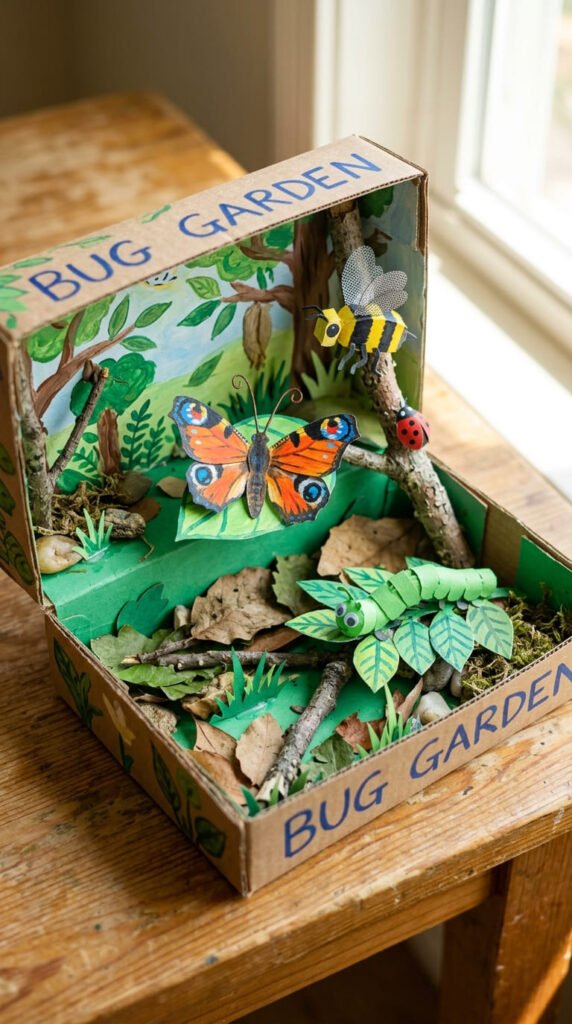
Turn a shoebox or small cardboard box on its side and let students decorate the inside to look like an insect’s natural habitat, using paint, twigs, and paper cutouts. This project connects to a science unit on insects and ecosystems, since students research what a specific bug needs to survive before building the scene. Prep takes about five minutes to hand out boxes and materials. Building time runs closer to 30 to 40 minutes, since students plan out details like leaves, dirt, and hiding spots. This craft works well as an individual project, giving each student a chance to research and represent a different insect. Pair the diorama with a short presentation, where students explain their habitat choices to the class. Ask families to save shoeboxes or small boxes a couple of weeks ahead, and collect twigs and leaves during a short outdoor break before the project begins.
16. Bottle Cap Counting Mosaic
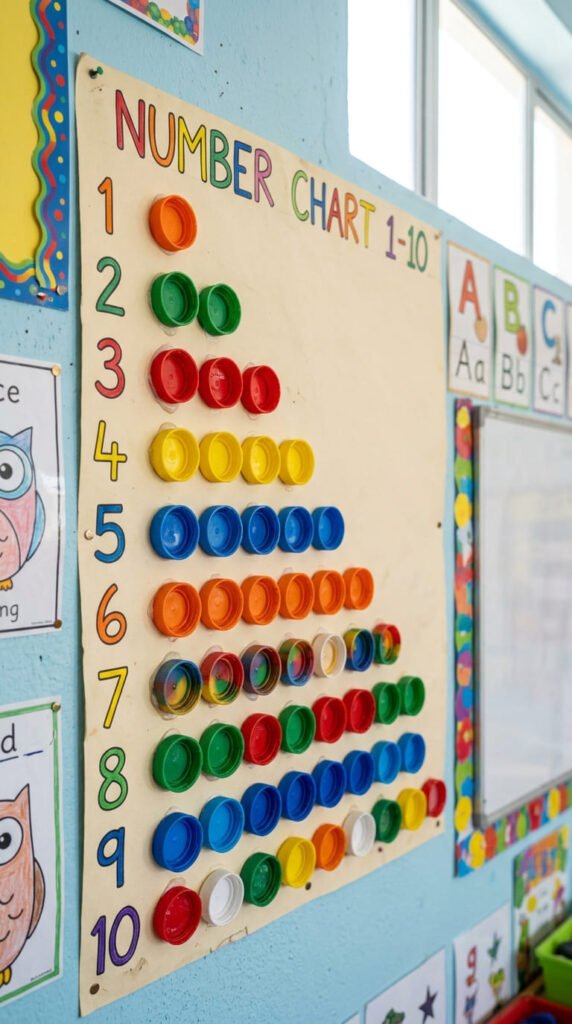
Glue bottle caps in rows onto a poster board, building a simple counting chart where each row holds a different number of caps. This project ties craft time directly into a math lesson on counting and number recognition, since students physically place each cap while counting aloud. Sorting caps by color first adds a light pattern-recognition element before the counting begins. Prep takes a few minutes to draw number labels down one side of the board. Building time runs about 20 minutes, depending on how high the count goes. This craft works well for younger grades still building basic number sense, and it doubles as a durable classroom display once finished. Since bottle caps come from recycling, this project costs nothing beyond glue and poster board. Start a caps collection bin a few weeks ahead of time, and ask families to save theirs at home to build up enough supply for a full ten or twenty count.
17. Paper Cup Telephone
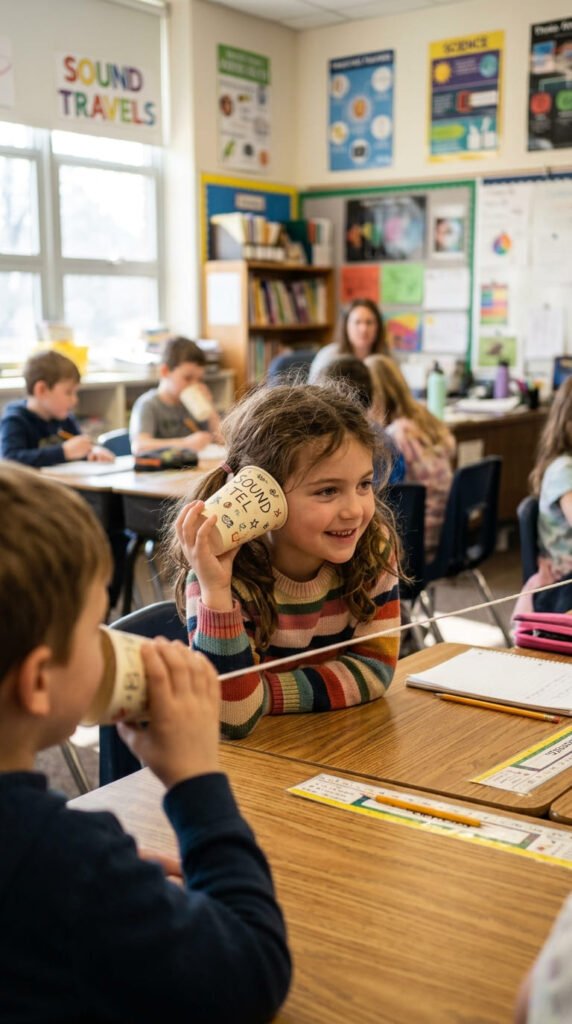
Poke a small hole in the bottom of two paper cups, thread a length of string through each, and tie a knot inside so it holds firm. Students hold one cup to their ear while a partner speaks into the other from across the room, testing how sound travels through the taut string. This project pairs directly with a science lesson on sound and vibration, giving students a hands-on way to feel how sound waves move. Prep takes about five minutes per pair to poke holes and cut string. Building time runs about ten minutes, making this one of the quickest crafts on this list. Pair students up and let them test how the string tension changes the sound quality, comparing a loose string to a taut one. This craft costs almost nothing, since paper cups and string are common classroom supplies already on hand for other projects.
18. Egg Carton Ecosystem Diorama
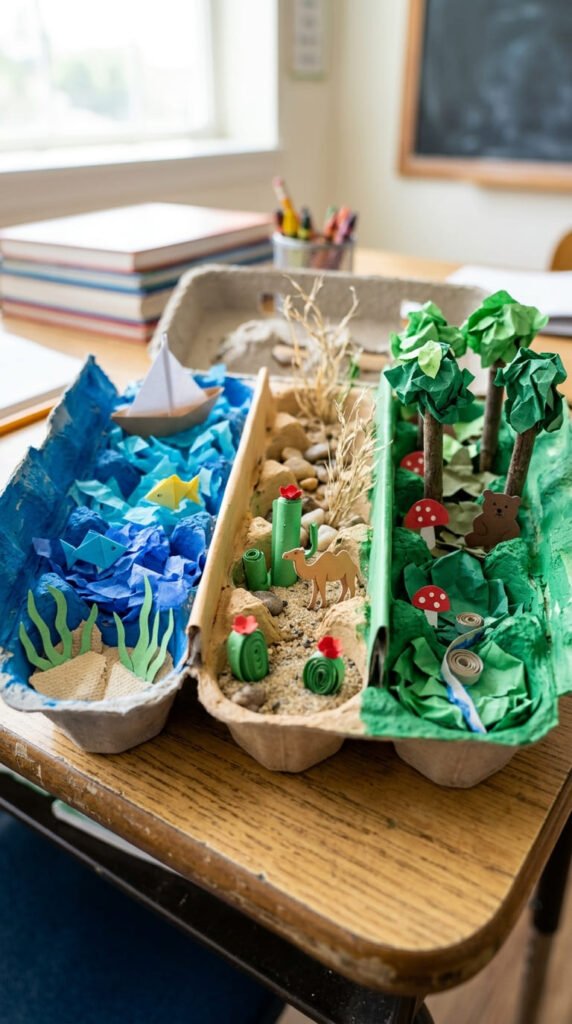
Paint each cup of an egg carton a different color to represent a separate ecosystem, like blue for ocean or green for forest, then add small paper cutouts of plants and animals inside each section. This project pairs with a science unit on habitats and biomes, letting students represent several ecosystems in one compact project. Prep takes about five minutes to hand out cartons and materials. Building time runs about 30 minutes, since painting and detailing each section takes longer than a single-scene craft. This project works well as an individual assignment, since each student can choose which ecosystems to represent based on what they’re studying. Pair it with a short written description of each habitat, listing one plant and one animal found there. Ask families to save clean egg cartons a couple of weeks ahead of time to build up enough supply for the whole class to each have their own.
19. Tin Can Pencil Holders
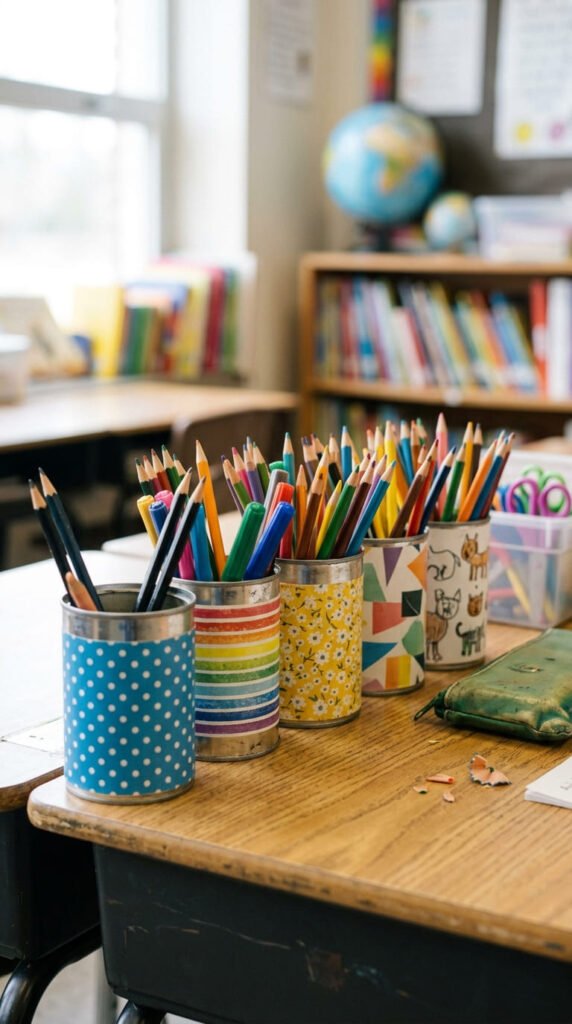
Wash and dry an empty tin can, making sure the edges are smooth, then let students wrap it in colorful paper or fabric scraps and decorate the outside. This project turns kitchen recycling into classroom storage, giving each student a personalized spot to keep pencils and markers at their desk. Prep takes about five minutes to check that cans are clean and safe to handle, and adults should smooth any sharp edges beforehand. Building time runs about 20 minutes, depending on how much decorating students want to add. This craft works well at the start of a school year, giving each student ownership over a small piece of their desk setup. Ask families to save clean cans like soup or vegetable tins a couple of weeks ahead of the project. Since the base material is free, the only real cost comes from paper or decorating supplies already common in most classroom craft bins.
20. Cardboard Tube Rain Shakers
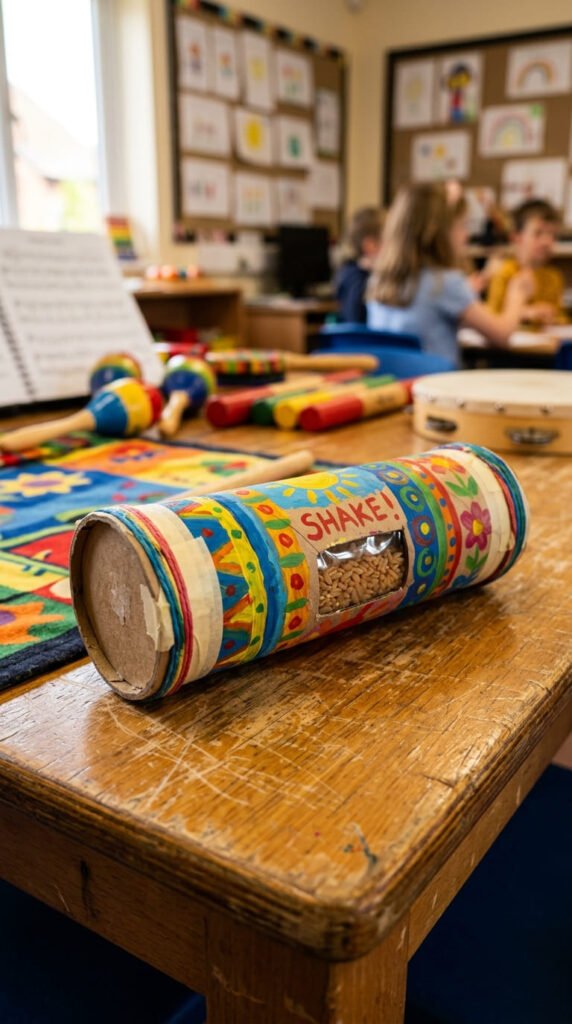
Seal one end of a cardboard tube with tape and a small paper circle, then pour in a handful of rice or dried beans before sealing the other end the same way. Students paint or decorate the outside, then shake the tube to test the sound. This project ties into a music lesson on rhythm and sound, giving students a simple instrument to use during a class song or beat-matching activity. Prep takes about five minutes to gather tubes and filler material. Building time runs about 15 to 20 minutes total. This craft works well as a whole-class project, since every student can build their own shaker at the same table using shared supplies. Compare how different fillers, like rice versus beans, change the sound, adding a small science element to the music lesson. Ask families to save cardboard tubes for a couple of weeks ahead to build up enough supply for the full class.
21. Plastic Bag Weaving Rainbow
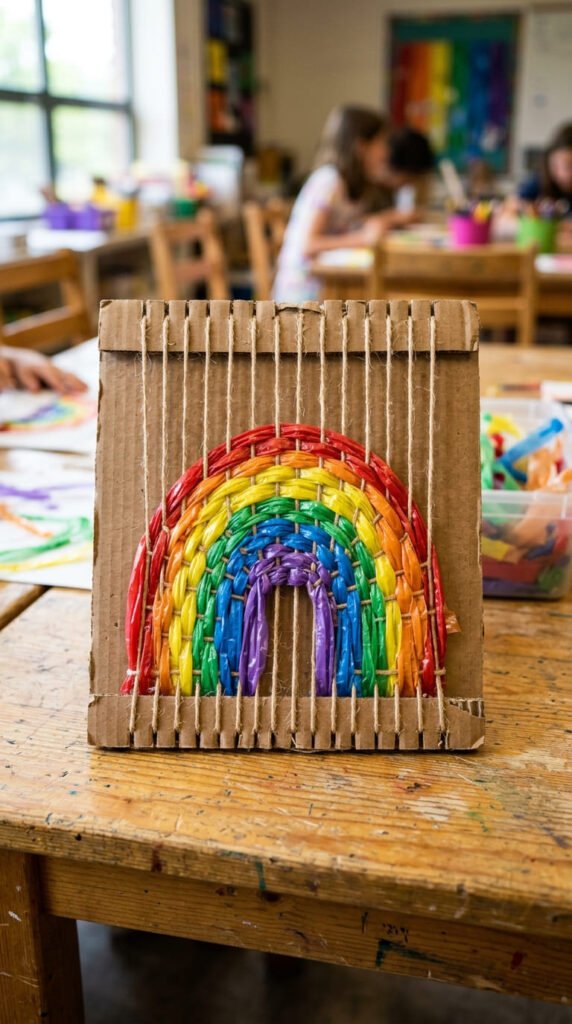
Cut plastic grocery bags into long strips, then weave them through slits cut into a cardboard frame to build a striped, rainbow-colored pattern. This project reuses plastic bags that often pile up unused in a kitchen drawer, giving them a second purpose instead of heading to the trash. Prep takes about ten minutes to cut cardboard frames and bag strips ahead of time. Weaving itself runs about 25 to 30 minutes, since the plastic strips take a bit more patience than paper or yarn. This craft pairs with a lesson on plastic waste and reuse, tying directly into a recycling or Earth Day unit. Students can arrange colors in a true rainbow order or mix them freely for an abstract pattern. Ask families to save clean plastic bags a couple of weeks ahead of the project, since most households collect more than they can use in everyday shopping trips.
22. Class Recycled Sculpture Garden
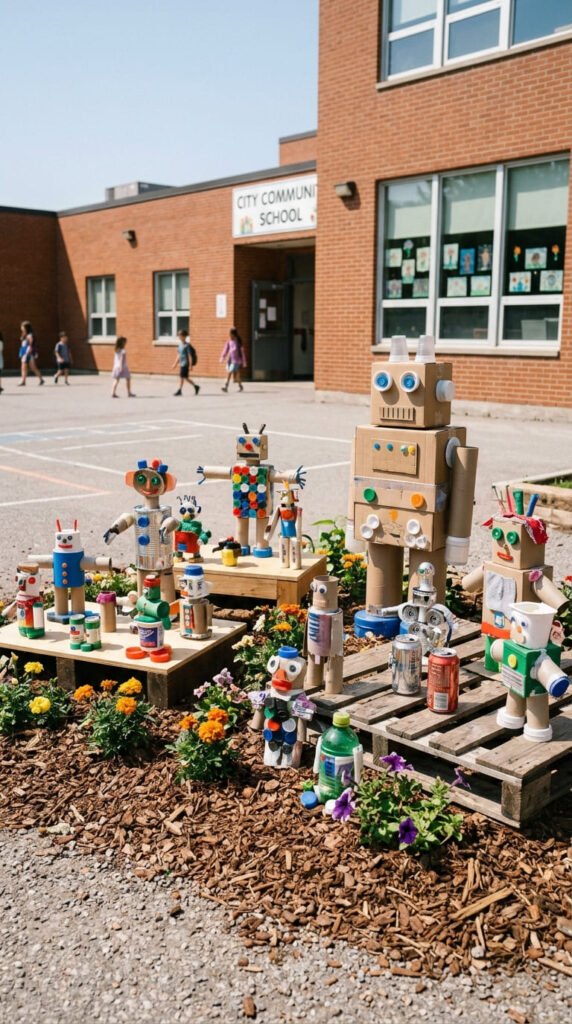
Gather a mix of recycled materials, cardboard, bottle caps, tubes, and cups, and let small groups build their own free-form sculpture using whatever pieces they choose. Once finished, arrange all the sculptures together outside or in a hallway for a shared class display. This project works as a wrap-up activity for a recycling unit, since it combines everything students have learned about reusing materials into one final, collaborative piece. Prep takes about ten minutes to sort supplies into shared bins for each group. Building time runs about 30 to 40 minutes, since group planning and assembly take longer than a solo craft. This project encourages teamwork, since students negotiate design choices with their group before gluing anything down. Pair it with a short walk-through, where each group explains their sculpture’s design and material choices to the class. Ask families to send in a mix of clean recyclables over the two weeks leading up to the project.
Conclusion
Classroom crafts don’t need a big supply order to make an impact. Bottle caps, cardboard tubes, egg cartons, and paper cups already sitting in a recycling bin can turn into science tools, math manipulatives, storytelling props, and full-class art projects. These 22 ideas give teachers a ready supply of low-cost, low-prep options that tie directly into lessons on sustainability, science, math, and literacy. Start a supply collection bin at the front of the room, send a note home asking families to save a few items, and pick a project that matches the time and mess level available for that day. A little recycled material and a class period of hands-on building go a long way toward a lesson students remember.