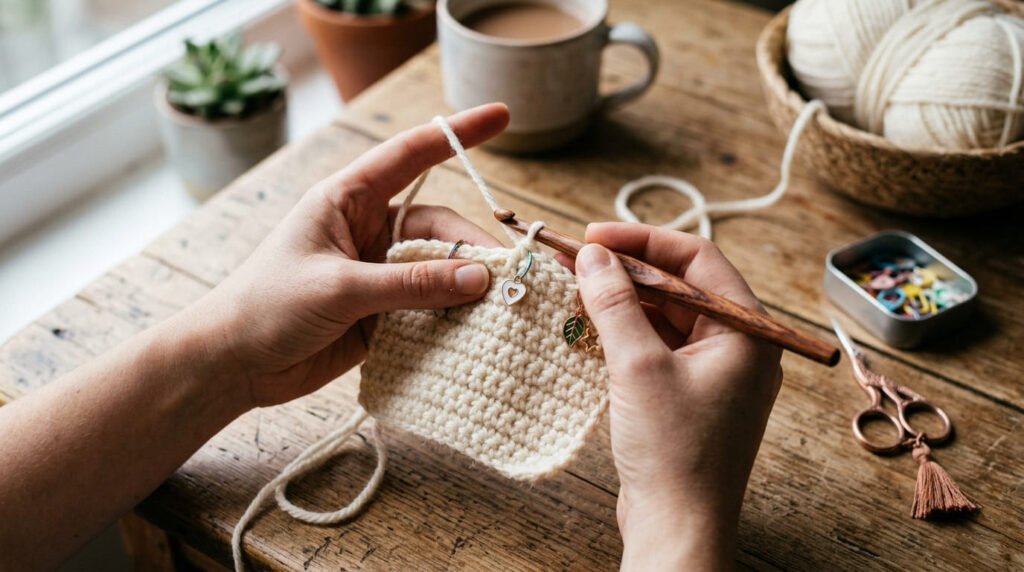
If your hand starts aching after a few rows, your crochet hook might not be the real problem. The way you hold it, guide your yarn, and position your wrist can make crochet feel either smooth and relaxing or stiff and tiring. The good news is that there is no one “perfect” grip. The best crochet hook hold is the one that feels steady, relaxed, and easy for your hand.
Start With the Two Main Crochet Hook Grips
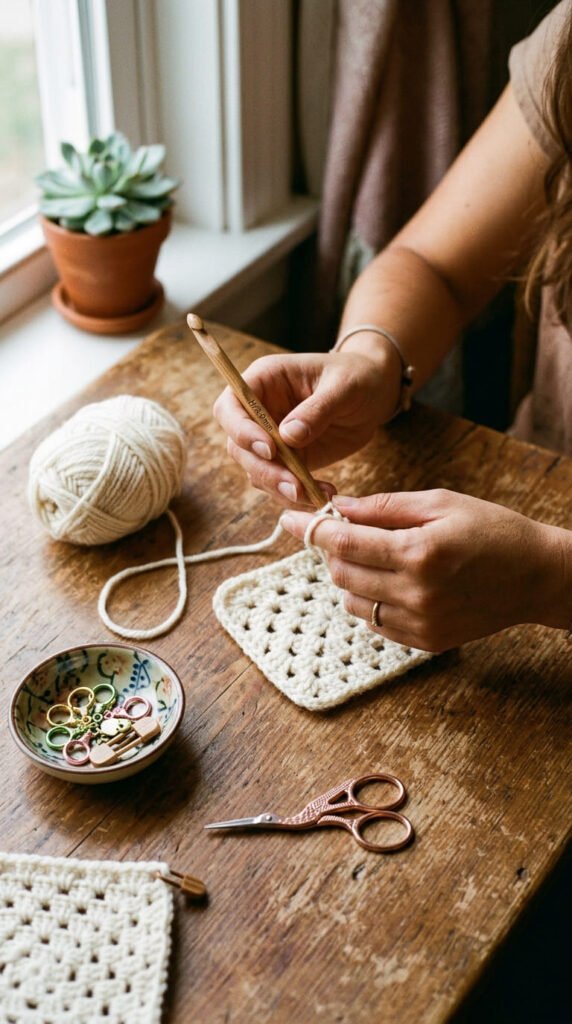
Most crocheters use one of two popular grips: the knife grip or the pencil grip. Both are correct. Your hand shape, project type, yarn, and comfort level will decide which one feels better.
The knife grip feels like holding a table knife. Your hand comes over the hook, and the hook sits under your palm. This can feel stable for blankets, scarves, chunky yarn, and long rows.
The pencil grip feels like holding a pencil. Your thumb and index finger guide the hook, while it rests near your middle finger. This can feel lighter for smaller stitches, lace, amigurumi, or detailed work.
Try this simple test:
- Make 10 chains using the knife grip.
- Make 10 chains using the pencil grip.
- Notice which grip keeps your wrist softer.
- Pick the one that feels easier, not the one that looks “right.”
Your crochet grip can also change over time. Many people start with one hold and naturally adjust as their hands learn the motion.
Try the Knife Grip for More Stability
The knife grip is a great option if your hook feels wobbly or hard to control. Hold the hook from above, with your thumb resting near the flat thumb area of the handle. Let your fingers curve around the hook without squeezing.
The hook should feel secure, but your hand should not feel locked. If your fingers feel stiff, loosen them slightly.
This grip works well when you want larger, steady movements. It can also be helpful when using medium or bulky yarn.
A quick practice drill:
- Hold the hook like a knife.
- Make a loose slip knot.
- Chain slowly for one minute.
- Pause every few stitches and relax your fingers.
If your hook is thin and uncomfortable, add a foam pencil grip around the handle. You can also wrap the handle with soft medical tape or self-adhesive bandage. This cheap DIY trick makes a plain hook easier to hold.
Try the Pencil Grip for Light Control
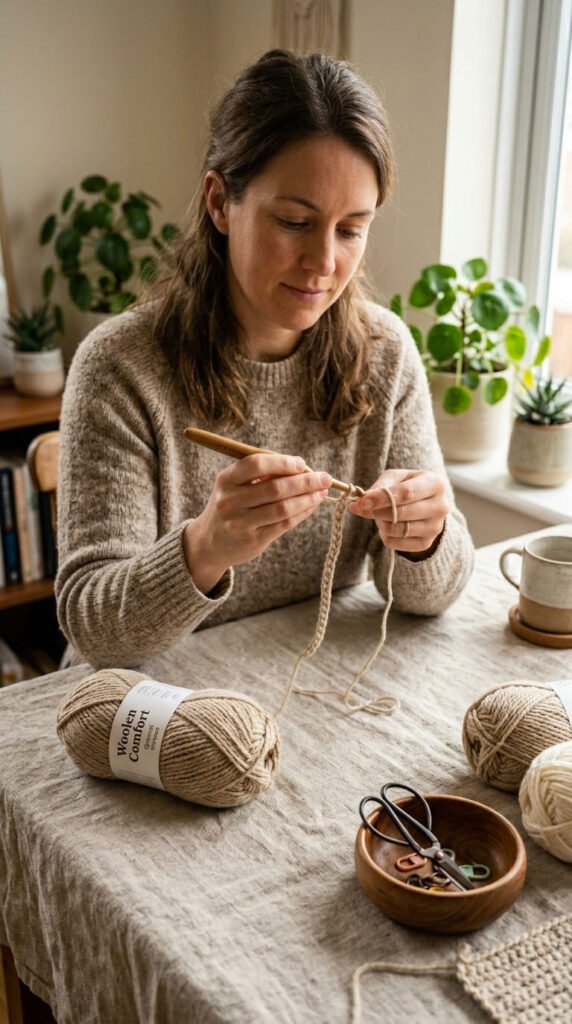
The pencil grip may feel natural if you enjoy writing, drawing, or working with smaller motions. Hold the hook between your thumb and index finger. Let the hook rest near your middle finger for support.
The mistake beginners often make is pinching too hard. Your thumb and index finger should guide the hook, not crush it. If your thumb starts aching, soften your grip.
This hold can work well for:
- Small crochet motifs
- Amigurumi
- Lace-style stitches
- Thin yarn
- Detail work
Try a short row of single crochet using the pencil grip. After the row, shake your hand gently. If your hand feels cramped, try moving your fingers slightly farther back on the hook or switch to the knife grip.
There is no need to force the pencil hold if it feels awkward. Crochet should feel comfortable, not tense.
Point the Hook Slightly Toward You
Hook direction matters. The hook tip should point slightly toward you and toward the working loop. If the hook faces away, it may split the yarn, miss the loop, or force your wrist into an awkward twist.
Avoid pointing the hook straight up or straight down. A small turn toward you usually helps the yarn slide into the hook groove.
Here is a simple way to check your hook angle:
- Insert the hook into the stitch.
- Yarn over.
- Turn the hook slightly toward you.
- Pull the yarn through smoothly.
If the yarn keeps slipping off, check your hook angle before blaming your yarn. A tiny turn can make the stitch much easier.
Keep Your Grip Firm, Not Tight
A tight grip is one of the biggest reasons beginners feel hand fatigue. When you squeeze the hook, your thumb, wrist, and forearm work harder than they should.
Your grip should be firm enough to control the hook but loose enough that your fingers can move. Think of guiding the hook instead of fighting it.
Use this quick check while crocheting:
- Can you wiggle your fingers a little?
- Is your wrist relaxed?
- Are your shoulders down?
- Can the yarn move without tugging?
If the answer is no, pause and loosen your hand.
A helpful habit is to crochet three stitches, relax your fingers, then crochet three more. This trains your hand to stop over-gripping.
Let Your Yarn Hand Do Its Job
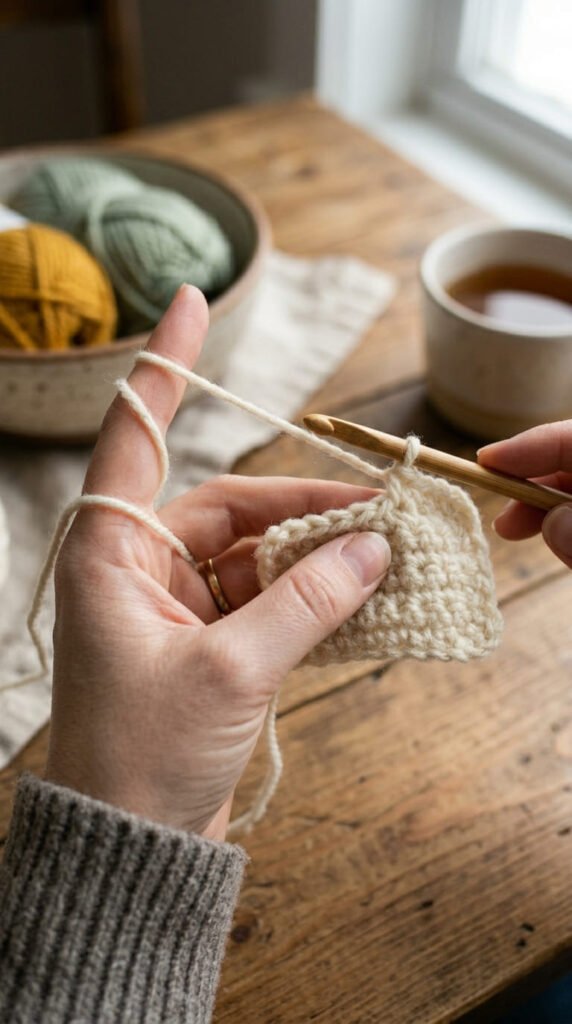
Your hook hand should not do all the work. Your other hand controls the yarn tension and holds the fabric close to the active stitch.
A common yarn hold is:
- Wrap the yarn gently around your pinky.
- Bring it across your palm.
- Drape it over your index finger.
- Hold the project with your thumb and middle finger.
Your index finger works like a tension dial. Move it slightly away from the hook for tighter yarn. Move it closer for looser yarn.
If the yarn keeps slipping, let it rest farther back on your index finger instead of near the fingertip. If the yarn feels too tight, remove one wrap around your pinky.
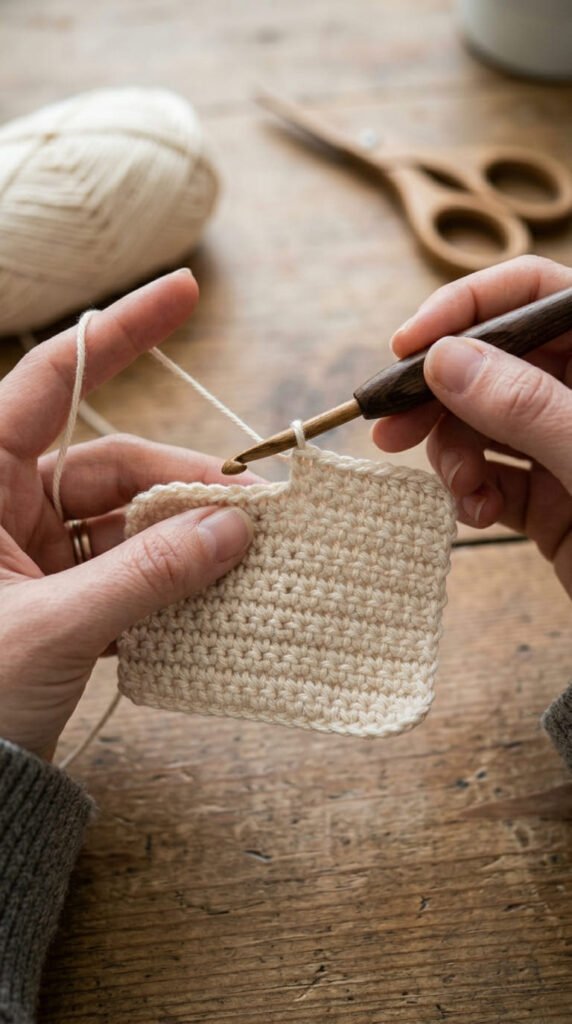
Choose Beginner-Friendly Yarn and Hook Size
Learning is harder when the yarn is dark, fuzzy, slippery, or textured. Start with smooth, light-colored yarn so you can see every stitch clearly.
A good beginner setup is:
- Smooth #4 worsted weight yarn
- Light color like cream, pale grey, or pastel blue
- 5.00mm H/8 crochet hook
- Small practice swatch
If your stitches feel too tight, try going up to a 5.50mm or 6.00mm hook. If your loops feel too loose, try a slightly smaller hook.
You do not need expensive supplies. A basic hook set and one affordable yarn skein are enough for practice.
Take Breaks Before Your Hand Hurts
Do not wait until your hand is sore. Short breaks help you crochet longer with less strain.
Every 15 to 20 minutes, pause and:
- Open and close your fingers.
- Roll your wrists gently.
- Drop your shoulders.
- Rest your hands in your lap.
- Stand up for a moment.
If you feel sharp pain, numbness, tingling, or ongoing discomfort, stop and rest. Crochet should feel calming, not painful.
Final Takeaway
Holding a crochet hook correctly is really about finding a relaxed grip that works for your hand. Try both the knife grip and pencil grip, keep the hook angled toward you, let your yarn hand control tension, and use smooth light yarn while learning. Small changes can make a big difference in hand comfort.
Save this guide for your next crochet session and test one adjustment at a time.