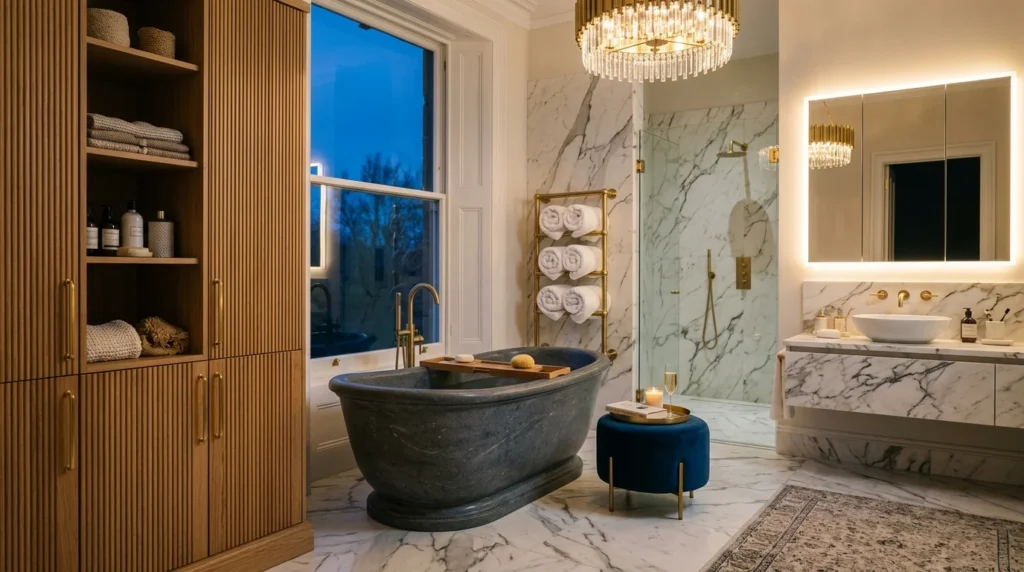
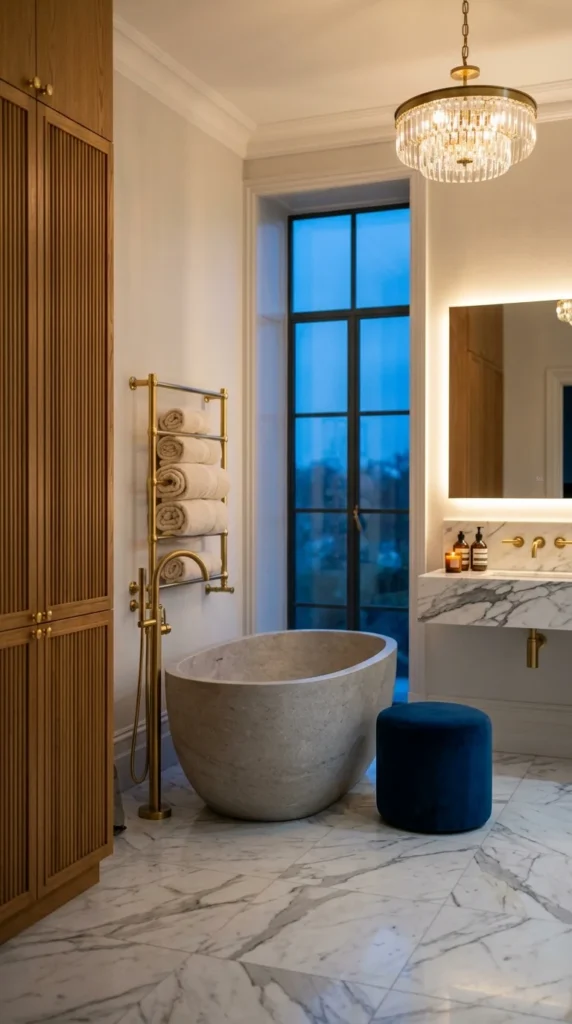
A truly elegant bathroom hides everything you do not want to see and showcases only what feels beautiful. The trick to that hotel-suite ambiance comes down to storage choices most homeowners overlook. Built-in cabinets, fluted vanity fronts, backlit mirrors, hidden ottoman compartments, and curated accessory sets all work together to make even a midsize bathroom feel like a private spa. The 23 ideas below mix designer-level concepts with smart budget swaps so you can build the look at any price point. Some require a remodel. Many you can install over a weekend. Pick the upgrades that suit your space and budget, and watch the room transform from utilitarian to indulgent.
1. Floor-to-Ceiling Built-In Linen Tower
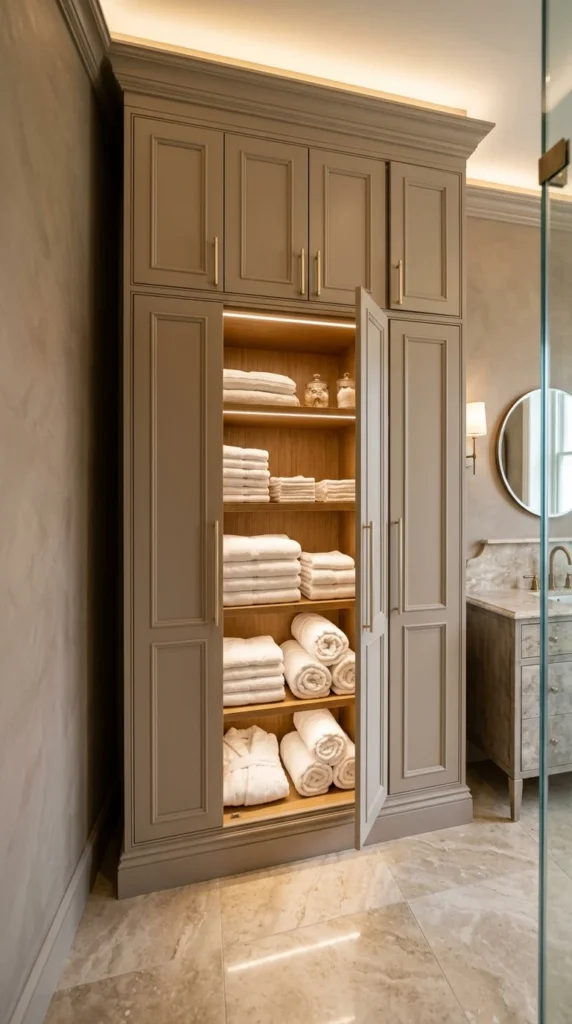
A full-height linen tower turns a blank wall into hotel-grade storage. The unbroken vertical line draws the eye up and makes ceilings feel taller. Inside, adjustable shelves hold towels, robes, sheets, and toiletries in one curated stack.
Plan the tower around your tallest items. Most run 84 inches high and 18 to 24 inches wide. Custom builds cost $1,500 to $4,000. Stock cabinetry from kitchen suppliers cuts that price by half if you can fit standard sizes.
Choose shaker, fluted, or flat-panel doors based on your bathroom style. Soft-close hinges and a push-to-open latch hide the handles entirely for a seamless look. Add interior lighting with motion sensors that switch on when doors open.
Budget angle: a tall freestanding wardrobe from a flat-pack furniture store works as a starter version for $200 to $400. Paint it the same color as your walls so it reads as built-in. Add crown molding at the top to anchor it visually. Floor-to-ceiling storage holds three times what an under-vanity cabinet does. The investment pays off every morning you grab fresh towels without digging through a stack.
2. Backlit Mirror Cabinet With Hidden Outlets
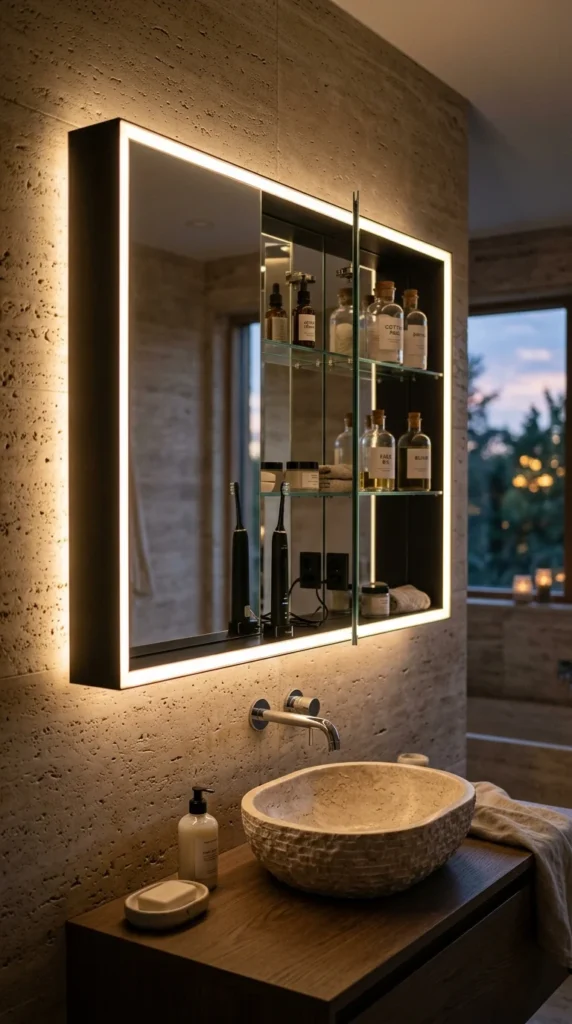
A regular medicine cabinet works. A backlit mirror cabinet with built-in outlets feels like a luxury hotel suite. The light glows from behind the mirror and creates flattering shadow-free illumination for makeup or shaving.
Look for mirror cabinets with adjustable color temperature. The best models swap between warm and cool light depending on mood or task. Interior outlets let you charge electric toothbrushes and razors without cluttering the counter. Cost ranges $400 to $1,800.
Install at eye level for the primary user. The mirror should align with your face when standing. The cabinet typically extends 4 to 6 inches deep, holding most toiletries and small grooming tools.
Cheaper version: a standard mirror cabinet plus a stick-on LED strip behind it creates similar ambient glow for $80 total. Use a USB-powered strip to skip electrical work. Add a slim power strip inside the existing cabinet for outlet functionality. Integrated lighting stops counters from filling up with bulky lighted mirrors. The cabinet does two jobs at once. The cleared counter immediately reads as more upscale.
3. Hidden Push-to-Open Vanity Drawers
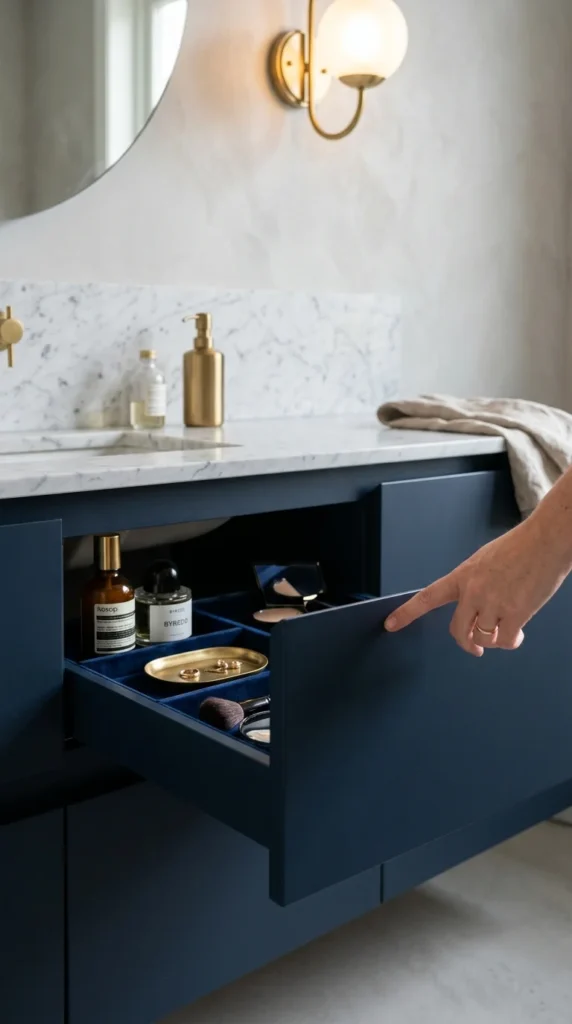
Handles interrupt clean lines. Push-to-open drawers stay perfectly smooth across the front, then pop open with a fingertip tap. The whole vanity reads as one sculptural piece instead of furniture.
Retrofit existing drawers with push-latch mechanisms for $15 each. Remove the old hardware and fill the screw holes with wood filler. Paint or refinish the drawer front. Install the push latch on the inside of the frame. The drawer opens with a gentle press anywhere on the front.
For new vanities, specify push-to-open in your order. Most luxury cabinet brands offer it as an upgrade for $80 to $150 per drawer. The smooth fronts photograph beautifully and make small bathrooms feel less crowded.
Velvet line each drawer interior for an instant luxury feel. Adhesive velvet liner costs $12 per roll and transforms cheap drawers into jewelry-quality compartments. Cut to fit and press in place. Handleless vanities read as custom even when assembled from stock cabinets. The trick costs little but reads as deeply considered design. Combined with marble or quartz counters, the look easily passes for a high-end remodel.
4. Vanity With Internal Outlet Drawer
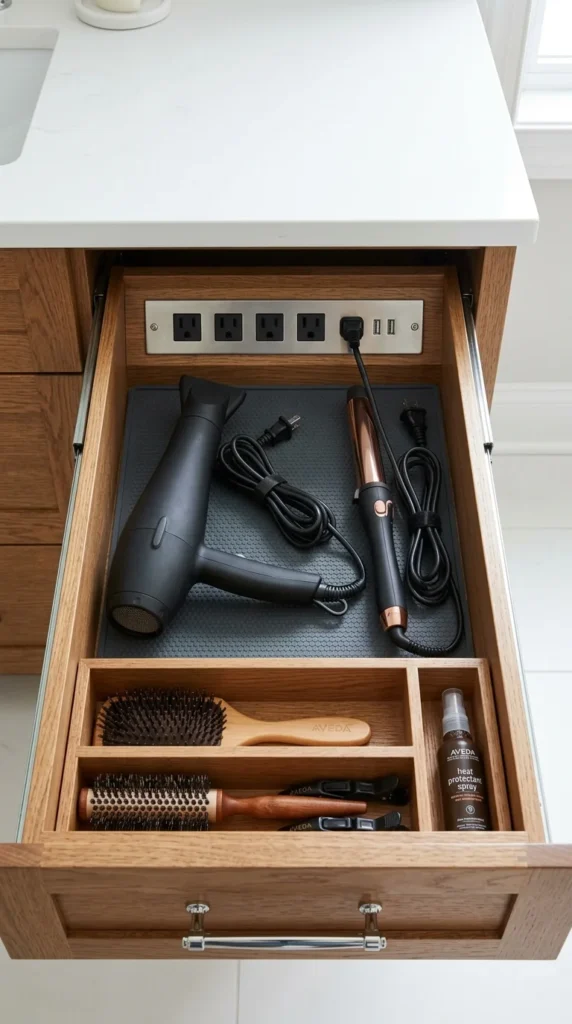
Hair tools strewn across a marble counter destroy the spa look instantly. A drawer with internal outlets stores them plugged in and ready, completely hidden when closed. Open the drawer, use the tool, close it when done.
Hire an electrician to add a GFCI outlet inside a vanity drawer. The job runs $200 to $500 depending on access. The outlet usually mounts on the back wall of the drawer cavity so cords stay tucked behind tools.
Line the drawer bottom with a heat-safe silicone mat or marine-grade rubber. This protects the wood from hot tools placed inside too soon after use. Wind cords with velcro ties to keep them tangle-free.
Wait-and-see budget version: a heat-safe mat plus a power strip mounted to the inside wall of a regular drawer skips the rewiring. Total cost under $40. Pass the strip’s cord through a small hole drilled in the cabinet back to reach an existing outlet. Plugged-in storage clears counters faster than any other upgrade. Bathrooms photographed for real estate listings always benefit from this hidden trick. Buyers notice clean surfaces even if they cannot name why.
5. Walk-In Linen Closet With Glass Door
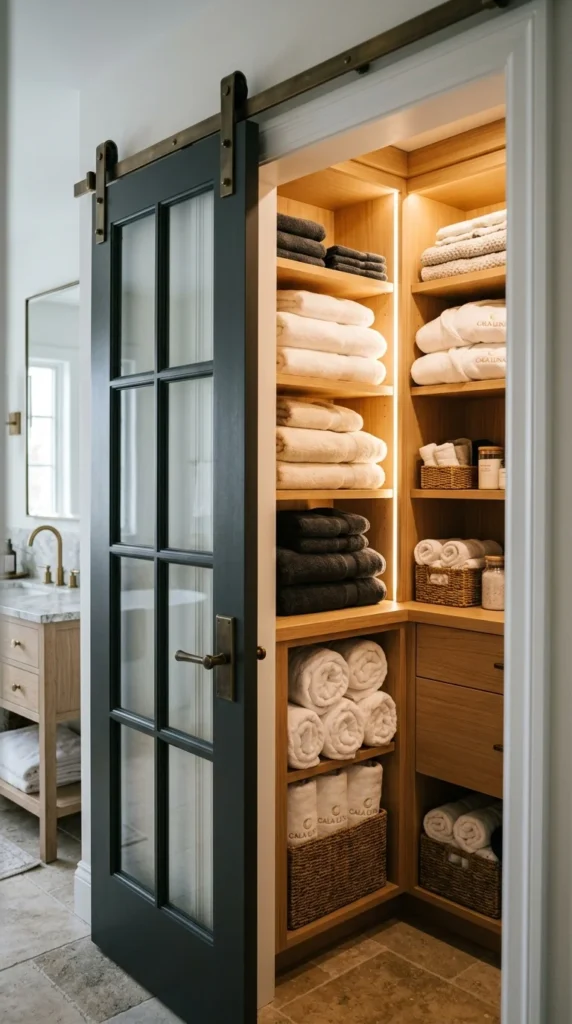
If you have an unused closet near the bathroom, convert it into a dedicated linen room. Glass doors keep the contents visible and curated like a boutique. Adjustable shelving fits anything from bath sheets to candles.
Strip the closet to bare walls. Install adjustable shelf brackets and solid wood or melamine shelves. Add interior LED lighting on a motion sensor. The whole conversion runs $300 to $1,200 depending on materials and electrical work.
Style the shelves with intention. Group items by category and color. Rolled white towels on one shelf. Stacked robes on another. Glass jars of bath salts on a third. The visual rhythm makes the closet itself feel like decor.
Renter alternative: a glass-front armoire from a vintage store performs the same function. Expect $200 to $600 for a quality piece. Place it in the bathroom or hallway. Glass-front storage lets you see and grab without rummaging. The curated look photographs well and adds gallery-style visual interest to the bathroom. The whole feature reads as deeply intentional storage rather than utility.
6. Fluted Cabinet Fronts for Texture
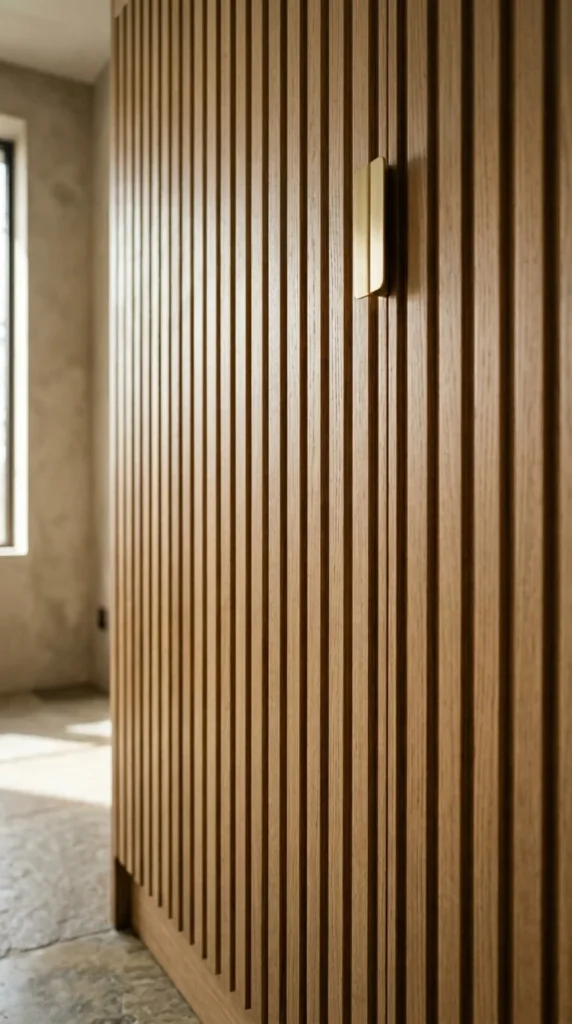
Flat cabinet fronts feel basic. Fluted or reeded fronts add vertical texture that catches light and creates depth. The visual interest takes a plain vanity into editorial territory.
Order fluted door fronts from cabinet refacing companies for $50 to $200 per door depending on size and material. Choose oak, walnut, or painted MDF based on style. The vertical lines elongate the cabinet visually and pair well with marble counters.
DIY route: half-round wood molding strips glued in vertical rows across existing cabinet doors recreate the fluted look. A pack of molding strips costs $30 to $50 for an average vanity. Apply with construction adhesive, fill gaps with wood filler, prime, and paint.
Maintain the fluted surface with a soft brush during regular cleaning. Dust collects in the grooves but lifts away easily. Textured fronts photograph beautifully because the grooves create natural shadow play. The vanity stops being a flat box and becomes a sculptural element. The same trick works on closet doors, drawer fronts, and tall cabinet panels throughout the bathroom for design continuity.
7. Pull-Out Hamper Inside the Vanity
A laundry basket sitting in a corner ruins the spa atmosphere. A pull-out hamper inside the vanity hides dirty towels and clothes completely. Open the cabinet, drop in the laundry, close the door.
Buy a tilt-out hamper kit for $40 to $120 at home stores. The kit includes a tilting bin frame and a fabric liner that lifts out for laundry day. Install inside an existing cabinet by attaching the frame to the door interior.
Pick a size that holds three to four days of laundry without overflowing. Linen liners breathe better than plastic and prevent musty smells. Wash the liner monthly with regular laundry to keep it fresh.
DIY for less: a tall fabric laundry bag with handles hung from a hook inside the cabinet works for $15. Pull it out on wash day and replace empty. Less polished but functional. Hidden hampers keep the bathroom photo-ready every day. Guests never see laundry. The trick especially benefits master bathrooms attached to bedrooms where the linen pile would otherwise pollute both spaces. One small change with outsized visual impact on overall room feel.
8. Marble Countertop Tower Storage
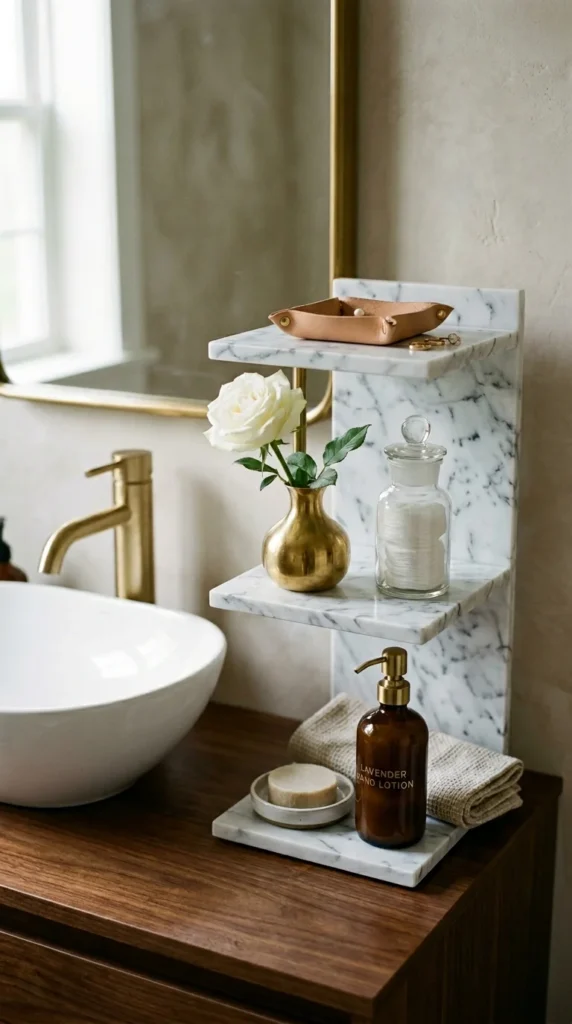
A small marble tower on the vanity counter holds daily essentials in a vertical footprint. Three or four tiny shelves stack what would otherwise sprawl across the entire counter. The tower itself reads as decor.
Look for stone countertop towers at high-end home goods stores for $80 to $250. Marble, travertine, or onyx versions look most upscale. Some come with brass or matte black metal frames for contrast.
Stock the tower with curated items only. A small tray for daily jewelry. One pretty bottle of face oil. A single rolled hand towel. Anything more crowds the look. The under-stocked approach reads as expensive even when items underneath are basic.
DIY tower: three small marble cheese boards stacked using brass plumbing pipe risers between them. Marble boards run $15 each at home stores. Brass risers from a hardware store add $20. Total cost about $65 for a custom version that matches the room. Vertical staging keeps essentials reachable while clearing surface area. The eye perceives less clutter even though storage capacity stays the same. The illusion is the upgrade.
9. Hidden Toilet Roll Niche
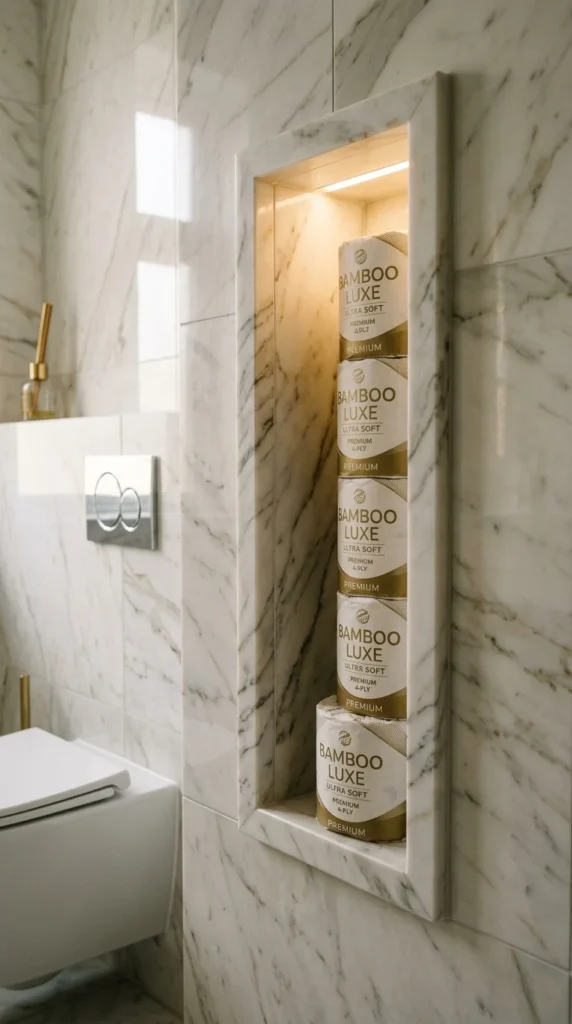
Toilet paper holders sticking out from the wall always look slightly utilitarian. A recessed niche tucks the rolls into the wall itself. The toilet area instantly feels designed rather than functional.
Plan a niche during a remodel or renovation. The space between studs holds four to six standard rolls vertically. Frame in the niche before tile goes on the wall. Tile the interior to match surrounding surfaces for the cleanest look.
Add LED strip lighting along the top inside edge of the niche. The soft glow draws attention to the recessed feature and makes the toilet zone feel intentional rather than ignored.
Renter version: a wall-mounted brass shelf above the toilet holds a stack of rolls behind a small ledge. Cost runs $30 to $60. Less integrated than a true niche but still classier than a single roll on a standard holder. Recessed storage removes visual interruptions from the wall plane. The toilet area joins the design language of the room instead of standing apart. Small details like this separate spa bathrooms from regular ones in real estate photography and showroom design.
10. Velvet-Lined Jewelry Drawer
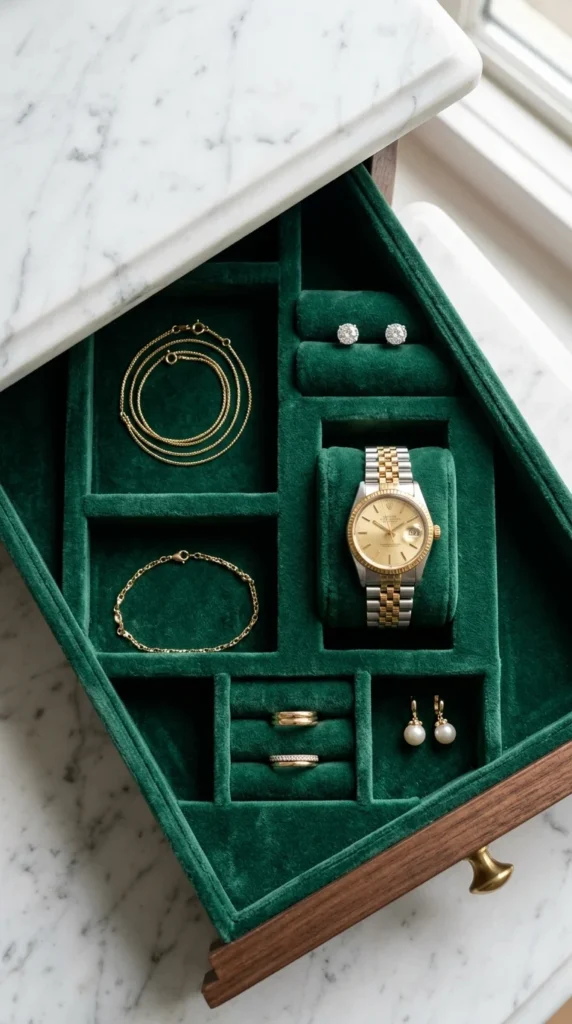
Bathroom jewelry storage usually means a tangled pile on the counter. A dedicated velvet-lined drawer transforms it into a jewelry box hidden inside the vanity. Open and close discreetly without leaving valuables visible.
Buy adhesive velvet liner for $12 to $25 per roll. Cut to fit the drawer bottom and walls. Press in place. Add small fitted compartments from a craft store to organize rings, earrings, and chains separately. Total project under $50.
Use the velvet drawer only for jewelry you wear in or near the bathroom. Watches, daily rings, earrings, and chains. Keep heirloom or high-value pieces in a proper safe elsewhere in the house.
Color-coordinate the velvet with the bathroom palette. Cream velvet for warm-toned rooms. Deep navy or emerald for cooler palettes. The hidden touch surprises anyone who opens the drawer. Layered drawer design turns boring storage into a personal vault. The same technique works in linen drawers for delicate silks or in countertop tower drawers for small daily accessories. The luxury reveals itself only to the user, which somehow makes it feel even more upscale.
11. Tall Pull-Out Tray Cabinet
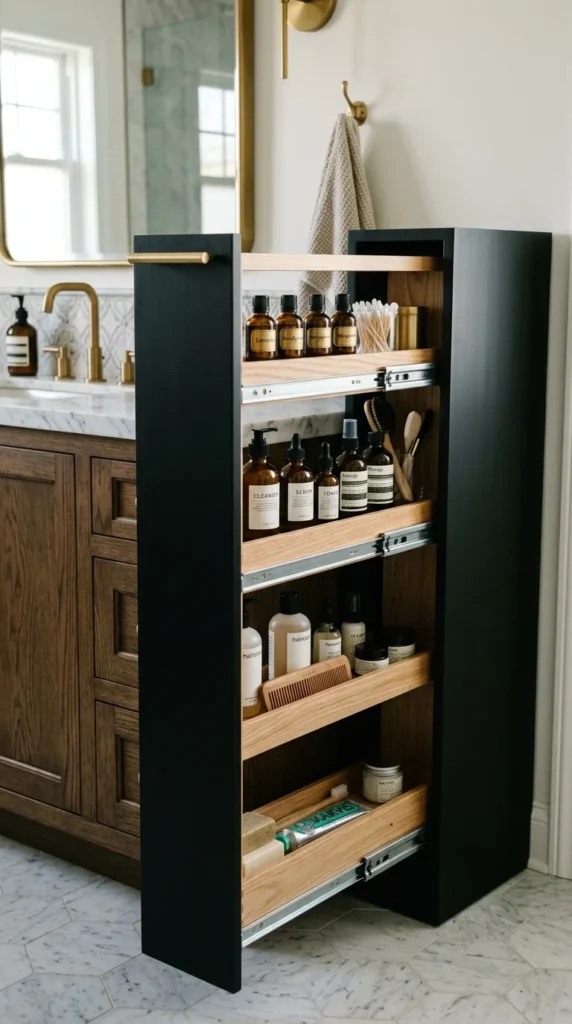
A narrow tall cabinet with pull-out trays solves the storage problem of small bathrooms. Items stay sorted and accessible without taking up much floor space. The whole unit slides out like a chef’s pantry.
Order a pull-out cabinet from custom or stock cabinet suppliers for $300 to $1,200. Look for soft-close mechanisms and four to six trays. The cabinet typically measures 9 to 18 inches wide and full vanity height.
Stock each tray by category. Skincare on one. Hair products on another. Dental items on a third. Cleaning supplies on the bottom. Pull out only the tray you need at any moment.
Budget hack: a slim rolling cart from a discount home store fits the same niche for $40 to $80. Tuck it beside the vanity. Pull it out for use, push back when done. Less integrated but the same functional concept. Pull-out trays keep daily routines smooth because everything you reach for has a fixed home. Add small brass tags engraved with category names for extra luxury detail. The cabinet stays clean even after years of use because the system makes putting things back automatic.
12. Recessed Wall Cabinet Behind the Toilet
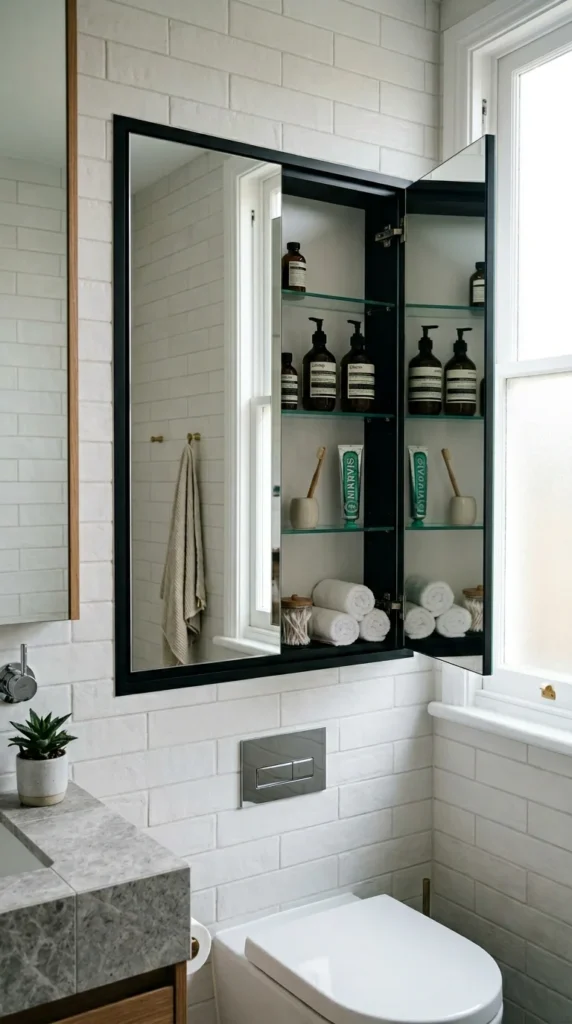
The wall above the toilet usually holds a generic floating shelf or print. A recessed cabinet hidden in the wall itself holds three times the storage in the same space. The mirror or paneled front blends with surrounding walls.
Recessed cabinets require an open wall cavity, which means installation during a remodel or by cutting into existing drywall. Cost runs $300 to $1,200 depending on size and finish. Standard sizes fit between studs without major framing changes.
Choose a mirrored front to reflect light and make the room feel larger. Frosted glass or paneled wood work in spaces where you do not want another mirror. Soft-close hinges prevent door slamming.
Stock the cabinet with backup supplies, medication, and items you do not need to grab daily. The semi-hidden location works for quarterly-use items rather than daily essentials. Wall-recessed storage uses depth that most bathrooms ignore. The standard 4-inch wall cavity holds a surprising amount when used properly. The above-toilet location keeps things accessible without crowding the vanity zone where you spend most morning routine time.
13. Open Shelf With Single Statement Stack
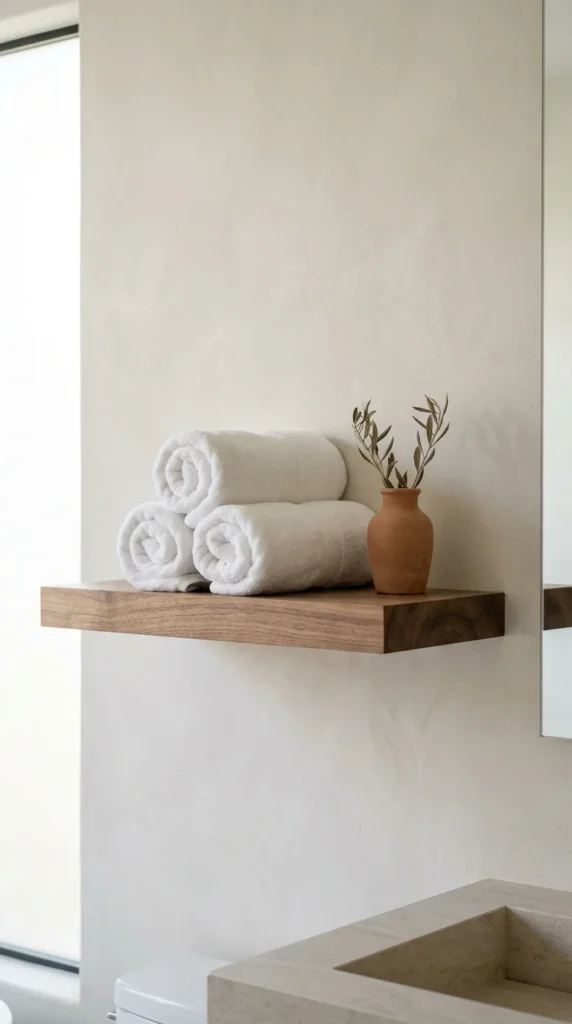
Open shelves filled with stuff look messy. One open shelf with three items styled with restraint reads as gallery-level intentionality. The negative space around the objects becomes the design.
Install one solid wood floating shelf at chest height. Walnut, white oak, or marble all work. The shelf should look substantial, around 18 to 24 inches wide and 8 to 12 inches deep. Cost runs $40 to $200 with hidden bracket installation.
Style with the rule of three. Three rolled towels. Or one large item, one medium, one small. Group by texture and color rather than function. Pure white towels plus a single terracotta object plus a green plant creates timeless balance.
Maintain the styling. Resist the urge to add new things over time. Replace items only when you actively replace the previous one. Curated open storage demands editing more than buying. The harder part is what you leave off the shelf, not what you put on it. This single-shelf principle works in any bathroom regardless of size or budget. Disciplined minimalism is the only style that always reads as expensive.
14. Underfloor Heated Linen Drawer
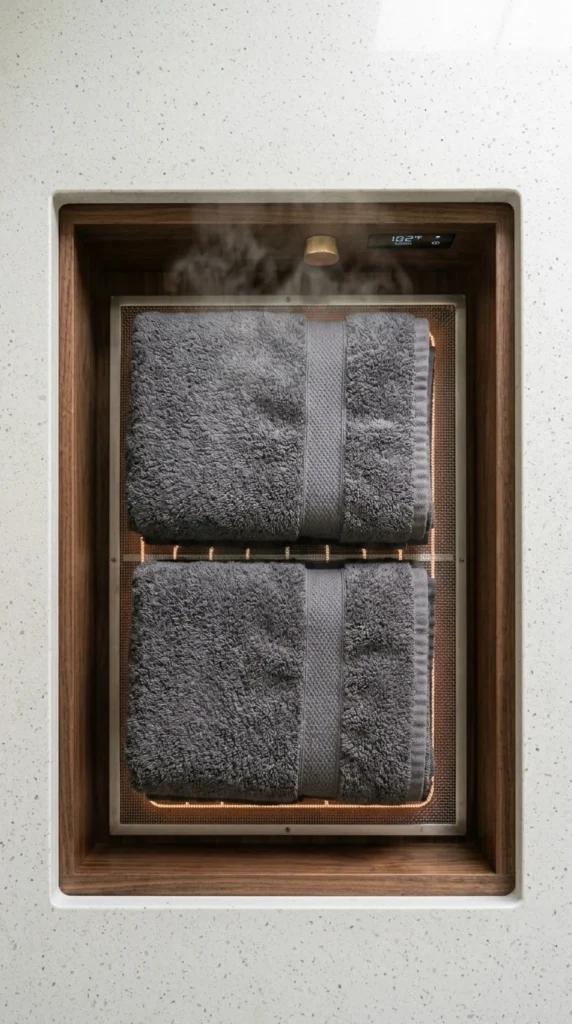
Warm towels after a shower feel like a five-star hotel. A drawer with a built-in towel warmer keeps a small stack of bath sheets toasty all day. Pull out a warm towel after the shower without any timing or planning.
Install a towel-warming drawer during a vanity build or upgrade. The unit costs $400 to $1,200 plus electrical installation. Most operate on standard 120V circuits with a thermostat to control temperature.
Stock the drawer with three to four bath sheets at most. Rotate towels in and out daily so none stay in the heated drawer too long. The constant warming dries out fabric over time if towels never cycle through laundry.
Wait-and-see version: a freestanding plug-in towel warmer holds the same number of towels for $80 to $200. Place it near the shower or tub. Less integrated but same comfort. Heated linens feel surprisingly luxurious for a fairly minor expense. The detail registers immediately when someone steps out of a steamy shower onto cold tile. The hospitality-level touch sets a private bathroom apart from any standard residential space.
15. Mirror-Front Robe and Bag Niche
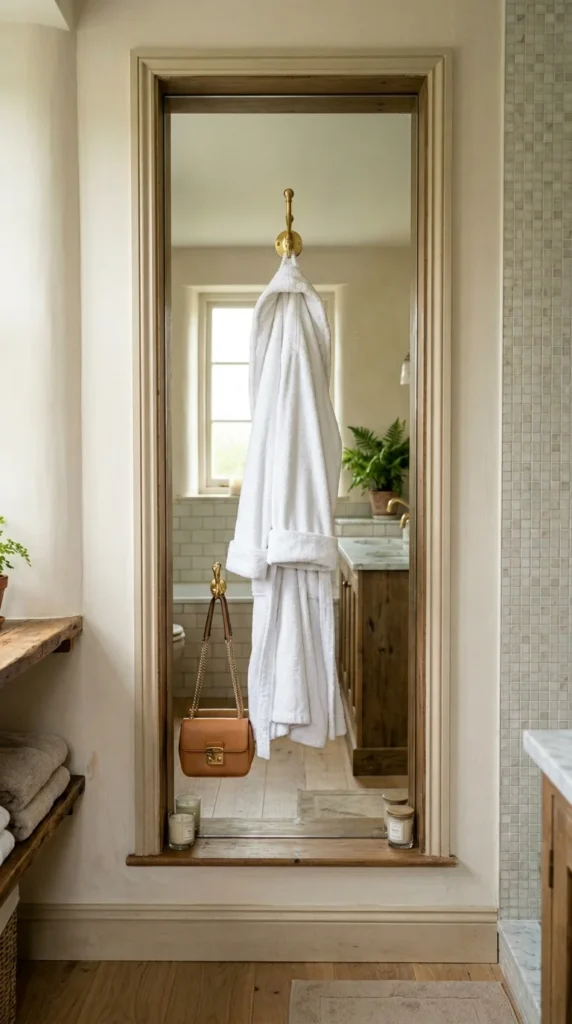
Robes draped on towel bars take up valuable hanging space. A dedicated robe niche carved into the wall holds your robe and bag completely concealed. The mirrored back makes the alcove feel deeper and brighter.
Plan the niche during a renovation for $500 to $1,500 including framing and finishing. The space measures roughly 24 inches wide, 60 inches tall, and 8 inches deep. Install a single brass hook for the robe and a smaller hook for a bag below it.
Add an LED light at the top inside edge. The light should shine down warm and dim, like spa lighting. Set it on a motion sensor that activates when someone approaches the niche.
Without renovation: a tall wall mirror plus two brass hooks creates a similar effect at the surface. The robe hangs against the mirror without indenting into the wall. Total cost $80 to $200. Dedicated robe storage keeps hooks free for daily towels and clears towel bars of permanent fixtures. The space reads as a hospitality moment when designed deliberately. Hotels do this kind of thing constantly. Bringing the trick home elevates daily routine into hotel-style experience.
16. Decorative Brass Tray on Vanity
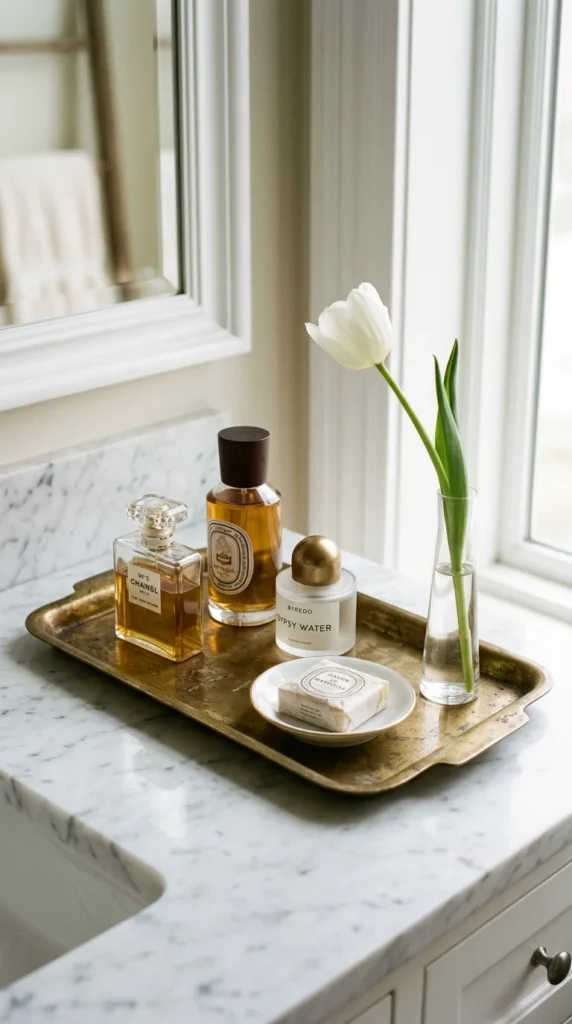
Loose items on a counter look like clutter. The same items grouped on a brass tray suddenly read as a styled vignette. The tray gives the eye permission to see everything as intentional.
Buy an antique or vintage brass tray from estate sales or thrift stores for $20 to $80. Polished or patinated finishes both work depending on style. Look for trays with raised edges to keep items contained.
Group items by category. One tray for perfumes and body sprays. One for daily makeup. One for skincare. Use multiple small trays rather than one giant one for better proportion on most counters.
Polish brass trays with a paste of flour, salt, and white vinegar. Apply with a soft cloth, let sit for ten minutes, wipe clean. Total cost under $1 for a thorough polish. Tray styling is the cheapest luxury upgrade available. A $30 tray plus items you already own creates a magazine-ready vanity in five minutes. The technique works in any room, but bathrooms benefit most because most have no other staging surfaces. The tray turns the counter into curated display.
17. Sliding Cabinet Door Apothecary
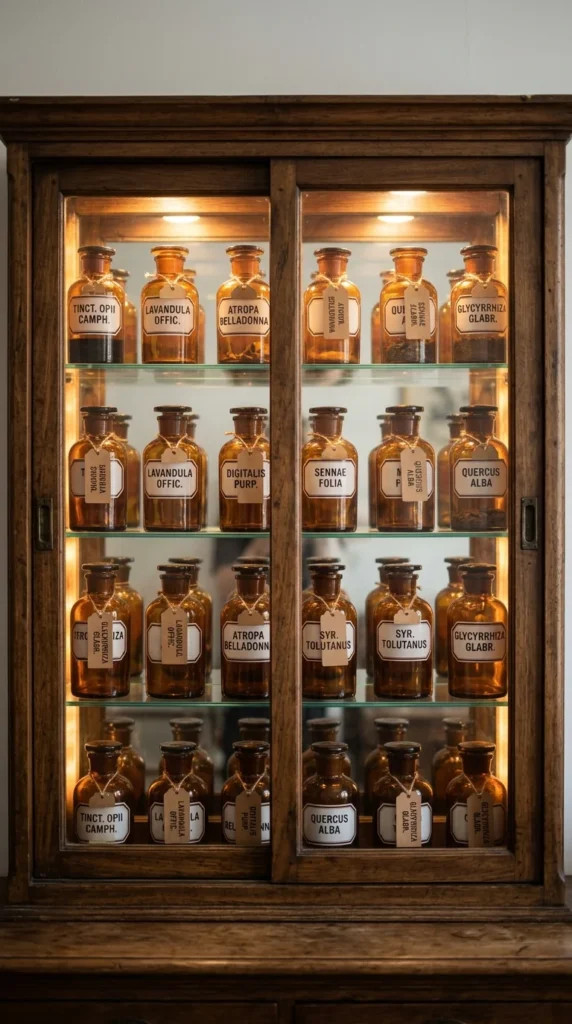
Glass apothecary bottles lined up inside a sliding-door cabinet look like a high-end pharmacy. The visual order calms the eye. The contents stay protected from steam and dust behind the doors.
Buy uniform amber or clear apothecary bottles in sets of 8 to 12 for $40 to $80 total. Standard sizes hold 8 to 16 ounces. Refill from your usual brand bottles. The matching shapes hide the chaos of mismatched commercial packaging.
Add small wooden or metal tags to each bottle. Burn or stamp short labels into the tags. The handcrafted labels look more upscale than printed stickers. Re-tag bottles when contents change.
Sliding doors save space over hinged ones because they do not swing open into the bathroom. Most sliding cabinet sets cost $80 to $300 depending on size. Decanted storage also stops bottles from leaking onto shelves over time. Pump tops on quality apothecary bottles last for years. The cabinet itself becomes a feature of the bathroom rather than a hidden utility. The visual effect carries the whole room toward boutique-hotel territory.
18. Curved Edge Stone Bench With Storage
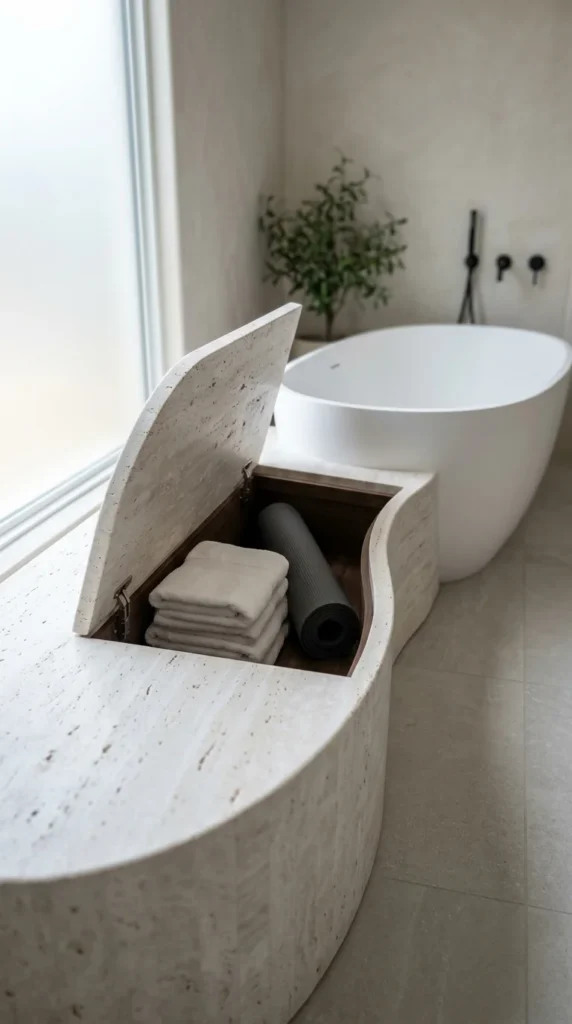
A stone or wood bench by the tub doubles as storage when the seat lifts off. Sit on it to dry feet after a shower. Lift the top to pull out extra towels, candles, or a yoga mat. One piece does two jobs.
Custom stone benches with storage run $1,500 to $5,000. The curved silhouette adds organic shape to a bathroom otherwise full of rectangles. Travertine, marble, or limestone all work depending on style.
Affordable version: a teak bath bench with a lift-up seat costs $150 to $400. The wood resists moisture naturally and reads as spa-like. Add a folded towel on top for cushion when sitting.
DIY route: a vintage trunk on legs makes excellent bath storage if you seal the wood with marine polyurethane. Estate sales sell quality trunks for $50 to $200. The patina adds character no new piece can match. Furniture-grade storage softens the room and makes it feel less utilitarian. The bench also extends seating beyond just the toilet, which matters in larger bathrooms where two people share routines or where someone with mobility challenges benefits from a place to rest mid-task.
19. Floating Vanity With Toe-Kick Drawer
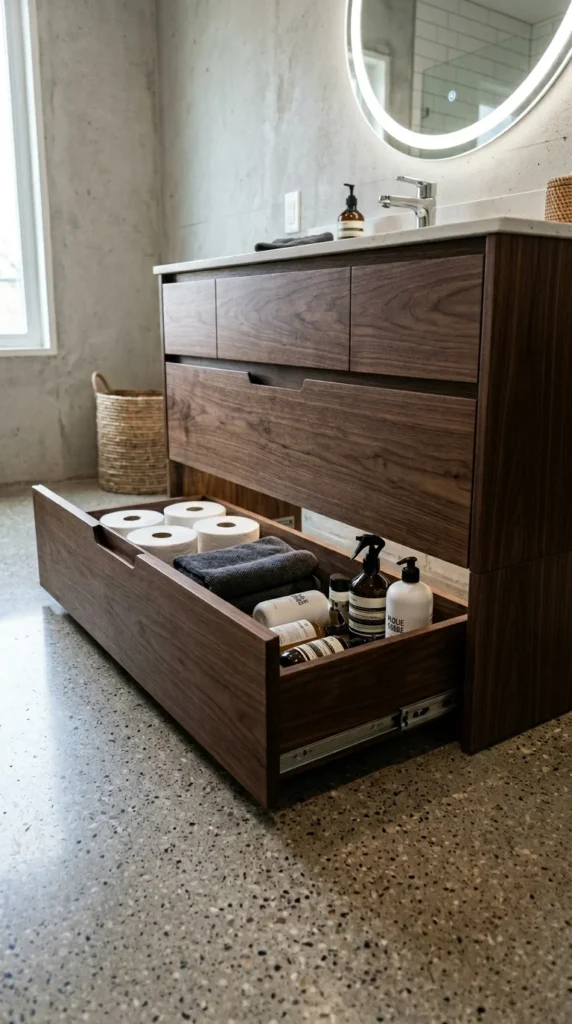
Floating vanities feel airy and modern. Adding a hidden drawer in the toe-kick space below adds storage capacity without sacrificing the floating look. The drawer pulls out where most people see only empty space.
Order a floating vanity with a toe-kick drawer from custom builders or higher-end cabinet brands. Cost runs $1,200 to $4,000 depending on size and material. The drawer typically measures 4 to 6 inches tall and runs the full vanity width.
Use the toe-kick drawer for flat items. Extra hand towels. A scale. Backup paper rolls. Cleaning supplies in slim bottles. The shallow height limits what fits, but the space adds up to real capacity over the full width.
Retrofit version: install a shallow drawer kit into an existing floating vanity for $80 to $200 in materials. The job requires woodworking but no plumbing changes. Bonus storage in unexpected places defines true luxury design. Standard furniture wastes the toe-kick zone completely. Reclaiming it costs little compared to the vanity itself. The room appears the same while holding 15% more stuff. Quiet upgrades like this distinguish design-led bathrooms from purely decorative ones.
20. Built-In Tub Surround Shelving
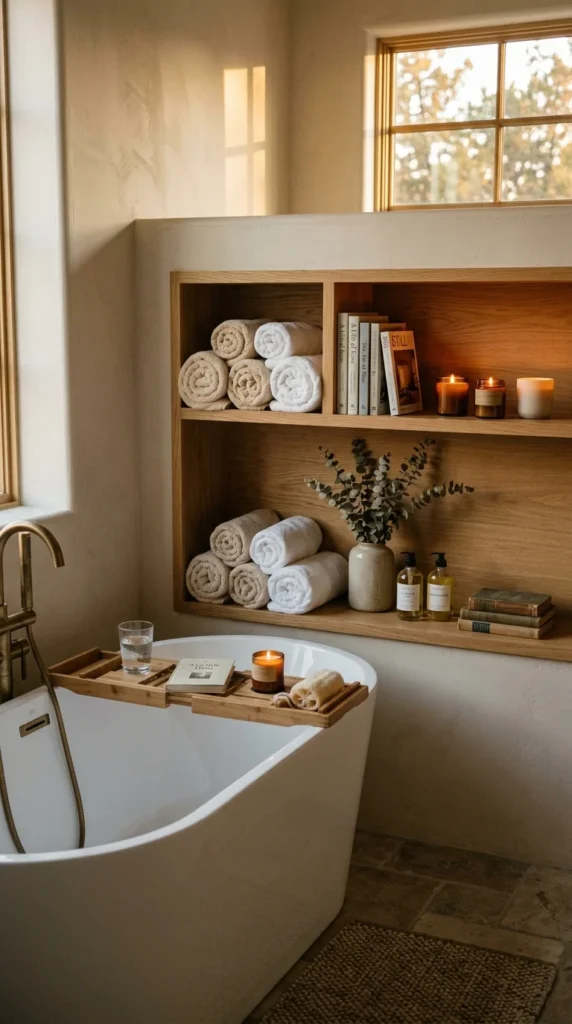
A wall partially built up around a freestanding tub creates a natural shelf at tub-edge height. The shelving holds bath essentials within reach during a soak. The wall itself adds privacy and architectural interest to an open bathroom.
The half wall typically rises 30 to 42 inches and runs the length of the tub. Construction costs $800 to $2,500 including framing, drywall, finishing, and any tile or stone work on top.
Tile the shelf top in matching or contrasting material. Marble or quartz reads most luxurious. Group items at the shelf in three or four small clusters rather than one long row. Candles at one end. A bath caddy in the middle. A folded towel at the other end.
Add a single sconce on the wall above the shelf. Warm dimmable light turns evening baths into spa rituals. Tub-side staging transforms a functional tub area into a destination. The half wall also blocks sightlines from the toilet zone if the bathroom layout requires it. One change handles privacy, storage, and ambient lighting in a single architectural move.
21. Custom-Sized Drawer Inserts
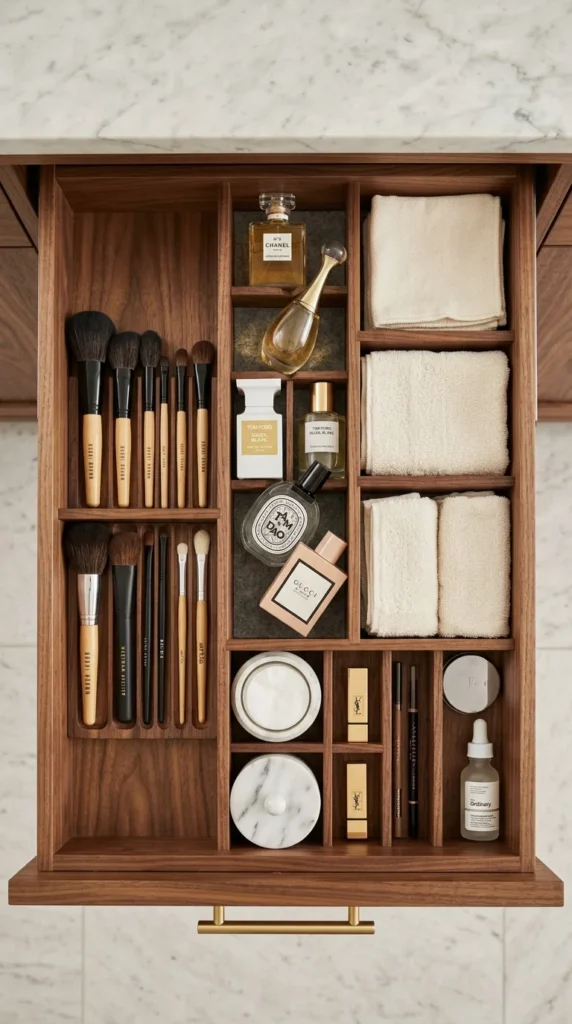
Plastic drawer dividers from box stores work but never feel quite right. Custom wood inserts sized to your exact drawer dimensions transform the storage into jewelry-store organization. Every item has a precise home.
Order custom inserts from local woodworkers or specialty online suppliers. Walnut, oak, or maple all work depending on cabinet finish. Custom inserts run $80 to $400 per drawer depending on complexity and size.
Design the inserts around what you store. Tall slots for perfume bottles. Long shallow trays for makeup brushes. Square compartments for cotton rounds and similar small items. Map out the contents before commissioning the build.
DIY version: cut pieces of solid wood to fit using a miter saw and join with wood glue. A drawer-sized insert costs about $40 in lumber if you do the cutting yourself. Sand smooth and seal with mineral oil. Custom organization earns its luxury label because it reflects how you actually live. Generic dividers force you to fit your stuff into their grids. Custom inserts adapt to your reality. The investment shows in daily use over years.
22. Decorative Ottoman With Hidden Storage
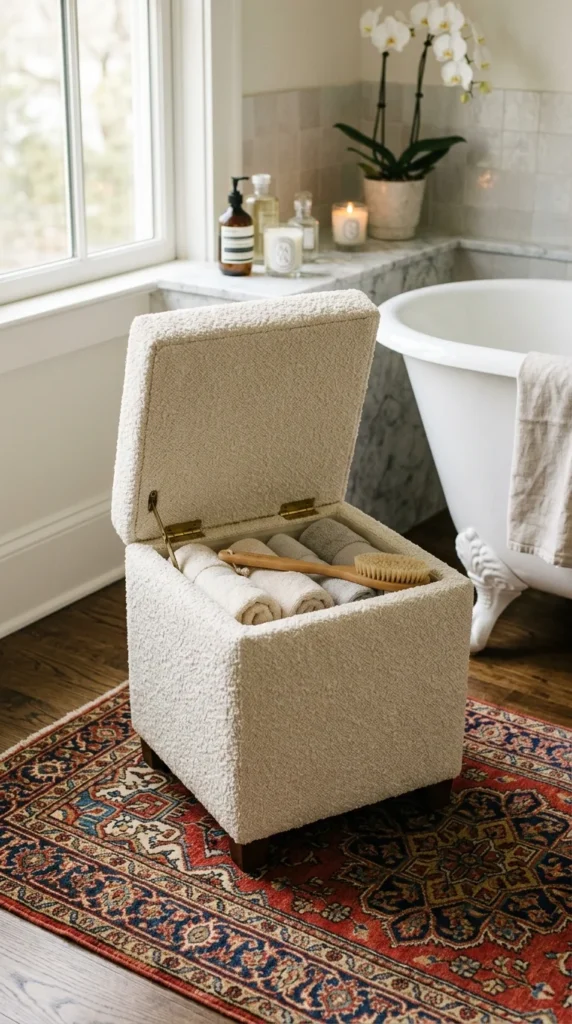
A small ottoman in a bathroom seems decorative until you lift the seat. Inside hides serious storage for towels, magazines, or grooming supplies. The piece functions as seating, a side table, and storage all at once.
Buy upholstered storage ottomans for $80 to $400. Look for sturdy frames with hinged tops. Fabric should resist moisture if the ottoman sits near a tub or shower. Velvet, boucle, or performance linen all work.
Place the ottoman where you actually sit. By the tub for putting on lotion. By the vanity for doing makeup. Use it as a foot rest while polishing toenails. The seating function justifies its presence and the storage adds bonus value.
DIY upgrade: a basic storage cube ottoman from a discount store costs $40. Upgrade the fabric with high-end yardage stapled over the original cover. Total cost $90 for what looks like a $300 piece. Multifunctional pieces are the bathroom version of small living-space furniture. Every item works harder. Anyone with a small bathroom benefits more from a piece that seats, stores, and decorates than from three single-purpose items occupying the same floor area.
23. Glass Door Linen Cabinet With Brass Hardware
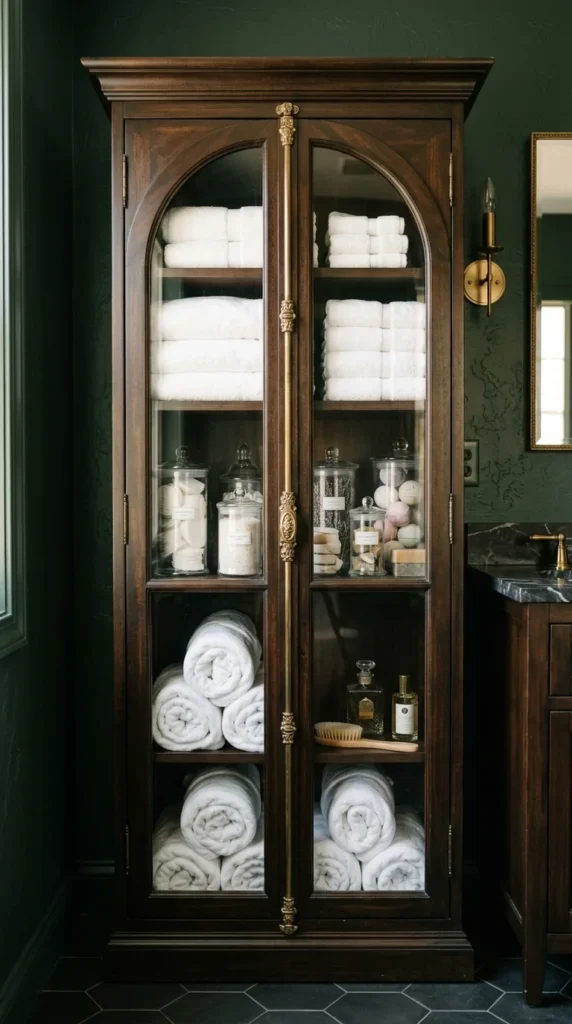
A glass-front linen cabinet shows off your towels and toiletries like a boutique display. The transparency forces you to keep contents tidy, which builds a permanent habit of organization. Brass hardware adds the final luxury detail.
Look for vintage glass-front cabinets at antique stores or estate sales for $200 to $800. Modern reproductions from cabinet companies run $600 to $2,000. Pick a height that fits your bathroom proportion. Most stand 60 to 84 inches tall.
Update hardware to unlacquered brass for the warmest tone. Polished brass tarnishes beautifully over years and develops patina that synthetic finishes cannot fake. Swap out plain knobs for ornate ones for under $50.
Style the interior like a hotel housekeeping display. Identical white towels stacked precisely. Three matching glass apothecary jars on one shelf. A single rolled robe at the bottom. The visual order through the glass becomes part of the room’s design. Glass-front cabinets force restraint. You only keep what looks good through the doors. The forced editing slowly turns the entire bathroom toward minimal luxury.
Conclusion
Luxury bathroom storage is not about spending more. It is about choosing pieces that hide what should be hidden and showcase what looks beautiful. The 23 ideas above cover everything from full remodels to weekend upgrades you can finish before Monday. Start with one project that fits your budget. Maybe a brass tray and three matching apothecary bottles this week. A push-to-open latch retrofit next month. A custom drawer insert when you save up. The cumulative effect builds slowly into a bathroom that genuinely feels like a private spa. Every morning starts smoother. Every evening soak feels more indulgent. The room you live with daily becomes the one that actually feels like home.