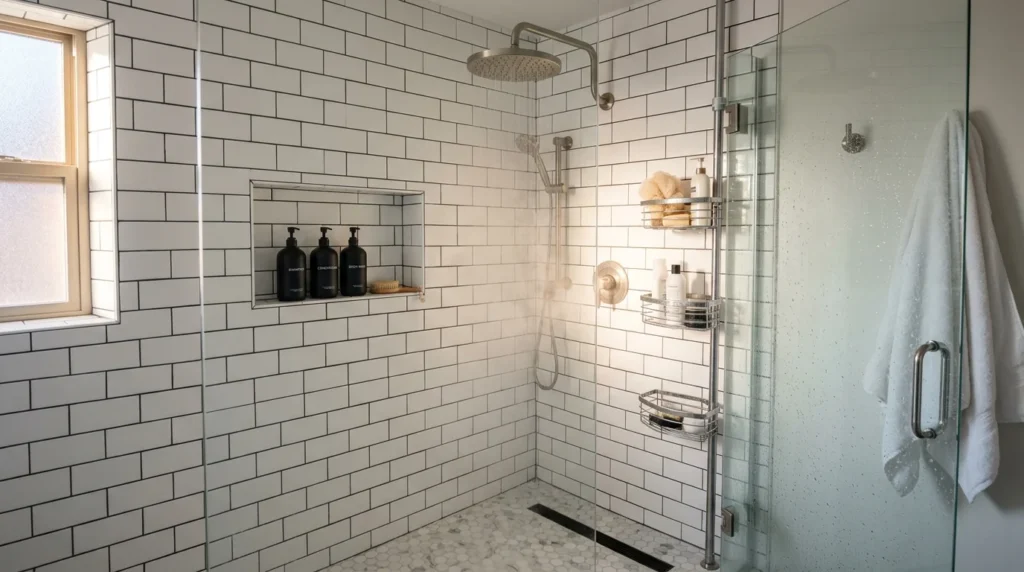
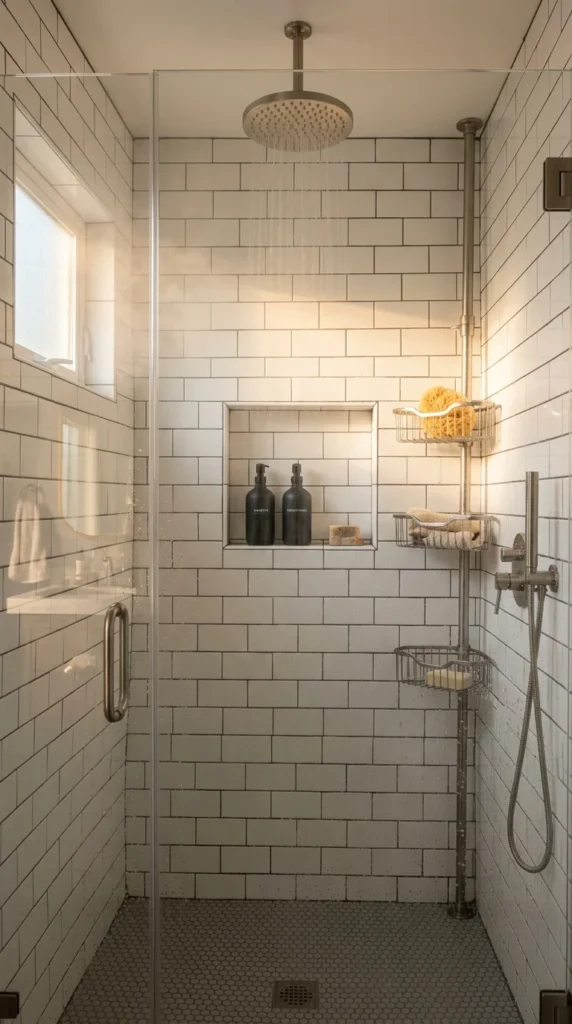
A shower stuffed with tipping bottles and slippery soap bars turns every wash into a hassle. Loofahs end up on the floor. Razors get lost behind shampoo. Kids’ bath toys take over every flat surface. The good news is that fixing this rarely requires breaking tile or hiring a contractor. Smart caddies, suction cups, tension rods, and niche hacks turn cramped showers into clean, calm spaces where everything has its spot. The 22 ideas below cover renters and homeowners, tiny stalls and huge walk-ins, single-person setups and busy family bathrooms. Pick a few that match your situation. Most projects run under $25 and take less than thirty minutes to set up.
1. Recessed Niche Built Into the Wall
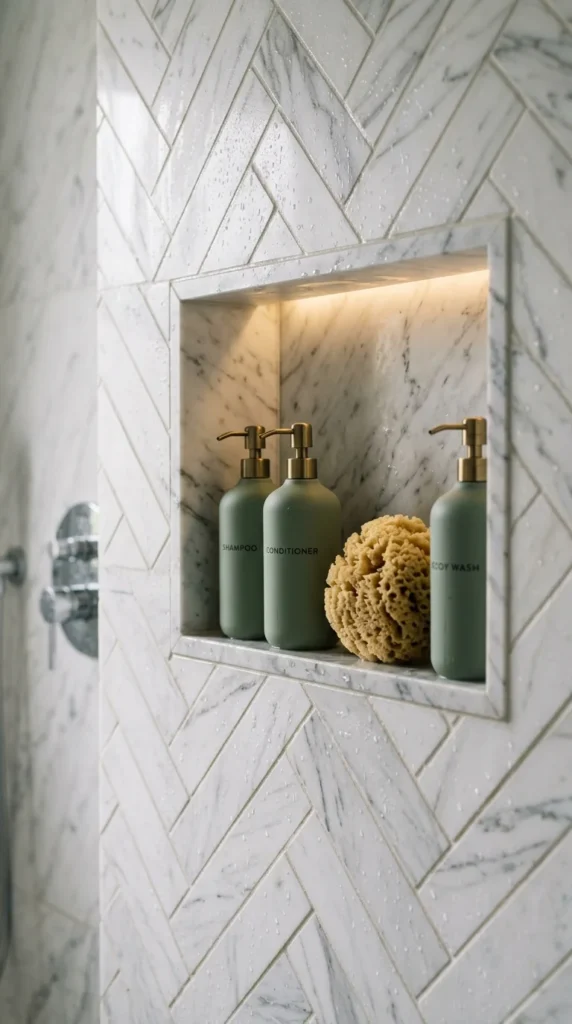
The cleanest shower storage sits flush with the wall. A recessed niche carved between studs holds bottles without sticking out into your elbow space. This works during a new build or full bathroom remodel.
Plan the niche size around your tallest bottle. Most run 12 to 14 inches wide and 24 inches tall with two shelves. Place the center about 48 inches off the floor so it sits at chest height for most adults.
Hire a tile contractor if you are not comfortable with waterproofing. The niche needs proper membrane behind the tile to stop leaks. DIY cost runs $150 to $300. Pro install lands between $500 and $900.
Budget angle: install a single niche during a partial reno when the wall is already open. Skipping the second niche cuts the cost nearly in half. A single well-placed built-in niche holds everything one or two people use daily. The flush design also means nothing falls off when you reach for shampoo. This single feature changes shower function more than any other storage upgrade. Plan it before tile day to avoid retrofitting headaches later.
2. Stick-On Niche Kit for Renters
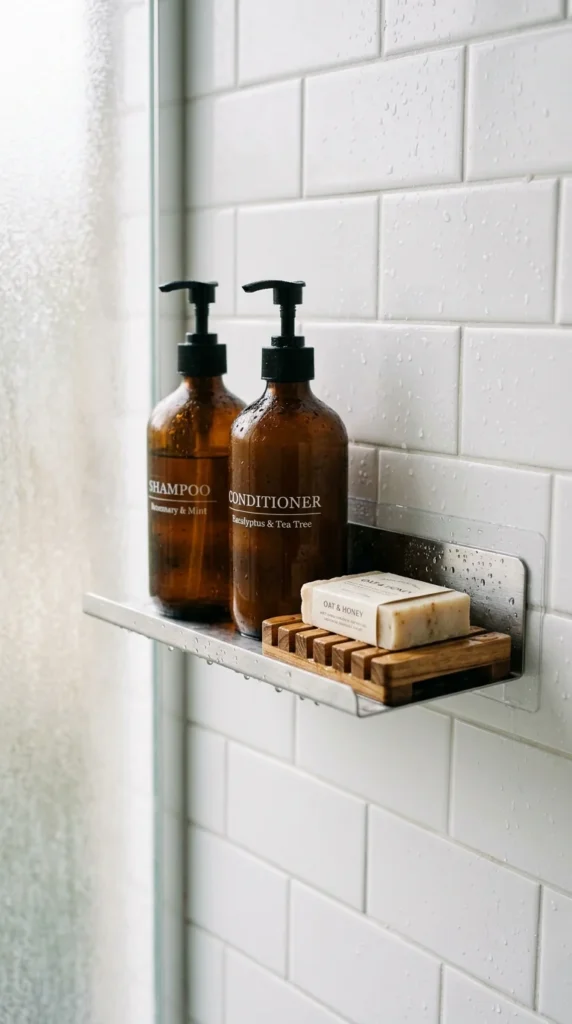
Renters cannot cut into walls. Adhesive niche kits stick onto existing tile and hold real weight. They look almost as clean as built-in versions when installed well.
Buy a stick-on shower shelf for $20 to $40 online or at hardware stores. Most come with industrial adhesive strips rated for wet conditions. Some include a small lip to stop bottles from sliding.
Prep the tile before sticking. Wipe the area with rubbing alcohol to remove soap film. Let it dry completely. Press the shelf hard for thirty seconds. Wait 24 hours before loading any weight.
DIY alternative: a marine-grade silicone caulk can attach a small ceramic shelf directly to tile. Apply a thick bead along the back, press the shelf in place, and tape it level for a full day. Cost runs about $8 in materials. No-drill solutions like this leave zero damage when you move. Remove the shelf later with a fishing line sawed behind the adhesive. The tile cleans up with a bit of goo remover. Your security deposit stays safe and your shower looks finished.
3. Corner Tension Pole With Adjustable Baskets
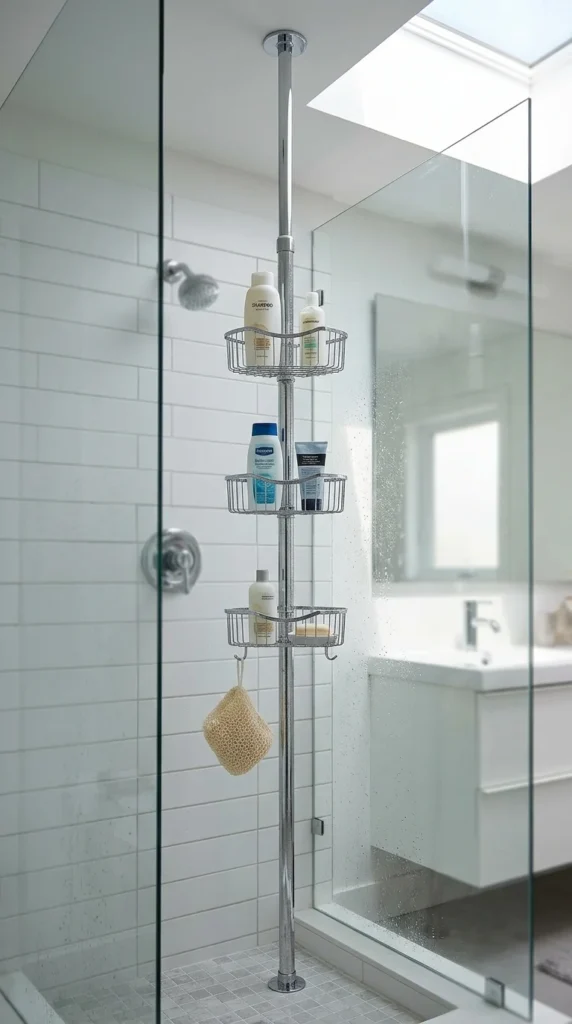
Tension poles wedge between floor and ceiling without screws. They turn an empty shower corner into a four-shelf storage tower. This is the king of no-drill shower storage.
Pick a pole rated for your ceiling height. Most extend between 5 and 9 feet. Stainless steel or aluminum versions resist rust. Plastic ones snap eventually. Expect $30 to $60 for a quality pole with three to four baskets.
Twist the pole to wedge it tight between floor and ceiling. Adjust the baskets to heights that match your routine. Tall bottles go on lower baskets. Small items go higher where you can see them.
Cheap version: a basic spring tension rod plus four caddy baskets gets you halfway there for $15 total. Less stable but does the job in a one-person shower. Vertical storage uses the corner that always sits empty. Once you have a tension pole, you wonder why you ever balanced shampoo on the tub edge. The pole also moves with you to your next apartment, making it one of the smartest rental purchases for any bathroom.
4. Showerhead Hanging Caddy
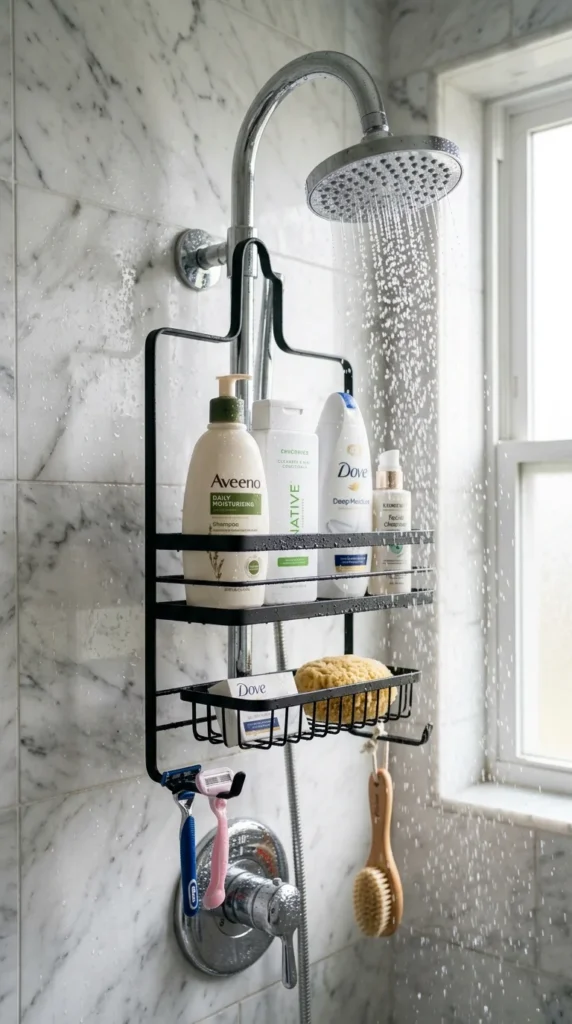
The simplest shower caddy hangs right off your showerhead. No tools, no adhesive, no installation. You hang it and load it up. Done in two minutes.
Look for caddies with rubber-grip arms that wrap the showerhead pipe. They stay put without sliding down. Most have two shelves, several hooks, and slots for razors. Cost runs $15 to $35.
Choose stainless steel or aluminum to avoid rust. Painted caddies chip and look ugly within a year. Open-bottom shelves drain water so products do not sit in soapy puddles.
Budget tip: a wire shoe organizer rack zip-tied to your shower arm works in a pinch for under $5. Not pretty, but functional while you save for something better. Showerhead caddies suit renters and college dorms where every other option is off the table. They hold less than wall-mounted systems but install in seconds. The downside is everything sits behind your head during the shower, requiring a quick turn to grab anything. Suits one-person showers better than family setups.
5. Suction Cup Baskets and Hooks
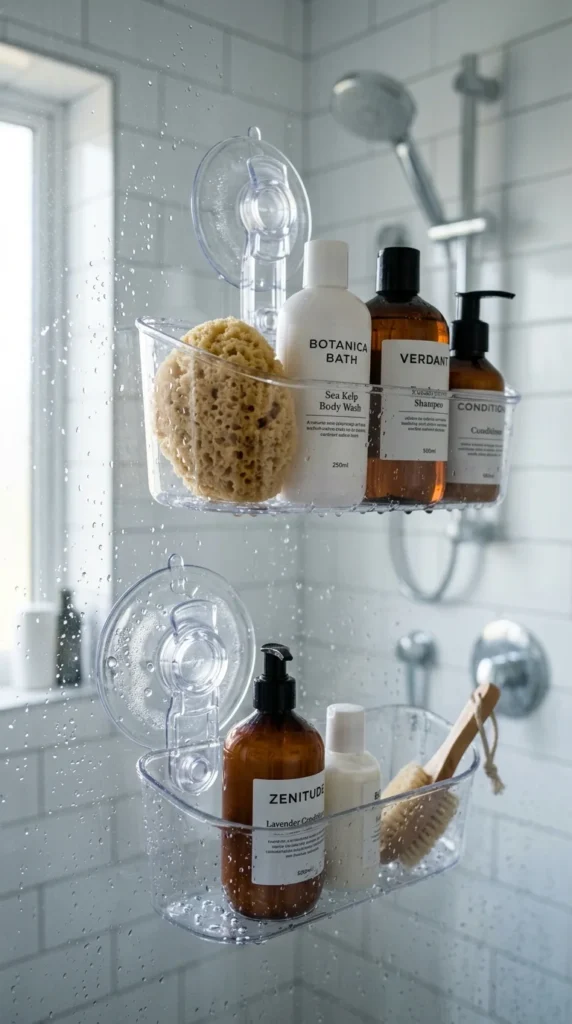
Suction cups stick to smooth glass and tile without permanent damage. The right ones hold serious weight if you prep the surface and use them right. The wrong ones fall daily and become a punchline.
Buy heavy-duty suction caddies rated for at least three pounds. Cheaper versions lose grip within weeks. Look for double-suction designs with a locking lever. Cost runs $10 to $25 each.
Prep the surface before applying. Clean the spot with rubbing alcohol. Dry fully. Press the suction firmly and lock the lever. Wait an hour before loading. Reapply every few months if the seal weakens.
Failure fix: warm the suction cup with a hair dryer briefly before applying. The slight heat makes the rubber softer and forms a tighter seal. Suction storage works only on smooth surfaces. Textured or porous tile will not hold suction no matter the brand. Test a spot before buying multiple pieces. Smooth glass shower doors and large-format tile work best. Tiny mosaic tile with deep grout lines defeats every suction cup made.
6. Floor Standing Shower Rack
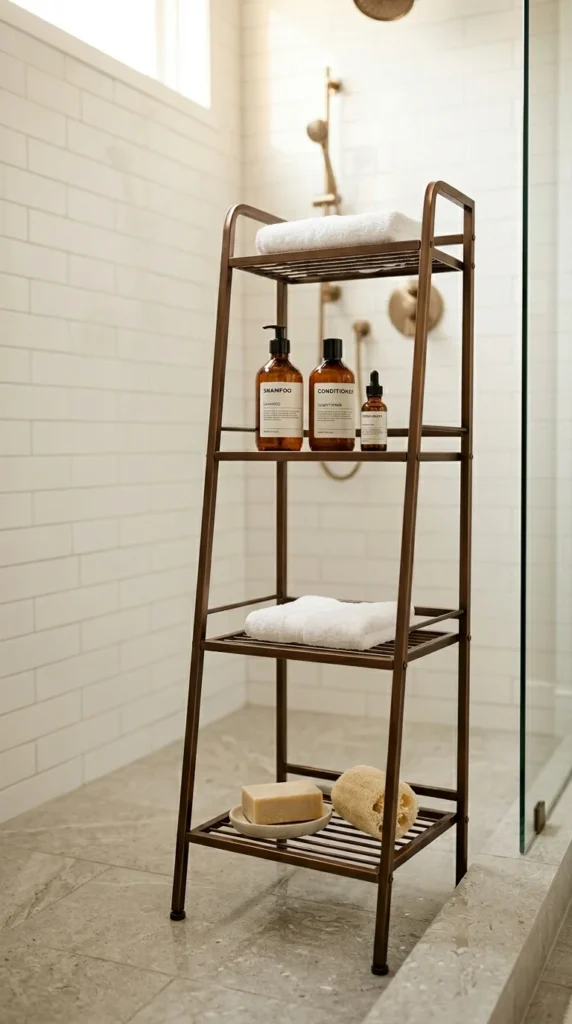
Some showers have no good wall spot for storage. A floor-standing rack fixes this without drilling or sticking anything. You set it down where you want it and move it whenever.
Pick a rack designed for wet conditions. Bronze or stainless steel beats painted metal for rust resistance. Four-tier racks hold the most without tipping. Cost runs $40 to $100.
Place the rack in a low-traffic corner where it does not block the showerhead spray. Load heavier items on the bottom shelves for stability. Top shelves hold lighter products like washcloths or small bottles.
Cheap option: a kitchen utility cart on casters works in larger walk-in showers if you can roll it out before mopping. Hit yard sales for old metal plant stands and repurpose them. Add a coat of rust-resistant paint. Standing racks make sense for showers with no wall hookups and for people who hate stick-on solutions. The rack moves easily for deep cleaning and survives every kind of shower surface. Worth the investment in homes with multiple users and lots of products.
7. Wall Mounted Pump Dispensers
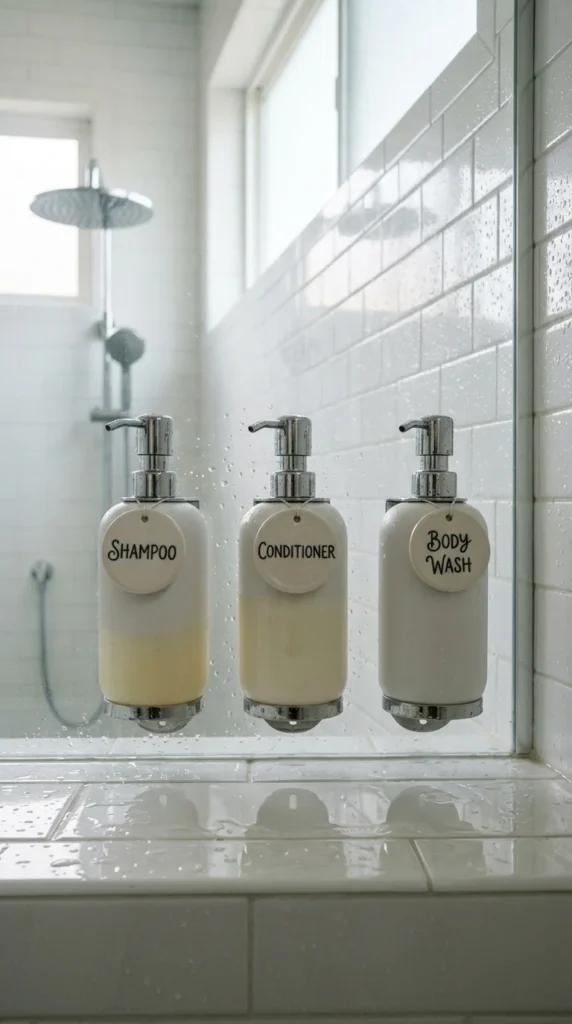
Random bottles in different colors and heights create visual chaos. Three matching wall-mounted dispensers replace them all and look like a high-end hotel. The shower instantly feels calmer.
Buy a dispenser set for $25 to $60. Pick wall mounts with adhesive or screw options. Most hold 12 to 16 ounces and last weeks between refills. Glass or ceramic versions look most upscale.
Fill the dispensers with shampoo, conditioner, and body wash. Refill from your usual big bottles stored in a cabinet. The big ugly bottles stay hidden. Only the matching dispensers show in the shower.
DIY route: buy three identical glass soap pump bottles for $5 each at a discount store. Use heavy-duty adhesive hooks to hang them. The wall-mount version requires extra hardware but the standalone look works too. Matching dispensers are the single biggest visual upgrade you can make to a shower. The change costs little and takes ten minutes. Family members stop fighting over whose shampoo is whose because everyone uses the same labeled dispenser stocked with the right product.
8. Floating Wood Shelf Above the Tub
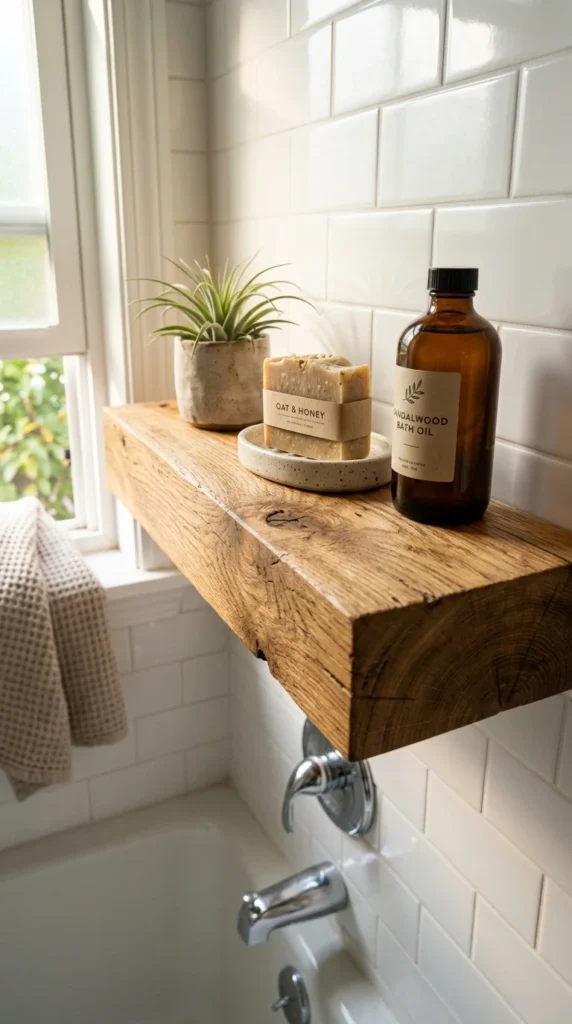
A single wooden shelf above the tub feels less industrial than wire baskets and metal racks. It works in baths where you soak more than rinse. Bottles, candles, and a book all fit on one solid plank.
Pick teak, cedar, or another water-resistant wood. Pine warps fast in steam. Most floating shelves are 18 to 36 inches wide for $25 to $80. Mount with hidden brackets for the floating look.
Seal the wood with a marine-grade polyurethane or teak oil before installing. Reseal once a year to keep moisture out. The shelf lasts decades if you keep up with the seal.
Budget DIY: a cedar fence picket cut to length and sealed costs under $15. Cedar resists rot naturally and looks just as nice as fancy teak. Add hidden brackets from a hardware store for $10 more. Warm wood in a wet zone adds spa vibes that no plastic caddy can match. The shelf works as a small staging area for bath bombs, candles, and your phone on a stand for music or shows during long soaks.
9. Tension Rod Above the Tub for Hooks
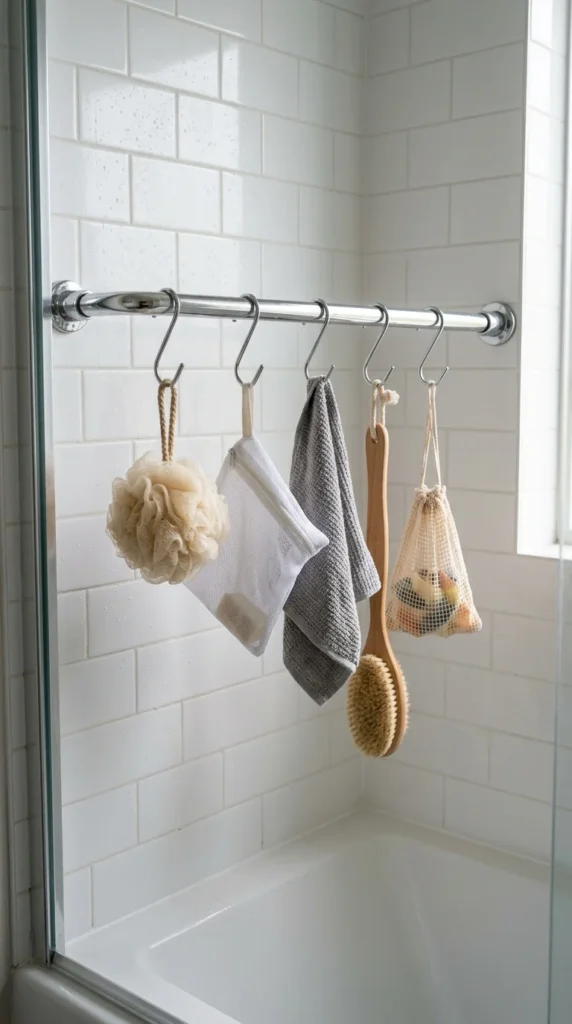
A second tension rod high above the showerhead becomes pure hook storage. You hang loofahs, mesh bags, washcloths, and scrubbers from S-hooks. Everything air-dries between uses.
Buy a basic tension rod for $5 to $10 at any home store. Pick one rated for your wall width. Add a pack of S-hooks for another $5. Total project cost under $15.
Wedge the rod about a foot below the ceiling. Stagger the hooks across the rod with two inches between each. Hang items where water drains away from the wall to prevent mildew streaks.
Stock the hooks based on shower routine. One for the loofah. One for a mesh bag holding small soap slivers. One for a face cloth. One for a back scrubber. Hook storage keeps wet items off shelves where they make puddles and grow mildew. The constant air circulation extends the life of every loofah and brush. This single tension rod costs less than one decent caddy and stores more items in a smaller footprint.
10. Caddy Hooked Over the Glass Door
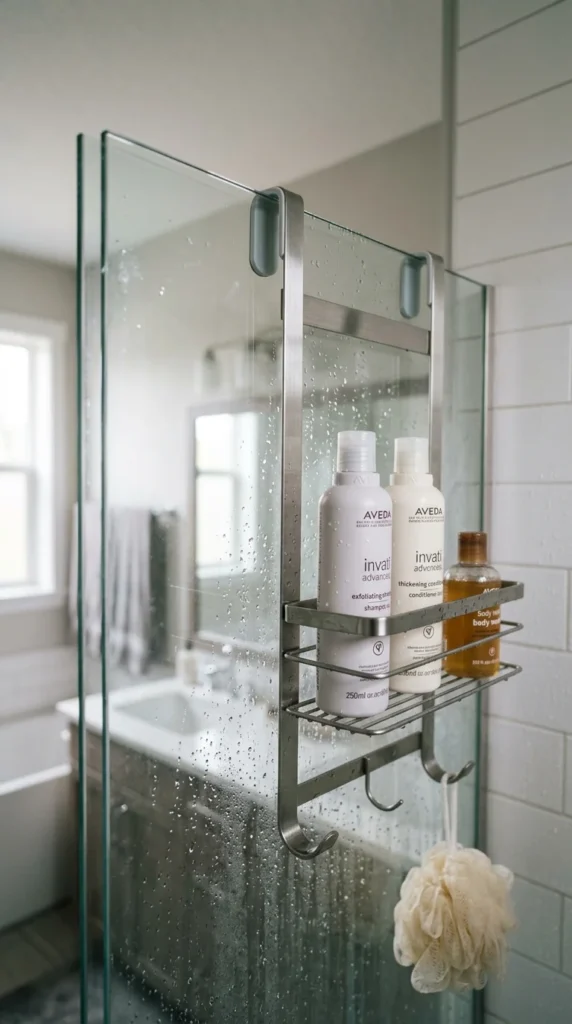
Frameless glass shower doors usually have a thick top edge that holds an over-the-door caddy. No drilling, no suction. Just hook it on and load it up.
Look for caddies designed for glass doors with rubber padding on the hooks. The padding stops scratches and gives a tight grip. Most cost $20 to $40 for a two-shelf caddy with hooks.
Hang the caddy on the outside of the door rather than inside if your shower head sprays toward the door. This keeps products drier. The hooks adjust to fit door thicknesses between half an inch and an inch.
Cheap idea: a tension hook normally used for purses can hold a small mesh bag full of shower products. Hang it from the door top for $3. Less polished but works while you save for a real caddy. Glass door caddies suit frameless showers where wall storage looks intrusive. The setup also moves easily between bathrooms when guests visit or when you move apartments. No installation, no damage, just instant storage that adapts to your space.
11. Magnetic Soap Holder
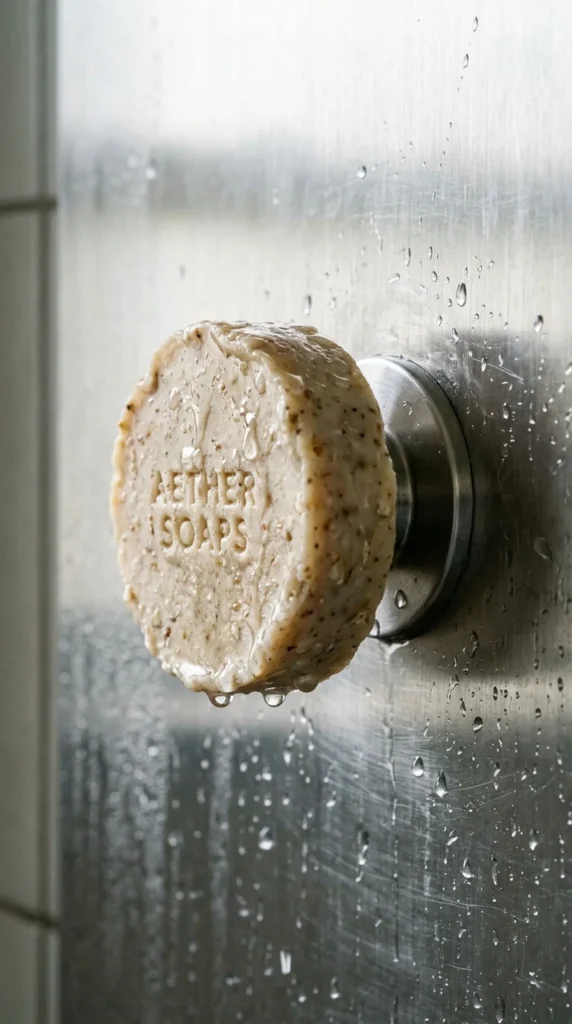
Wet soap bars sit in slimy puddles inside traditional dishes. A magnetic holder lifts the soap into the air so it dries between uses. The bar lasts twice as long and stays clean.
Buy a magnetic soap holder for $10 to $20. The set includes a wall plate that mounts with adhesive and a small disc that presses into your soap bar. The two pieces snap together by magnet.
Press the disc into the back of a new soap bar firmly. Stick the wall plate to your shower wall at chest height. Press the soap against the plate and it hangs in mid-air. Pull it off to use, push back when done.
Eco bonus: the bar dries fully between uses so it does not melt away in soggy water. One bar lasts six to eight weeks instead of two or three. Magnetic holders also keep loose soap slivers out of shower drains where they cause clogs. The clean look photographs well too, which matters if you list your home as a short-term rental or take real estate photos.
12. Wire Shelf Above the Showerhead
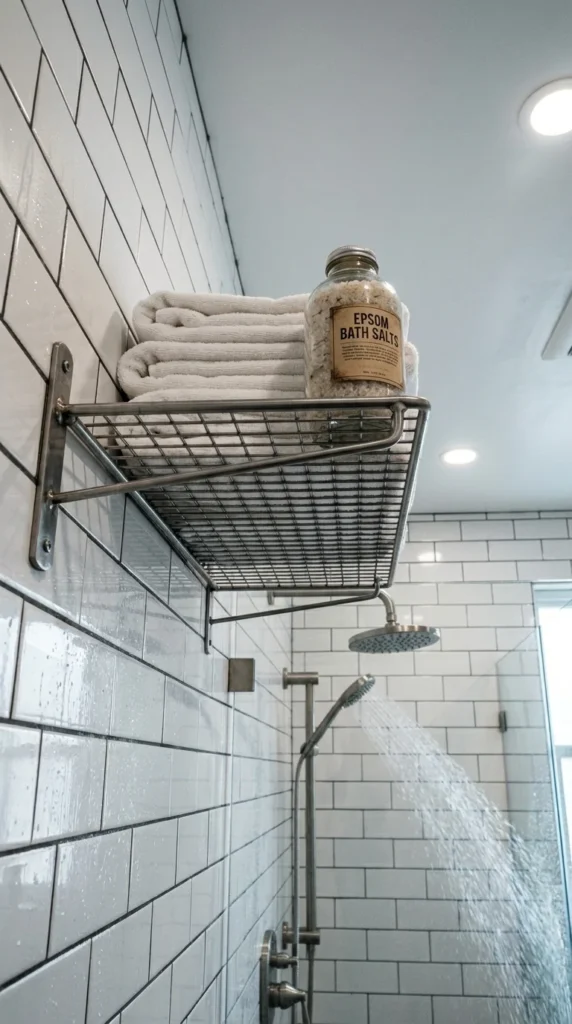
The wall above your showerhead is wasted space. A simple wire shelf installed there holds extra bottles, backup towels, and bulk products you do not need to reach daily. The height keeps it out of the main shower zone.
Buy a stainless steel wire shelf for $15 to $30 at hardware stores. Install with screws into wall studs or use heavy-duty drywall anchors rated for wet conditions. Mount about six inches above the showerhead.
Use this high shelf for backup supplies. Family-size shampoo bottle. Extra bar soaps. A folded backup towel. Things you grab once a week instead of every shower.
Renter alternative: large adhesive hooks rated for shower use can hold a small wire basket at the same height. The hooks support up to seven pounds when applied to clean dry tile. Overhead storage uses height that no caddy can reach. Most showers waste two feet of vertical wall space above the showerhead. Filling that space adds real storage without crowding the main shower area where you actually wash.
13. Bath Toy Drainage Bag
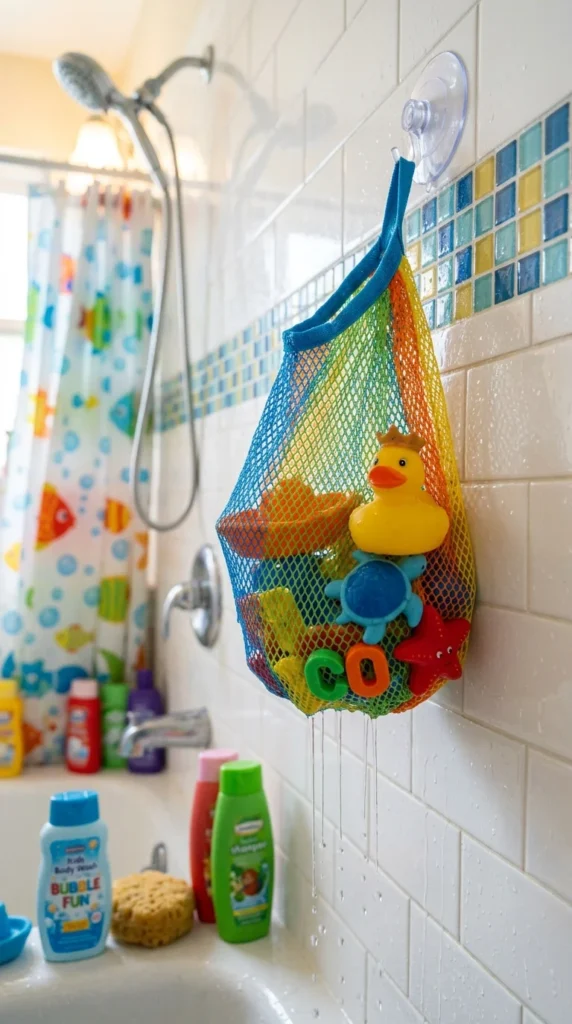
Bath toys mildew fast when stored in solid containers. A mesh bag drains water and lets toys dry between uses. Kids learn to drop toys in the bag at the end of bath time, which keeps shower floors clear.
Buy a mesh bath toy bag with suction cups or hooks for $8 to $15. Look for big mesh holes that drain water fast. Smaller mesh holds water and defeats the purpose.
Stick the bag to a wall low enough for kids to reach. Make it a game to throw toys in at the end of bath time. The bag stays open at the top for easy access during play and drains fully between baths.
DIY version: a small laundry mesh bag with grommets at the top costs $3. Hang it from suction hooks at kid height. The basic version works just as well as the fancy ones marketed for bath toys. Drained storage keeps toys mold-free and saves you from tossing out slimy ducks every few months. Replace the bag itself once a year when the mesh starts to smell.
14. Curved Shower Curtain Rod for More Room
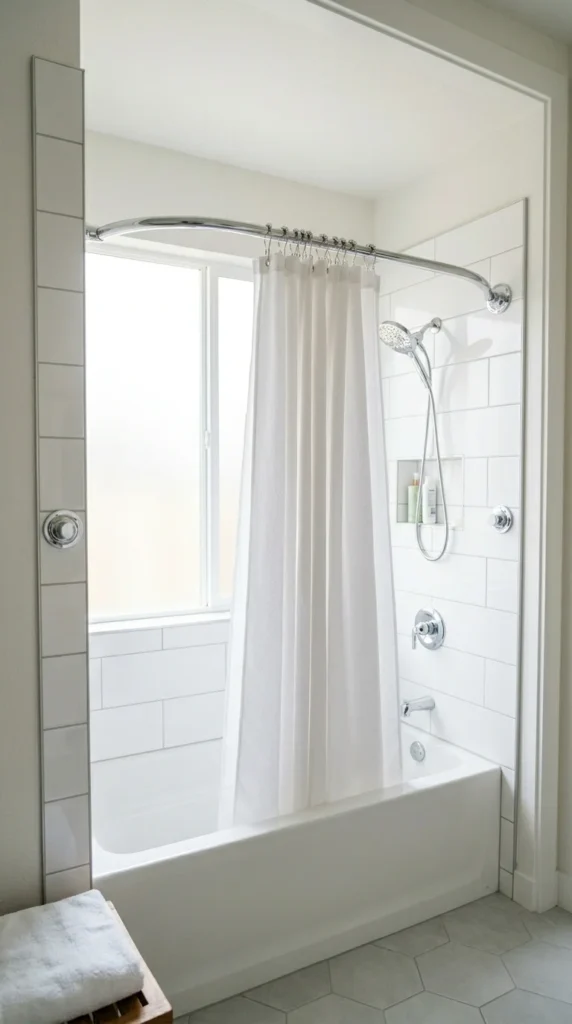
A curved rod is not technically storage but it changes how much space your shower has for storage. The arch pushes the curtain out by six inches, giving you more elbow and storage room inside.
Buy a curved rod for $25 to $50 at any home store. The two ends attach to your existing wall brackets or new ones you install. Most adjust to fit tub widths between 55 and 75 inches.
The extra interior space means caddies and shelves no longer get pushed into your back by the curtain. Tall users especially benefit since hair products sit further from your face during use.
Budget hack: tape two short broom handles end to end with strong duct tape and bend at a slight angle. Free curved rod from existing supplies. Not pretty but proves the concept before buying. Curved rods add about a square foot of interior shower volume which translates to room for one more caddy or basket. Combined with other storage upgrades, the curve makes a tight tub-shower feel like a real walk-in space.
15. Hairband on the Showerhead
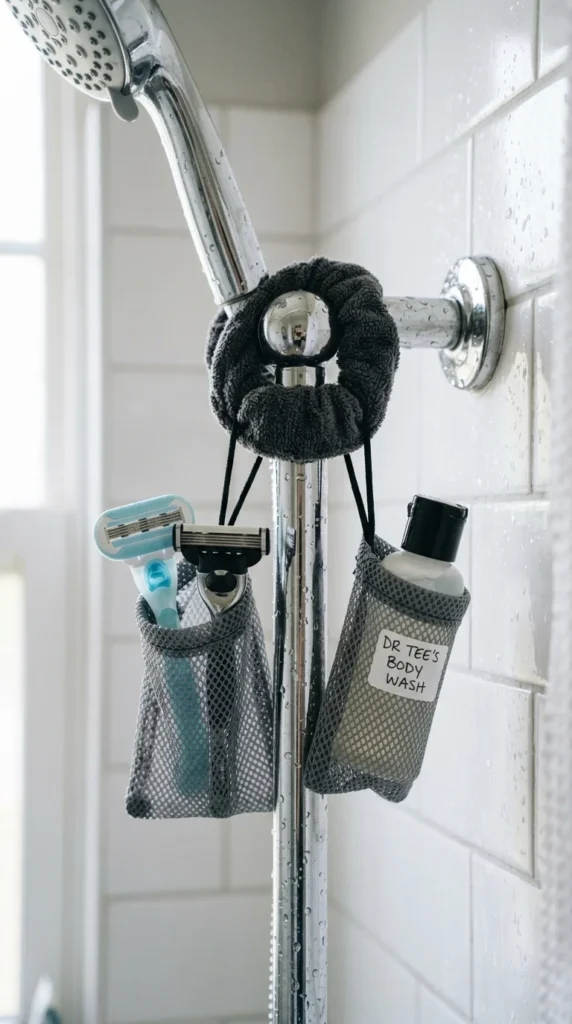
The cheapest shower storage hack uses items you already own. A thick fabric hairband around the showerhead pipe creates instant loops for small mesh pouches.
Loop a wide hairband twice around the showerhead arm where it meets the wall. The fabric grips and stays put. Hang small mesh laundry pouches from the band loops by their drawstrings.
Each pouch holds different items. One for razors that should drain. One for sample-sized products. One for a face cloth. The mesh dries between uses and the whole setup costs nothing if you raid your existing supplies.
Upgrade for $3: buy a thin bungee cord with loops at each end. Stretch around the showerhead pipe and clip together. Holds heavier items than the hairband. Free storage works while you figure out what permanent solution suits your shower. This trick especially helps in showers with no good caddy location since it uses the showerhead itself. Take it down in seconds when not needed. No damage, no commitment, no money spent.
16. Razor Holder on the Wall
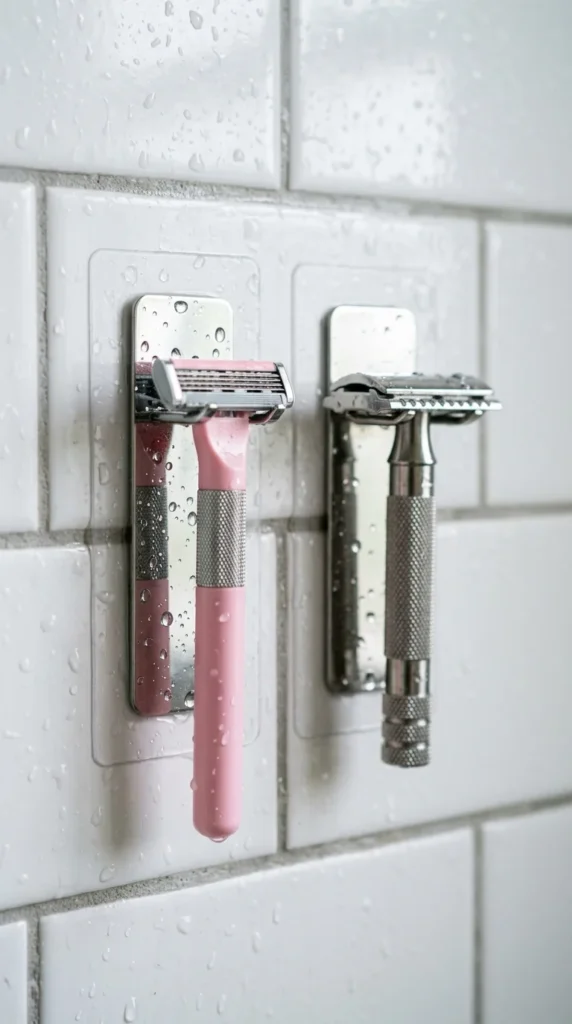
Razors balanced on tub edges fall and rust. A dedicated razor holder on the wall keeps them up, dry, and out of the way. Each user gets their own spot.
Buy razor wall holders for $5 to $12 each. Most have adhesive backs or small suction cups. Slim profiles hold one razor by the handle. Two-piece holders cradle the handle in a U shape.
Stick a holder at shoulder height for each user. The wall location lets razors drip-dry vertically. No more rust rings on the tub. No more nicked toes from dropped razors on the shower floor.
DIY route: a small adhesive hook works as a quick razor holder. Hang the razor by the hole in the handle. Cost under $2 per hook. Dedicated holders also prevent shared razors which spreads bacteria between household members. Color-code each holder with washi tape or paint marker so everyone knows which razor is theirs. Replace razor blades regularly and the holder lasts for years without any maintenance.
17. Vinegar Spray Bottle Stored in Shower
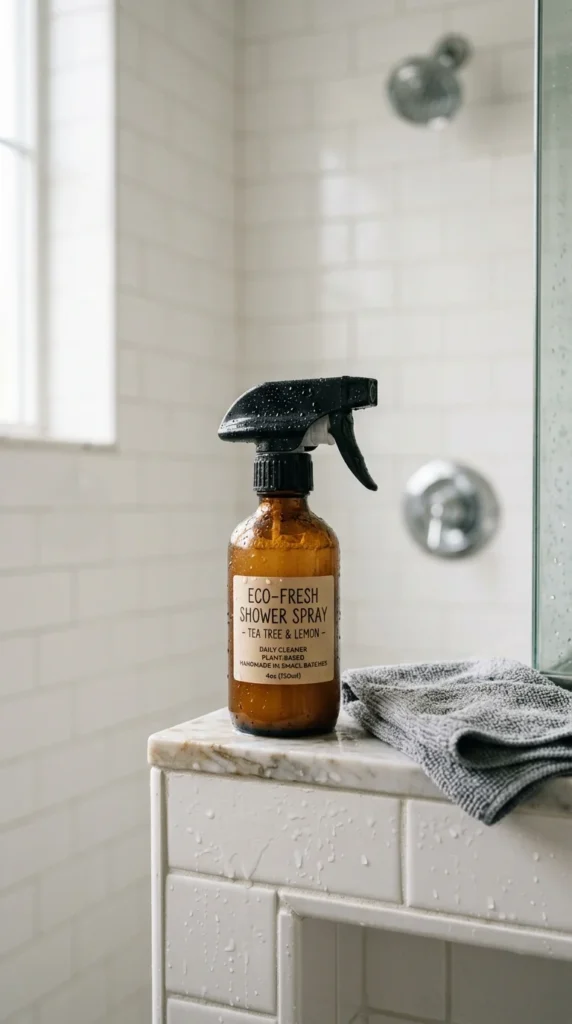
The fastest way to keep a shower clean is cleaning it during the shower itself. A spray bottle of diluted vinegar stored in the shower lets you spray walls down before stepping out.
Mix one part white vinegar with one part water in a spray bottle. Add a few drops of dish soap for cutting soap scum. Total cost about $4 for a full bottle. The mix lasts months.
Store the bottle in a corner or on a low shelf where steam softens it. Spray walls and tile lightly after each shower. Wipe down once a week with a squeegee or microfiber cloth.
The trick saves you from monthly deep scrubs. Soap scum never builds up because you remove it daily before it hardens. In-shower cleaning turns a five-minute weekly chore into a ten-second daily habit. The bottle itself adds almost zero clutter since it lives on the floor or in an existing caddy. Replace the cloth every few weeks when it starts to smell. Air dry the cloth between uses on a tension rod hook.
18. Squeegee Hung From a Hook
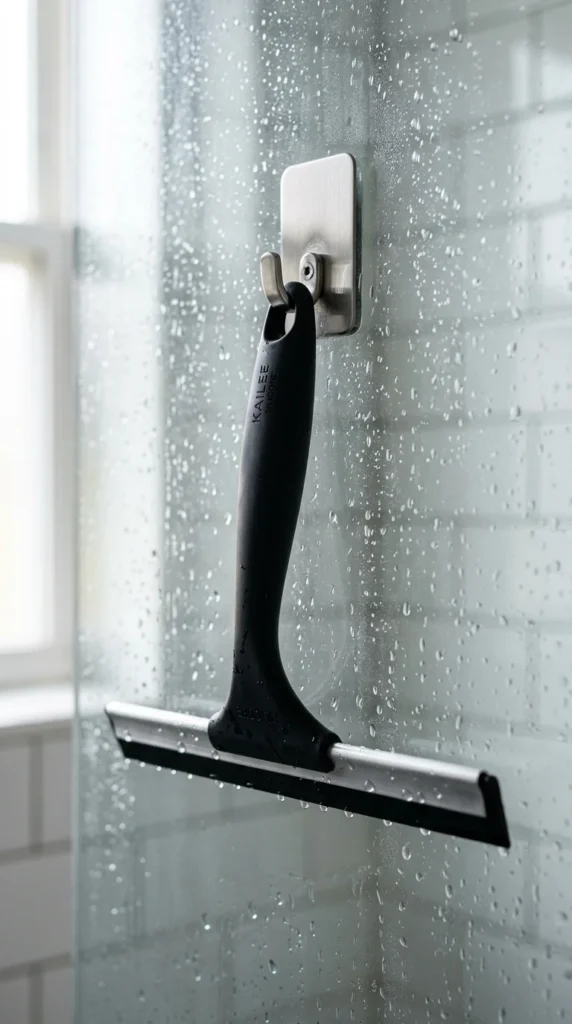
A squeegee stored in the shower means you actually use it. Stash it in a closet and it never sees water. Hang it inside the shower and you wipe down glass after every wash.
Buy a silicone squeegee for $5 to $10. The flexible blade outlasts rubber ones and does not streak. Add an adhesive hook rated for showers to hang it from the wall.
Stick the hook to the inside of your shower glass where you can grab the squeegee easily. After your shower, run the squeegee top to bottom across all glass and tile surfaces. Takes thirty seconds. Stops water spots and soap scum from forming.
Free version: an old credit card or hotel keycard works as a squeegee in a pinch. Not as efficient but proves the concept. Daily squeegee use doubles the life of your shower glass and tile by stopping mineral deposits from etching the surface. The simple habit prevents the need for harsh chemical cleaners later. Hard water areas see the biggest payoff from this single 30-second routine after each shower.
19. Slim Shelf Behind the Shower Door
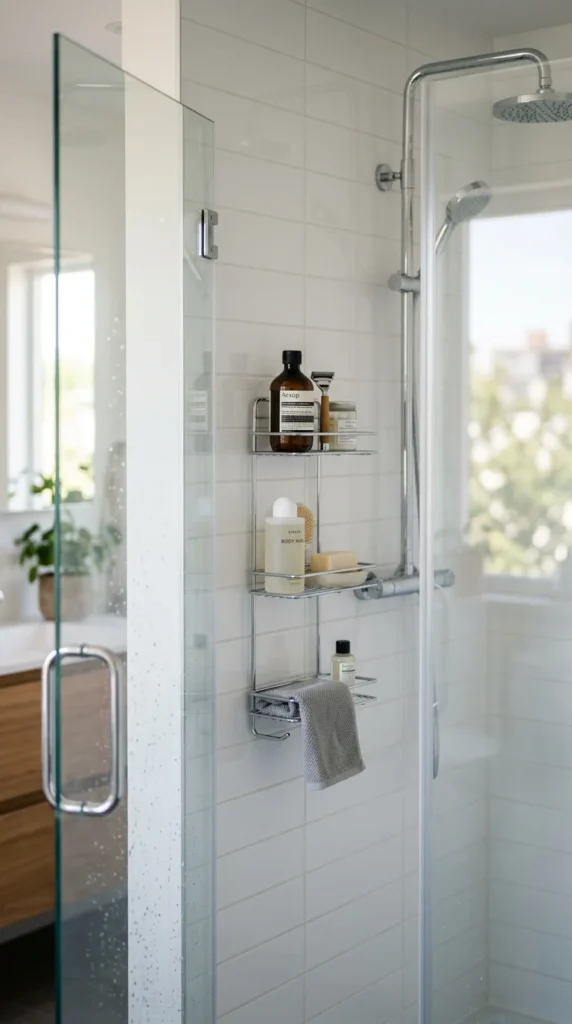
Most showers have wasted vertical space behind the door where nothing fits. A slim five-inch deep shelf there holds small items without blocking traffic. The door swings clear of the shelf because it sits close to the wall.
Look for narrow shelves designed for tight spaces. Measure the wall behind your door before buying. Five to eight inches deep is the sweet spot. Cost runs $20 to $40 for stainless steel or wire models.
Stock this shelf with face wash, small lotion bottles, dental items, and other small toiletries. The shelf stays accessible while the rest of the bathroom looks clean since everything tucks behind the door.
DIY: a thin board cut from cedar or plywood plus two L-brackets makes a custom shelf for the exact width you have. Total materials under $15. Seal the wood with marine polyurethane. Hidden storage turns dead space into usable storage. Most people never think to look behind the shower door for storage opportunities. The narrow profile fits where standard caddies would block traffic, making it the answer for cramped bathrooms with awkward wall layouts.
20. Rolling Cart Parked Outside the Shower
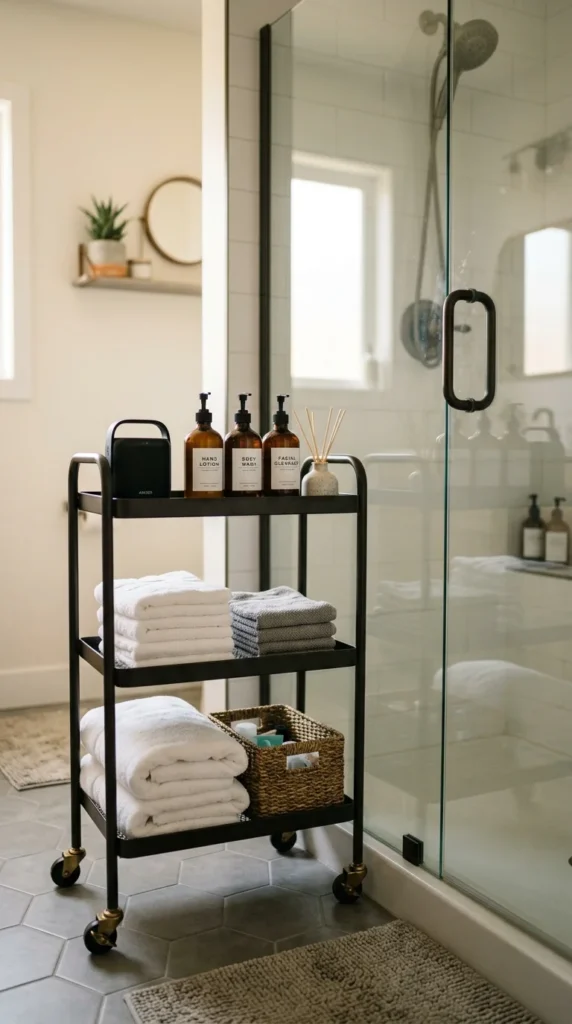
The shower itself does not have to hold everything. A small rolling cart parked next to the shower stall holds backup supplies, towels, lotions, and a speaker. Reach out of the shower to grab what you want.
Buy a three-tier rolling cart for $25 to $50 at home stores. Pick one with mesh or wire shelves so air circulates around stored items. Casters let you roll the cart away for cleaning.
Stock the cart with shower-adjacent items. Backup shampoo bottles ready for refill. Fresh towels for after the shower. Body lotion to apply right after drying off. A bluetooth speaker if you like music during showers.
Budget find: a thrift store bar cart or microwave stand on wheels costs under $20. Add a coat of rust-resistant paint and use it for the same purpose. Adjacent storage keeps shower contents minimal while having backup supplies one arm’s reach away. The cart also moves to a closet when guests come over and you want the bathroom to look minimal. Versatile beyond just the bathroom since it works as kitchen or office storage too.
21. Hide Razor and Tweezers in a Sealed Box
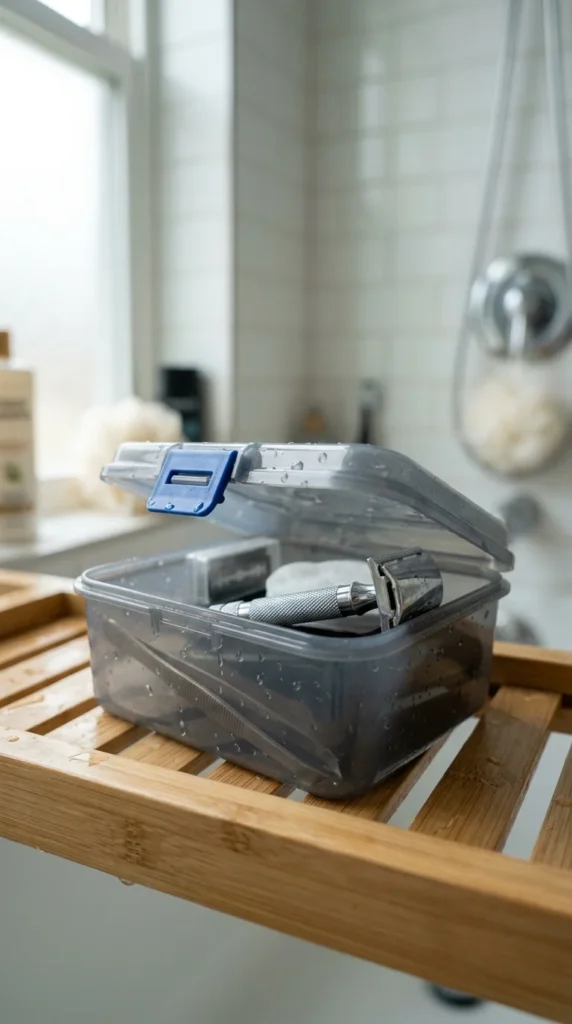
Razors and tweezers rust fast in steamy showers. A sealed plastic box with a snap lid keeps them dry between uses. Open the lid only when you want to shave.
Buy a small waterproof container for $5 to $10 at hardware or kitchen stores. Look for snap-shut lids with rubber gaskets. The smaller it is the easier it stores on a shelf or in a niche.
Add a silica gel packet inside the box to absorb any humidity that sneaks in. The packets come free in shoeboxes and vitamin bottles. Replace them every few months when they feel heavy.
This trick extends razor life by months. Cheap disposable razors normally rust within weeks. Stored in a sealed box they stay sharp for the entire pack. Sealed storage also protects expensive tools like quality tweezers and small grooming scissors from corrosion. The whole hack costs under $10 and saves money on replacement razors over time. Especially worth it in humid climates where rust happens even in dry-stored items.
22. Toe Tap Bottle Holder
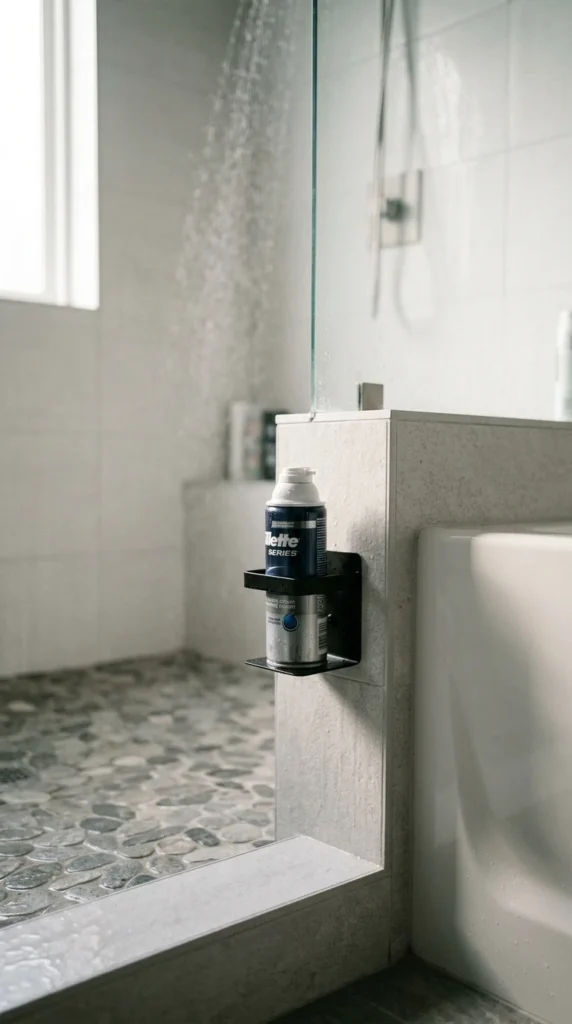
Shaving legs in the shower means bending over with one hand on a slippery wall while reaching for shaving cream on a high shelf. A low bottle holder near foot level fixes this awkward dance.
Install a single-bottle holder about a foot off the shower floor. The low height puts your shaving cream right at hand while one foot rests on the tub edge. No bending or balancing required.
Buy a wall-mount holder for $8 to $15 with adhesive or screws. Pick one sized for your specific shaving cream can. Most hold a standard 7-ounce can with a small foot at the bottom.
DIY: an adhesive hook plus a small mesh bag holds the same can for under $3. The bag drains water and dries between uses. Low storage suits items you reach for from a seated or one-foot-up position. The trick works for leg-shavers, anyone with mobility challenges, or kids who shower independently. Place the holder where it does not interfere with anyone else’s routine. Test the spot with painters tape first to mark the best height before installing permanently.
Conclusion
Shower storage does not require a remodel to work well. The right mix of tension rods, suction baskets, wall-mounted dispensers, and hidden hooks turns any shower into a calm, clean space where everything has a home. Most of the ideas above cost under $30 and install in under an hour. Renters can pick the no-drill versions. Homeowners can plan permanent solutions during their next renovation. Either way, the payoff is real. Bottles stop tipping. Razors stop rusting. Bath toys stop molding. Mornings get faster and the whole bathroom looks more put together. Start with one project this weekend and build out from there.