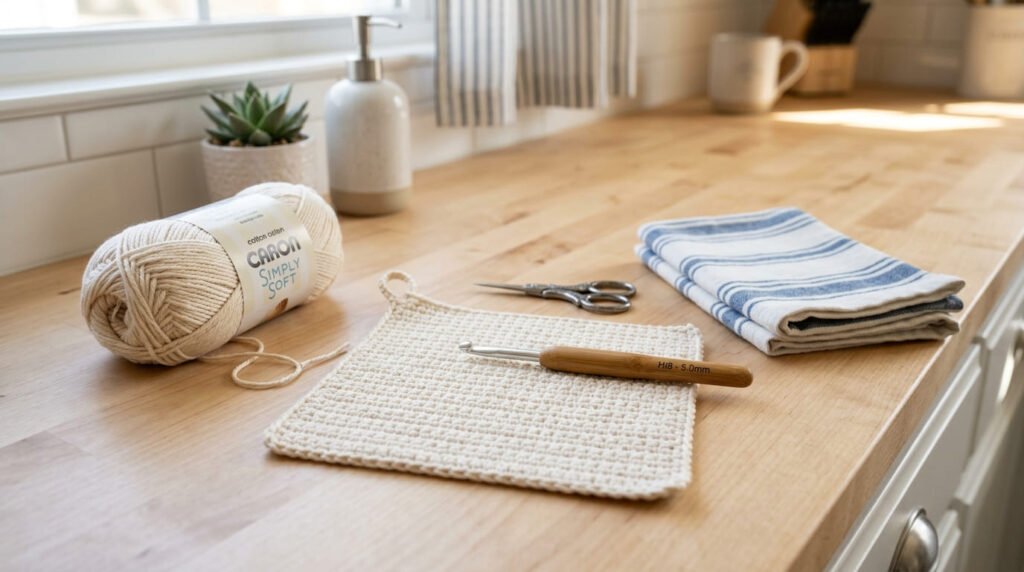
Want a crochet project you can actually finish today? A dishcloth is one of the best beginner crochet projects because it is small, useful, and very forgiving. Even if your edges are not perfect, you will still end up with something you can use in the kitchen, gift to a friend, or make again in a different color.
You only need basic supplies, one easy stitch, and a little patience. By the end of this guide, you will know how to make a simple crochet dishcloth in under an hour.
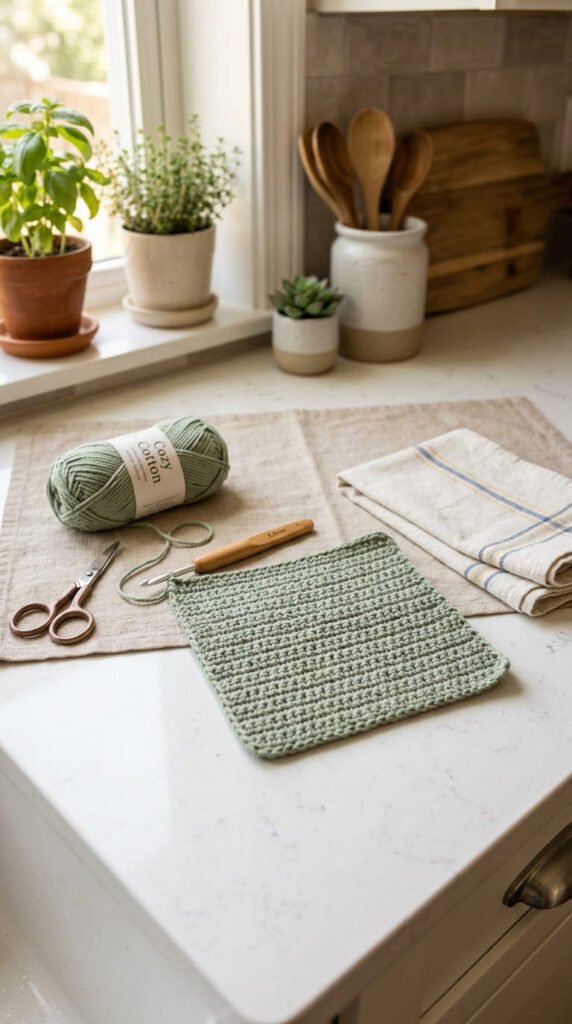
Why a Dishcloth Is Perfect for Beginners
A crochet dishcloth is basically a small square or rectangle made with simple rows. That means you can practice the most important crochet skills without committing to a huge blanket or sweater.
You will practice:
- Making a slip knot
- Crocheting a foundation chain
- Working single crochet stitches
- Turning your work
- Keeping edges even
- Fastening off
- Weaving in ends
Dishcloths are also practical. You can use them for dishes, counters, sinks, or as a soft washcloth. They make sweet handmade gifts too, especially when bundled with soap or a wooden dish brush.
The best part? A basic dishcloth can be finished quickly once you get comfortable with the stitch repeat.
What You Need
Keep your supplies simple. Fancy tools are not required for this beginner project.
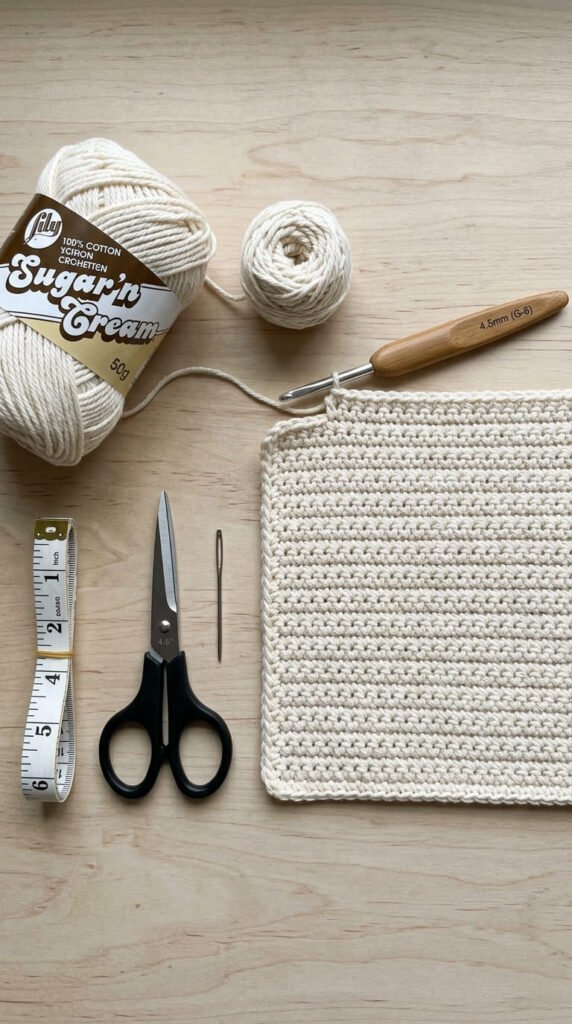
You will need:
- Cotton yarn
- Crochet hook, around 4.5mm to 5mm
- Scissors
- Tapestry needle
- Measuring tape, optional
Cotton yarn is the best choice for dishcloths because it is absorbent and sturdy. Acrylic yarn is fine for practice, but it does not work as well for kitchen use.
Choose a light or medium color for your first dishcloth. Cream, yellow, mint, peach, or light blue makes it easier to see your stitches. Dark yarn can make beginners miss stitches.
Step 1: Start With a Slip Knot and Chain
Begin by making a slip knot and placing it on your hook. Keep the loop snug, but not tight. Your hook should move easily inside the loop.
Next, make your starting chain. For a beginner dishcloth, chain 25 to 30 stitches. This usually gives you a good dishcloth width, depending on your yarn, hook size, and tension.
If you want a smaller practice cloth, chain 20. If you want a wider kitchen cloth, chain 30.
Beginner tip: make your chain a little loose. If the chain is too tight, the first row will feel hard to work into.
Once your chain is ready, you will start your first row by working into the second chain from the hook. This helps create the first proper stitch of the row.
Step 2: Single Crochet Across the Row
The easiest beginner dishcloth uses single crochet. It makes a firm fabric that works well for scrubbing, wiping, and washing.
To make a single crochet:
- Insert your hook into the second chain from the hook.
- Yarn over.
- Pull up a loop.
- Yarn over again.
- Pull through both loops on the hook.
Now repeat that same stitch across the whole row.
If you chained 25, you will usually have 24 single crochet stitches across after skipping the first chain.
Do not rush. The first row is often the slowest because working into chains can feel awkward. Once you start crocheting into regular stitches, the rows will feel easier.
Step 3: Chain 1, Turn, and Repeat
When you reach the end of the row, chain 1. Then turn your work around like turning a page in a book.
Now single crochet across the next row.
That is the whole pattern:
- Single crochet across
- Chain 1
- Turn
- Repeat
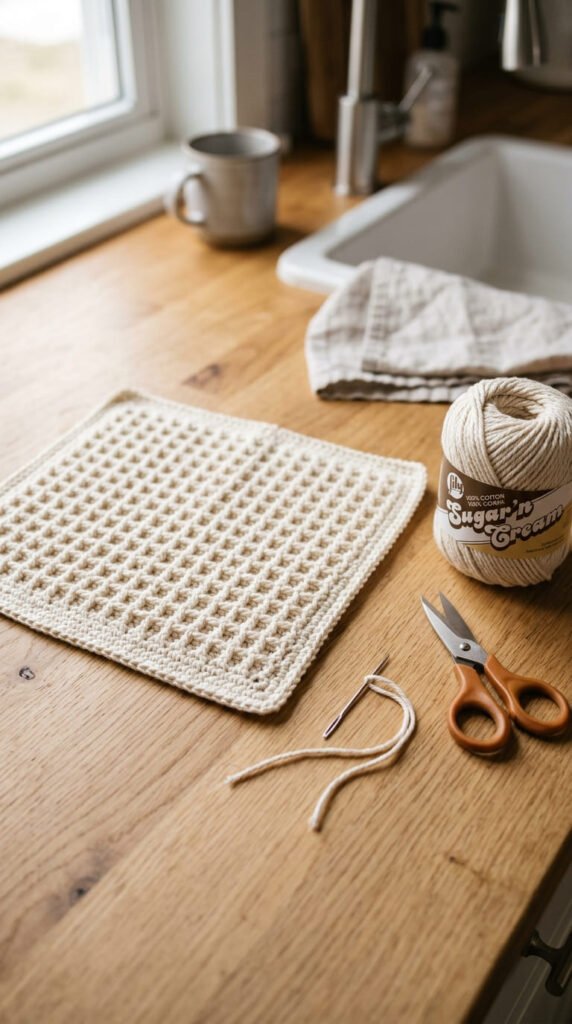
Keep going until your dishcloth is about 7 to 10 inches tall. For many beginners, this may be around 20 to 25 rows, but your row count may change based on yarn and tension.
A good beginner size is around 8 inches square. It is big enough to use, but small enough to finish fast.
Check your edges as you go. If your dishcloth starts getting wider or narrower, you may be adding or skipping stitches at the row ends. Count your stitches every few rows until you feel confident.
Step 4: Fasten Off and Weave In Ends
Once your dishcloth is the size you want, cut the yarn and leave about a 6-inch tail.
Yarn over and pull the tail all the way through the last loop on your hook. Gently tighten it. This secures your final stitch.
Now thread the tail onto a tapestry needle. Weave the yarn end back and forth through the stitches on the back of the dishcloth. Trim any extra yarn.
Do the same with the starting tail.
This finishing step matters because it keeps your dishcloth from unraveling after washing.
Optional: Add a Simple Border
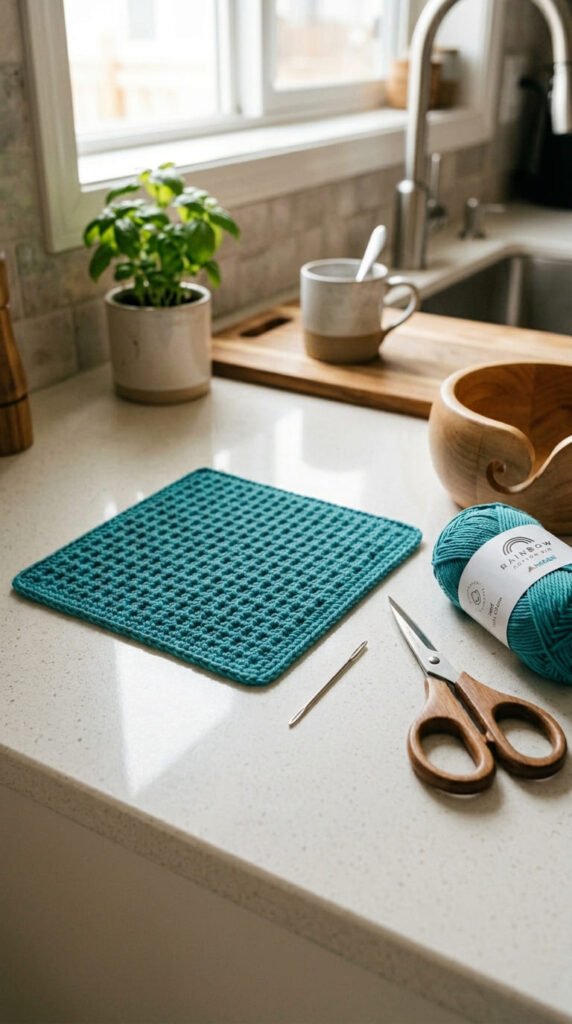
A border is optional, but it can help your dishcloth look cleaner.
The easiest border is a single crochet border:
- Insert your hook into any corner.
- Single crochet evenly around all four sides.
- Place 2 or 3 stitches in each corner.
- Slip stitch to join at the end.
You can also add a small hanging loop. At one corner, chain 12 to 16 stitches, then slip stitch back into the same corner. This makes a loop for hanging near the sink.
Skip the border if you are trying to finish under an hour. Your dishcloth will still work perfectly without it.
Beginner Troubleshooting Tips
If your first dishcloth looks uneven, that is normal. Most first crochet projects have wavy sides, tight chains, or mixed tension.
Try these quick fixes:
- Count stitches every few rows.
- Use stitch markers at the first and last stitch.
- Keep your chain loose.
- Use cotton yarn that is easy to see.
- Relax your grip on the hook.
- Make a second dishcloth right away for practice.
The second one usually looks much better because your hands already know the motion.
Final Takeaway
A crochet dishcloth is the perfect under-an-hour beginner project because it teaches the basics while giving you something useful at the end. Start with cotton yarn, chain 25 to 30 stitches, single crochet across each row, and keep going until you reach a simple square.
Make one for your kitchen, then make a few more as gifts. Save this guide for your next quick crochet session!