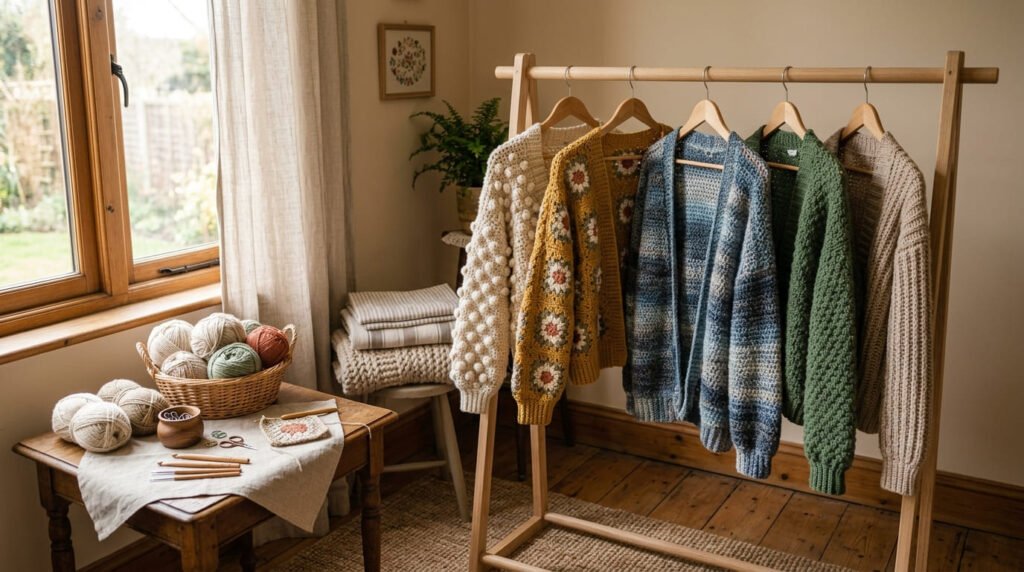
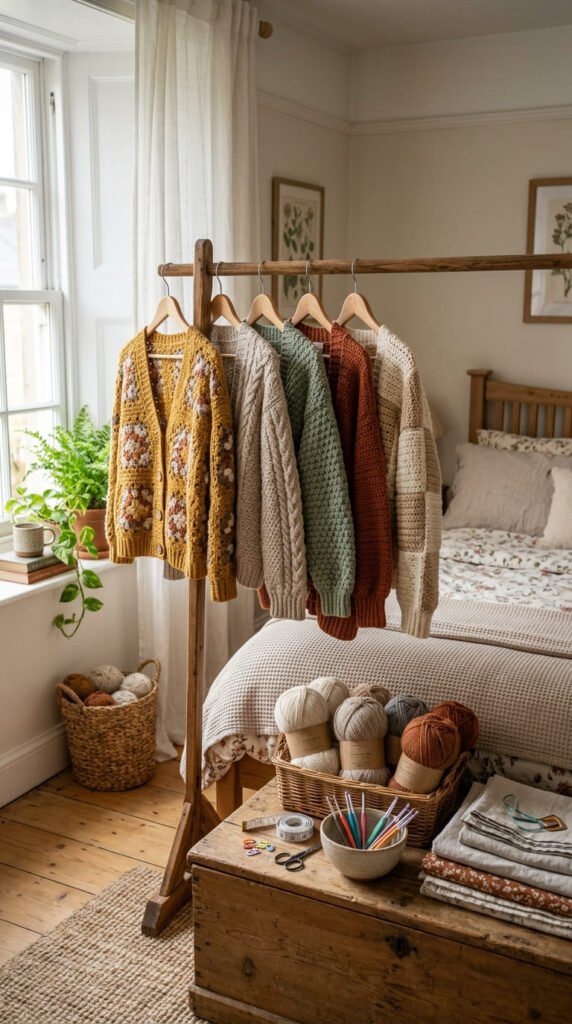
Crochet cardigan patterns can feel scary when you are new, but the right beginner cardigan can be built from simple shapes, basic stitches, and easy seams. Many absolute beginners start with rectangle cardigans, one-stitch cardigans, oversized layers, and short-sleeve styles because they do not require hard shaping. You can make a wearable cardigan with yarn, a hook, stitch markers, a tapestry needle, and patience. These gorgeous beginner crochet cardigan ideas focus on simple construction, budget yarn choices, easy measuring, and realistic DIY steps so your first handmade cardigan feels possible.
1. Five-Rectangle Crochet Cardigan
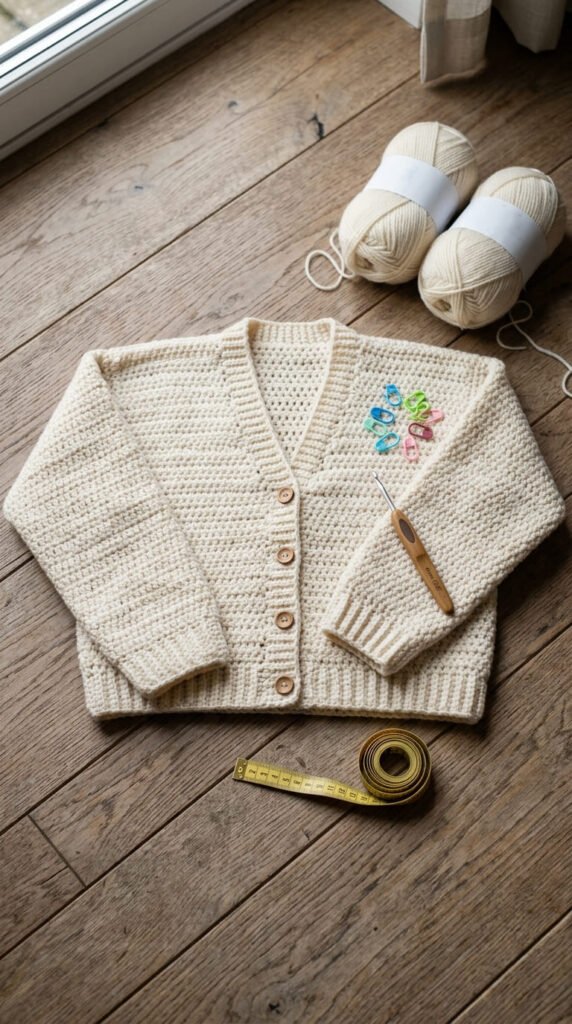
A five-rectangle crochet cardigan is one of the easiest patterns for absolute beginners. The idea is simple. You crochet one back panel, two front panels, and two sleeve panels. Then you seam them together.
This style works because every piece is flat. You do not have to shape armholes or count complicated decreases. If you can crochet a scarf, you can practice the same skill here with larger panels.
Use half double crochet for a soft, steady fabric. It grows faster than single crochet but still looks neat. Acrylic yarn is a budget-friendly option for a first cardigan because it is easy to find and comes in many colors.
Before starting, measure a cardigan you already like. Write down the back width, sleeve length, and body length. Match your crochet panels to those measurements.
Use stitch markers to line up shoulders and sleeves before seaming. Take your time with the seams. Clean seams make a simple cardigan look much more wearable.
2. One-Stitch Beginner Cardigan
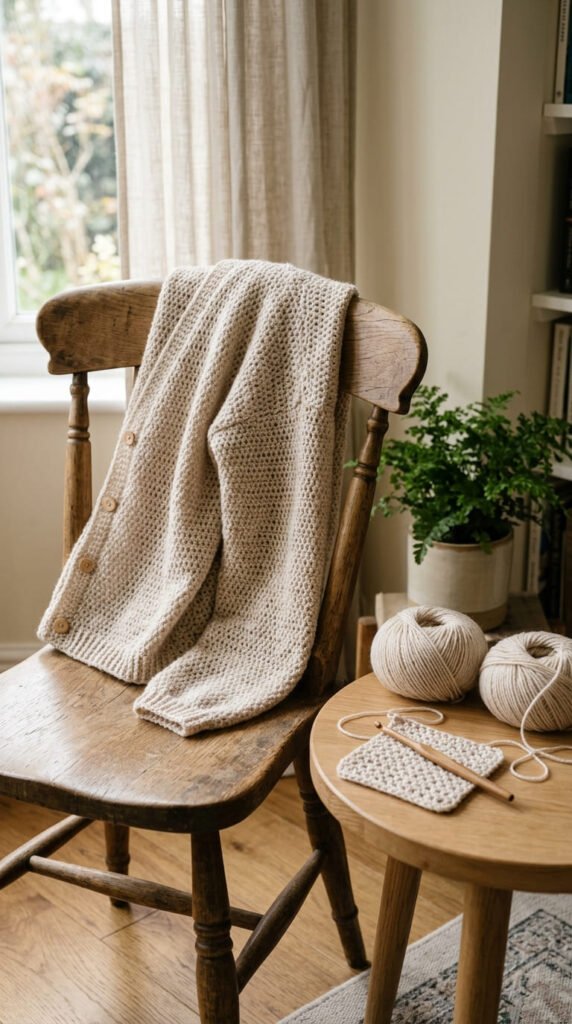
A one-stitch cardigan is perfect when you want a calm project with very little pattern reading. You pick one easy stitch and repeat it across every panel. That keeps the whole cardigan simple from start to finish.
Half double crochet, double crochet, or treble crochet can all work. Half double crochet gives a balanced fabric. Double crochet grows faster. Treble crochet creates a lighter layer with more drape.
This pattern is great for beginners because your hands learn the stitch through repetition. You can focus on keeping edges straight, checking length, and counting rows.
For a budget DIY version, choose one solid color. Cream, grey, navy, camel, or sage can make a plain stitch look polished. You can add a simple border later if you want a cleaner edge.
Make a small swatch before the cardigan. If your fabric feels stiff, use a larger hook. If it feels too loose, use a smaller hook. This small test can save yarn and time.
3. Oversized Crochet Cardigan
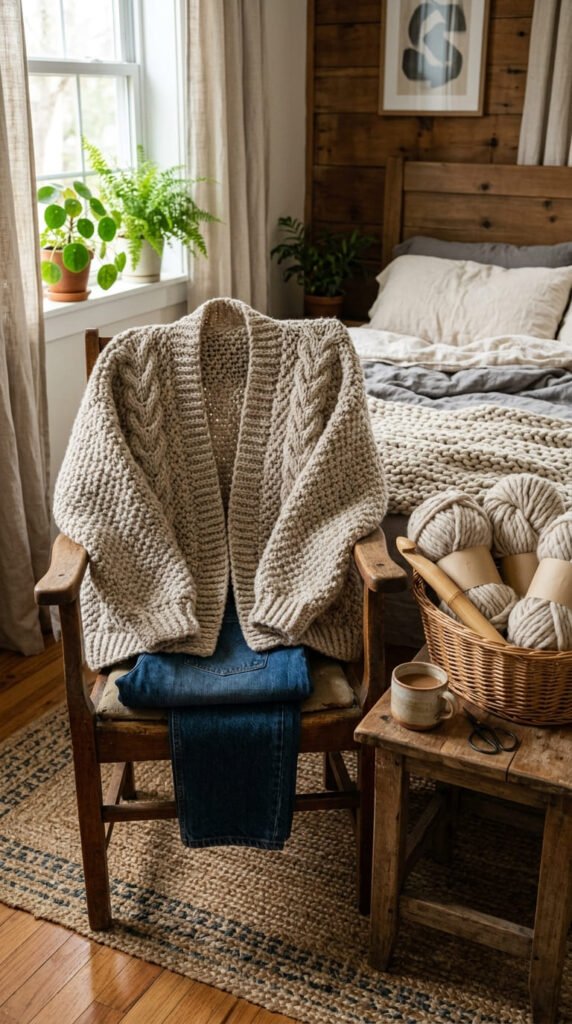
An oversized crochet cardigan is great for a first garment because the fit is forgiving. You do not have to make it tight or shaped. A roomy body, dropped shoulders, and wide sleeves can look intentional while staying simple.
Use basic rectangles for the panels. Make the back panel wide enough to sit loosely across your shoulders. The front panels can be the same length as the back. Sleeves can be simple tubes or flat rectangles seamed later.
Chunky or bulky yarn makes this cardigan work up faster. It can cost more per skein, so look for sales or use affordable acrylic. If you are on a budget, make a cropped oversized version to use less yarn.
Try the body on before attaching sleeves. Pin the shoulder seams with stitch markers and check the length. If it feels too wide, seam in farther from the edge. If it feels too short, add rows before finishing.
This is a cozy project for winter layering.
4. Cropped Crochet Cardigan
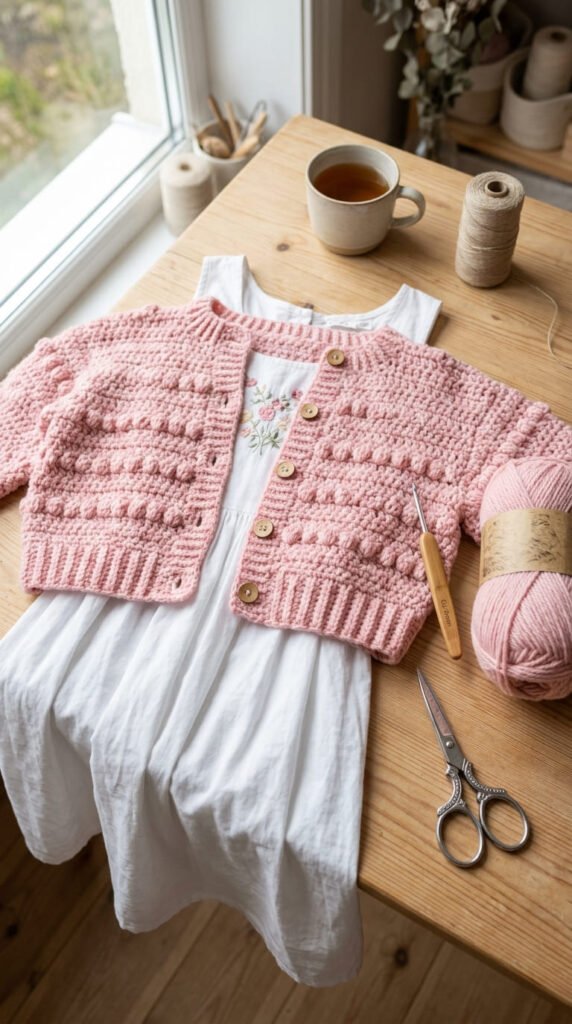
A cropped crochet cardigan is a smart beginner project because it uses less yarn than a full-length cardigan. It also finishes faster, which is helpful when you are making your first wearable piece.
The shape can stay simple. Make a short back panel, two front panels, and sleeves. You can stop the body at the waist or just above it. Try it on over a dress, tank top, or high-waisted jeans as you check the length.
Use a basic stitch like half double crochet or double crochet. Keep the edges straight by counting stitches at the end of each row. A stitch marker at the first and last stitch can help prevent accidental increases.
For a low-cost version, use budget acrylic or cotton-acrylic yarn. A cropped shape may use fewer skeins, so it is easier to make from yarn already in your stash.
Add a ribbed border only if you feel ready. A plain single crochet edge also looks tidy.
5. Short Sleeve Summer Cardigan
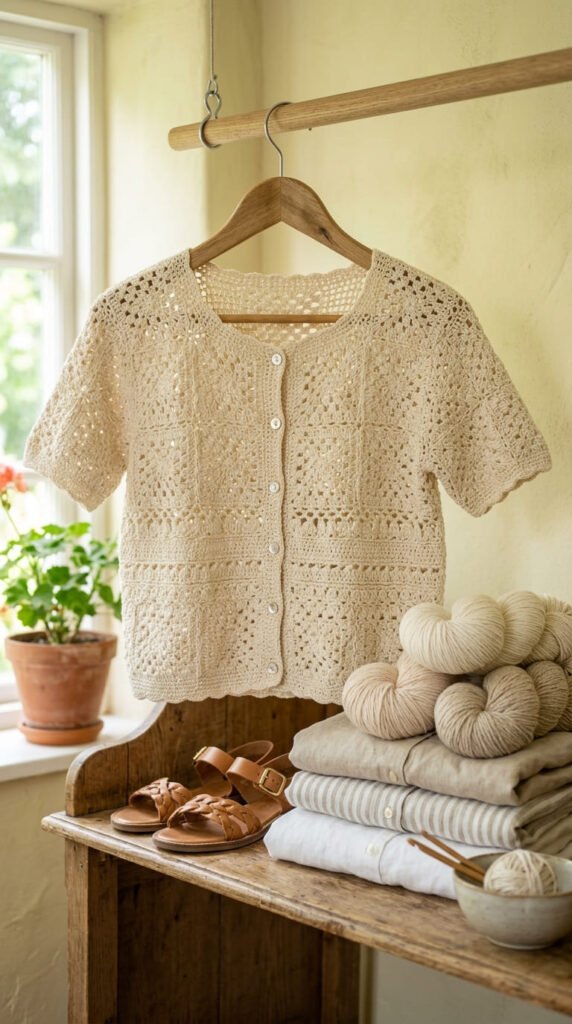
A short sleeve crochet cardigan is a gentle first garment for warm weather. It uses less yarn than long sleeves and feels easier to finish. The shorter sleeves also reduce bulk under the arms.
Use lightweight yarn if you want a soft summer layer. Cotton, bamboo, or light acrylic can work. Choose open stitches like double crochet, granny stitch, or a simple mesh row if you want more airflow.
This style pairs well with dresses, tank tops, skirts, and jeans. Keep the shape relaxed so it can sit comfortably over summer outfits.
For a budget-friendly plan, make the body first and stop the sleeves at the upper arm. Try it on before adding borders. If you have yarn left, add a small edging around the neckline and front opening.
A short sleeve cardigan is also a good place to practice garment assembly without spending weeks on a long sleeve project. It teaches panel sizing, shoulder seams, and sleeve placement in a smaller format.
6. Long Sleeve Everyday Cardigan
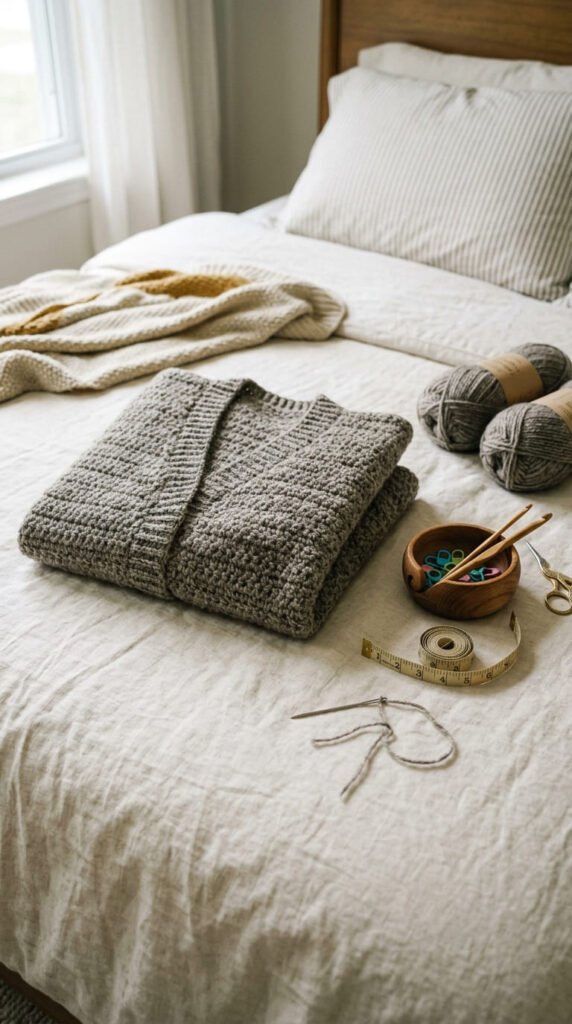
A long sleeve crochet cardigan is a classic project, and beginners can make one by keeping the construction simple. Use flat panels, basic stitches, and frequent fit checks.
The sleeves are the part that can feel tricky. Start by measuring a sweater that fits you well. Measure sleeve length from shoulder to wrist and width around the upper arm. Use those numbers as your guide.
Make sleeves as rectangles if you want the easiest method. Seam each rectangle into a tube, then attach it to the body. This gives a relaxed sleeve shape and avoids complicated shaping.
Use worsted weight yarn for a sturdy everyday cardigan. Acrylic yarn is cheaper and washable. Wool blend feels warmer but may cost more.
For a realistic DIY tip, try the cardigan body before joining the sleeves. Pin everything with stitch markers. Move your arms gently. If the armhole feels tight, adjust the seam before sewing.
A long sleeve cardigan takes more time, but the finished piece can become a favorite layer.
7. Half Double Crochet Cardigan
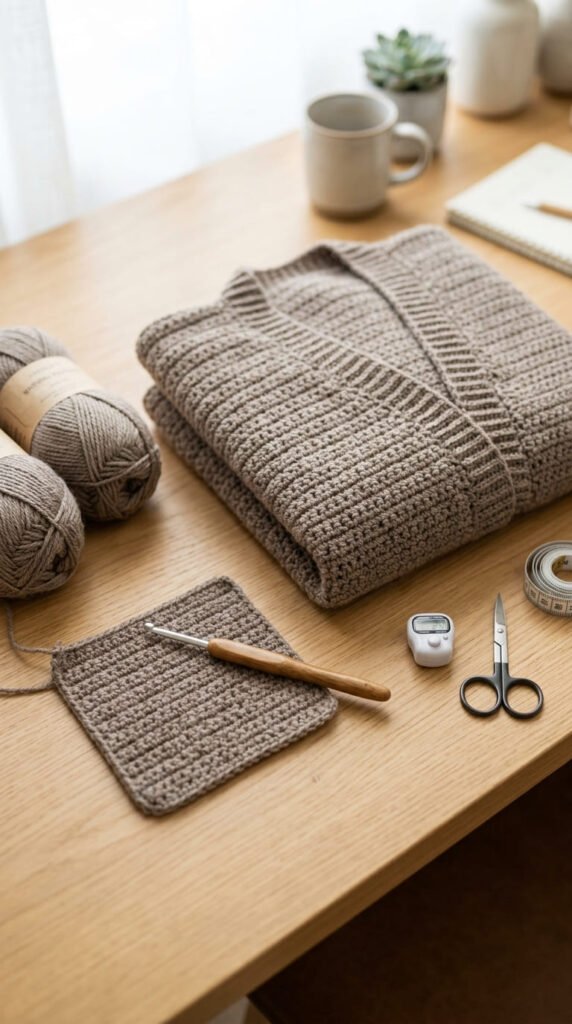
A half double crochet cardigan is a wonderful beginner choice because the stitch is simple, soft, and not too slow. It creates a fabric that is thicker than double crochet but faster than single crochet.
This stitch works well for rectangle cardigans, cropped cardigans, and cozy oversized shapes. The rows are easy to count, and the texture looks clean in solid colors.
Start with a swatch. Crochet a small square and check how the fabric feels. If it is too stiff, go up a hook size. If it has large gaps, go down a hook size. A swatch is especially helpful for cardigan fit.
For a budget version, use worsted acrylic yarn. It gives warmth without a high price. Make a neutral cardigan first so you can wear it often.
Keep your row count the same on both front panels. Lay them on top of each other as you work. This helps both sides match. Add a simple border around the front opening for a neat handmade finish.
8. Treble Crochet Cardigan
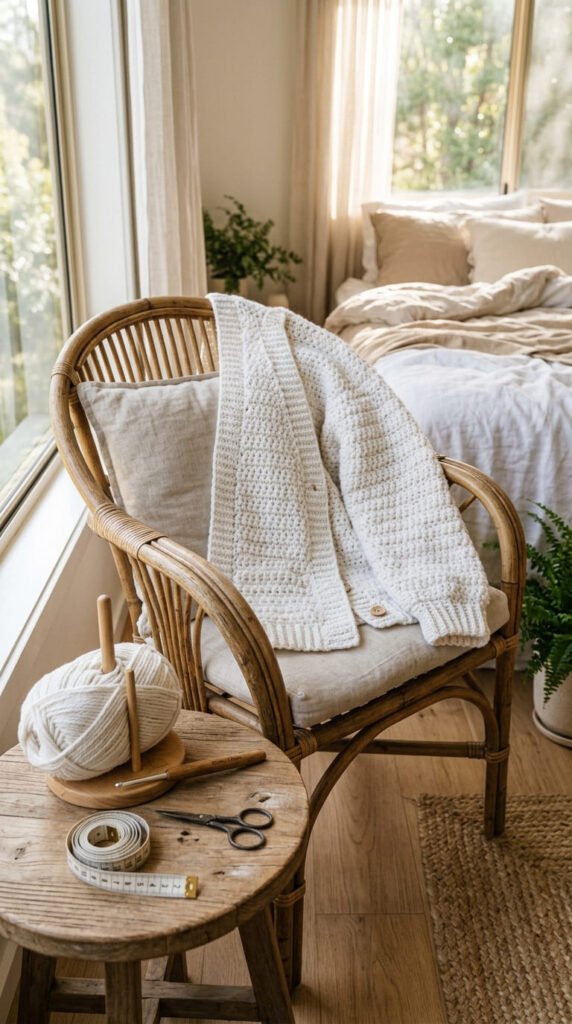
A treble crochet cardigan is a good choice when you want a lighter layer that works up fast. The tall stitches create length quickly, so large panels feel less slow.
Treble crochet can look open and airy, which makes it great for spring and summer cardigans. Use it for a loose kimono-style cardigan, beach layer, or relaxed duster.
Because the stitches are tall, your tension matters. Try to keep the loops even. If the fabric looks too open, use a smaller hook. If it feels stiff, try a softer yarn or go up slightly in hook size.
For an absolute beginner, keep the pattern plain. Make flat panels and seam them together. Do not add shaping until you feel confident.
A budget-friendly color choice is white, cream, or light grey. These colors make the open stitches look delicate without adding design details.
Treble crochet also works well for a cardigan you want to finish faster than a dense single crochet style.
9. Cozy One-Day Style Cardigan
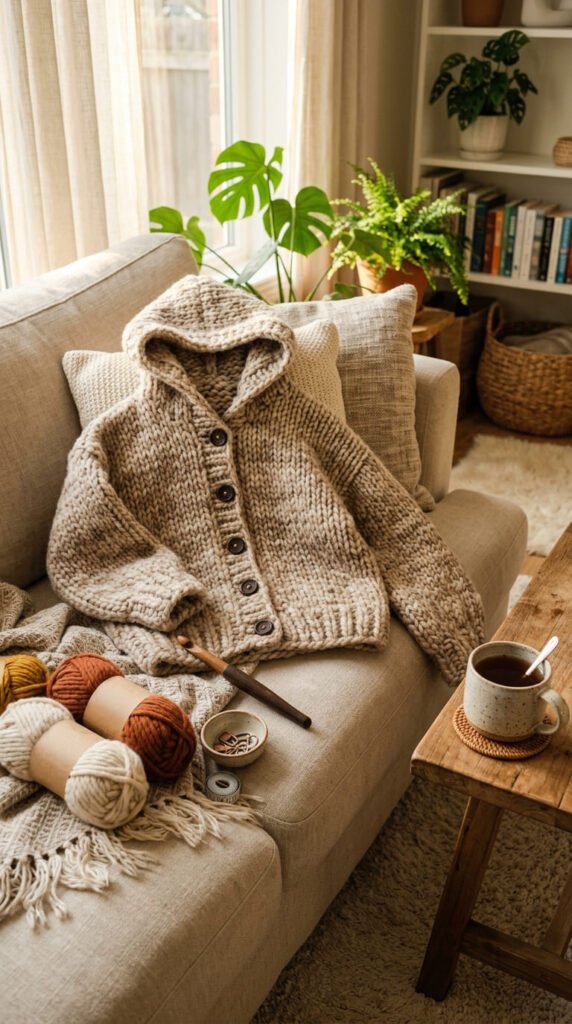
A one-day style cardigan is for crocheters who want a fast project with big, easy stitches. It may still take more than one day for a true beginner, but the idea is to keep the stitch pattern and shape simple.
Use bulky yarn and a large hook. This helps the fabric grow quickly. Choose a pattern with a chain base, repeated rows, and minimal shaping. A cardigan built from loose panels will be easier than a fitted style.
Work loosely so the fabric drapes instead of feeling stiff. If your starting chain feels tight, remake it with a larger hook. Tight chains can pull the cardigan out of shape.
For a budget tip, wait for yarn sales or use a store-brand bulky yarn. A cropped version can reduce yarn cost.
Keep finishing simple. Seam the sides and sleeves, then add a loose slip stitch or single crochet edge. This cardigan is great for quick winter layering, gifts, or confidence-building.
10. Granny Square Cardigan
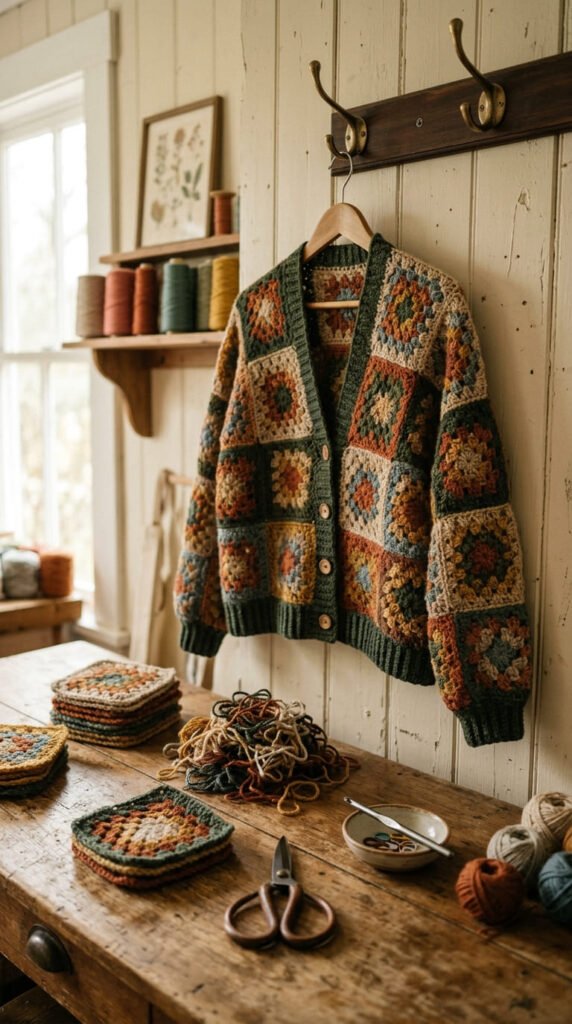
A granny square cardigan is perfect if you like color and want to build a garment one small piece at a time. Each square is a mini project, so the cardigan feels less overwhelming.
Use one square pattern for the whole cardigan. Make enough squares for the back, front panels, and sleeves. Lay them out on the floor before joining so you can plan the colors.
For beginners, keep the square size consistent. Use the same yarn weight and hook for every square. Measure each square before joining. Blocking the squares can help them sit flatter.
This project is great for using leftover yarn. Try a planned palette like cream, brown, sage, rust, and tan. This gives the cardigan a modern look while still using scraps.
Join squares with single crochet seams for texture or whip stitch for a flatter finish. Add a simple border around the front opening, hem, and cuffs. A granny square cardigan takes time, but the small sections make it easy to pause and return later.
11. Long Crochet Duster Cardigan
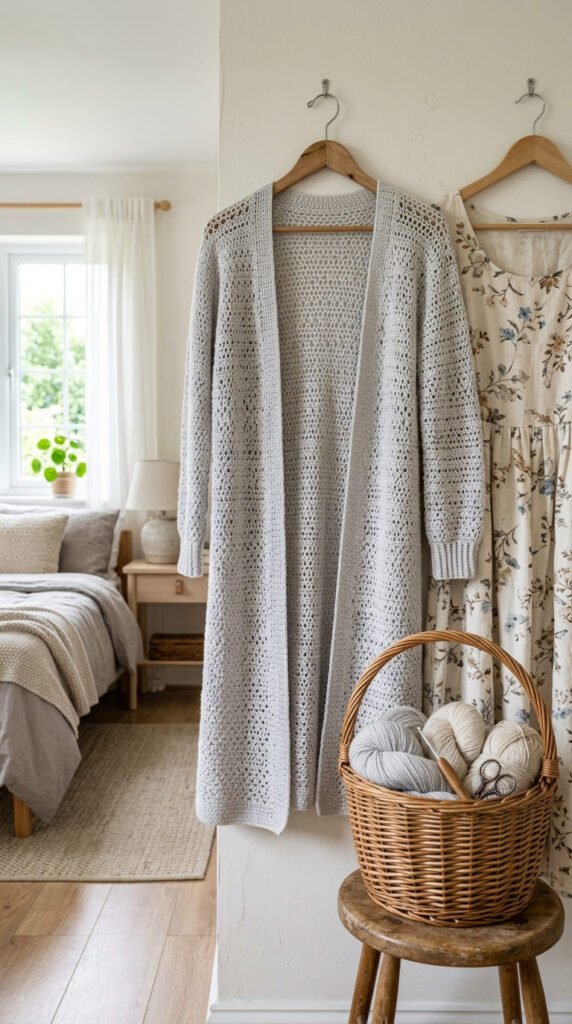
A long crochet duster cardigan looks dramatic, but the beginner version can still use simple rectangles. The difference is length. You make the body panels longer so the cardigan falls near the knee or calf.
Use a light stitch pattern so the cardigan does not become too heavy. Double crochet, mesh rows, or a loose granny stitch can work well. Heavy yarn can stretch the body, so choose yarn with care.
Measure the length from shoulder to where you want the cardigan to end. Compare it with a long cardigan or robe you already own. This keeps the project realistic.
For a budget-friendly version, make a sleeveless duster first. It uses less yarn and removes sleeve assembly. You can wear it over dresses, jeans, or swimwear.
If you add sleeves, keep them simple and slightly loose. Try the cardigan on before finishing the borders. A long duster is a great project when you want something easy but eye-catching.
12. Crochet Cardigan With Pockets
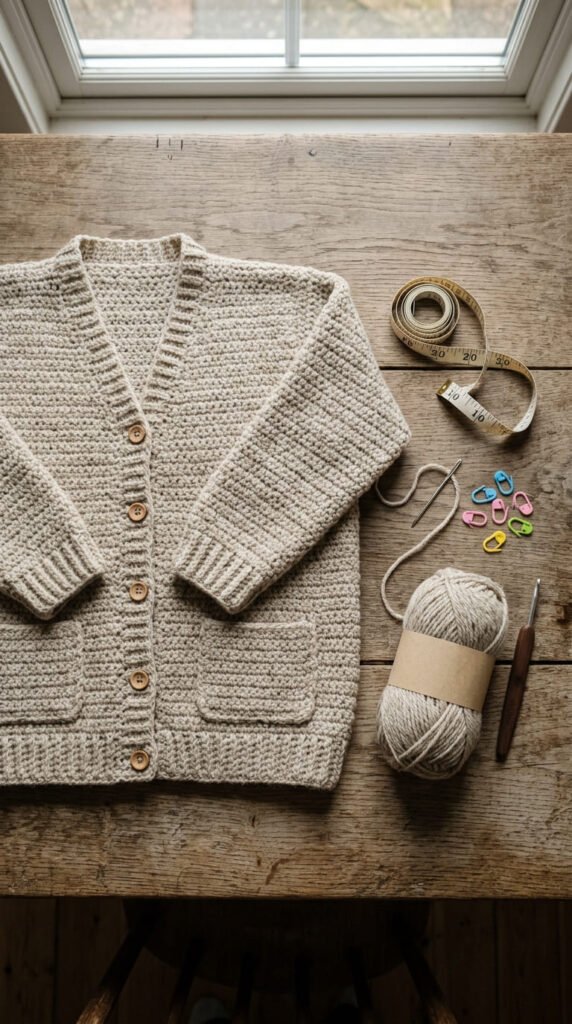
Pockets make a beginner cardigan feel more useful, and they are easier than they look. You can add them after the cardigan is finished, so they do not affect the main construction.
Make two small rectangles in single crochet or half double crochet. Keep them the same size. A simple pocket can be around the width of your hand, but you can adjust it to your cardigan size.
Place the pockets while wearing the cardigan or while it is laid flat. Pin them with stitch markers before sewing. Check that both pockets sit at the same height.
For a budget DIY touch, use leftover yarn from the cardigan. If you are short on yarn, make smaller patch pockets or use a contrast color.
Sew around the sides and bottom, leaving the top open. Do not pull the sewing yarn too tight, or the pocket may pucker. Pockets are a great way to hide small imperfections on the front panels too.
13. Two-Tone Beginner Cardigan
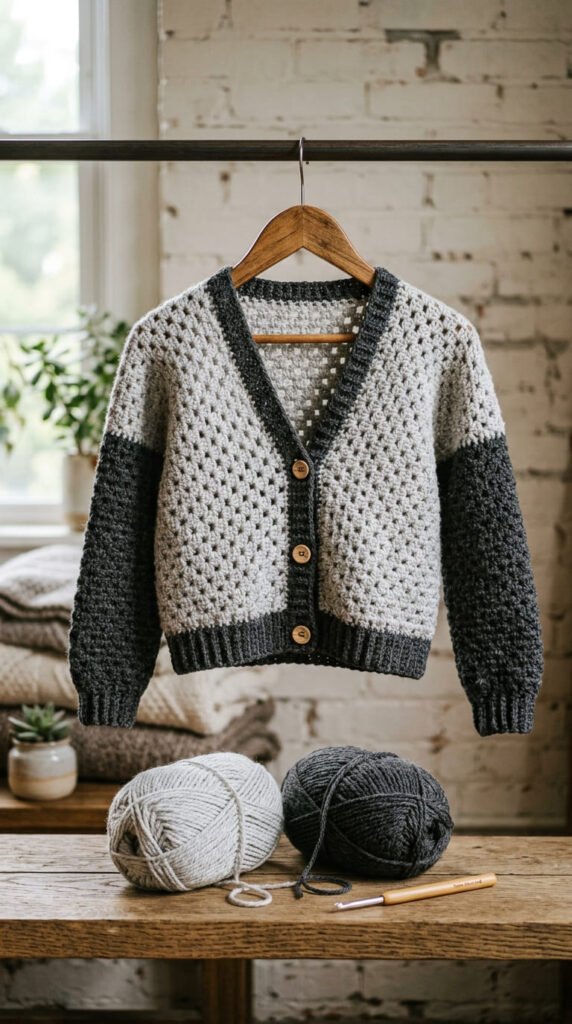
A two-tone cardigan is a simple way to make a basic pattern look more stylish. You can use one color for the body and another color for sleeves, cuffs, pockets, or borders.
This is a good beginner idea because you do not have to learn fancy stitches. The color placement does the design work. Keep the stitch plain and focus on clean panels.
Try light grey with dark grey, cream with camel, black with oatmeal, or sage with ivory. Use yarns from the same brand and weight so the fabric stays even.
For a budget-friendly plan, use one main color from a large skein pack and add a smaller amount of contrast yarn from your stash. This can help you use leftovers while still making the cardigan look planned.
Change colors at row ends for clean lines. Weave in ends as you go so finishing does not feel endless. A two-tone cardigan is great for beginners who want a custom look without harder construction.
14. Cardigan With Simple Ribbed Cuffs
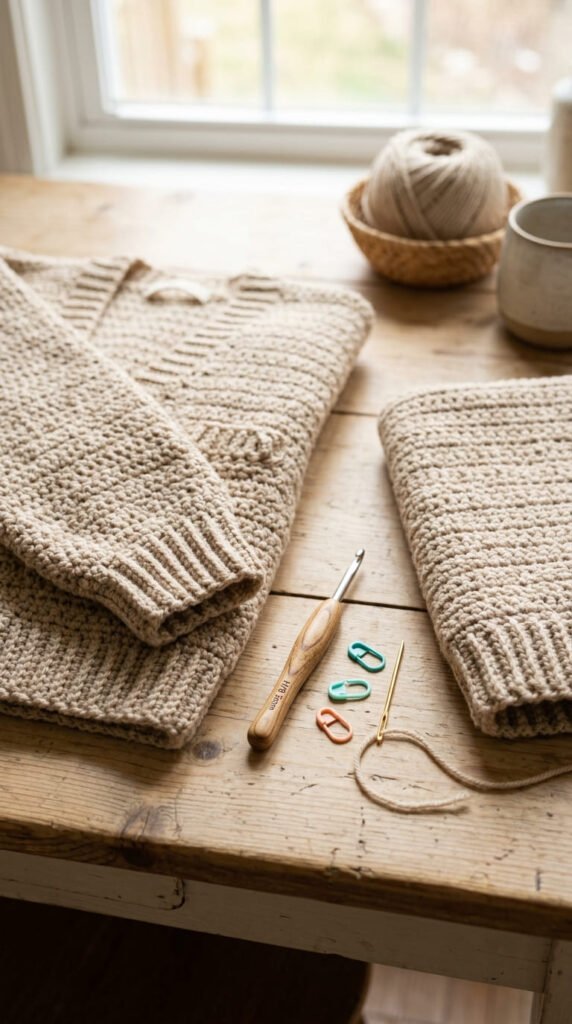
Ribbed cuffs can make a beginner cardigan look more finished. They also help sleeves sit better at the wrist. The easiest ribbing uses back-loop single crochet.
You can make cuffs separately and sew them on, or crochet them directly onto the sleeve edge. For a first cardigan, separate cuffs may feel easier because you can control the length and stretch.
Make a narrow rectangle that fits around your wrist. Seam the short ends, then attach it to the sleeve. Use stitch markers to spread the cuff evenly around the sleeve opening.
For a low-cost detail, use the same yarn as the cardigan. You do not have to buy special ribbing yarn. If your cardigan is plain, ribbed cuffs add texture without extra color.
Keep the cuff loose enough to slide over your hand. If it feels too tight, add rows before seaming. Ribbed cuffs are a small detail, but they can make a simple rectangle cardigan feel more wearable.
15. Boxy Drop-Shoulder Cardigan
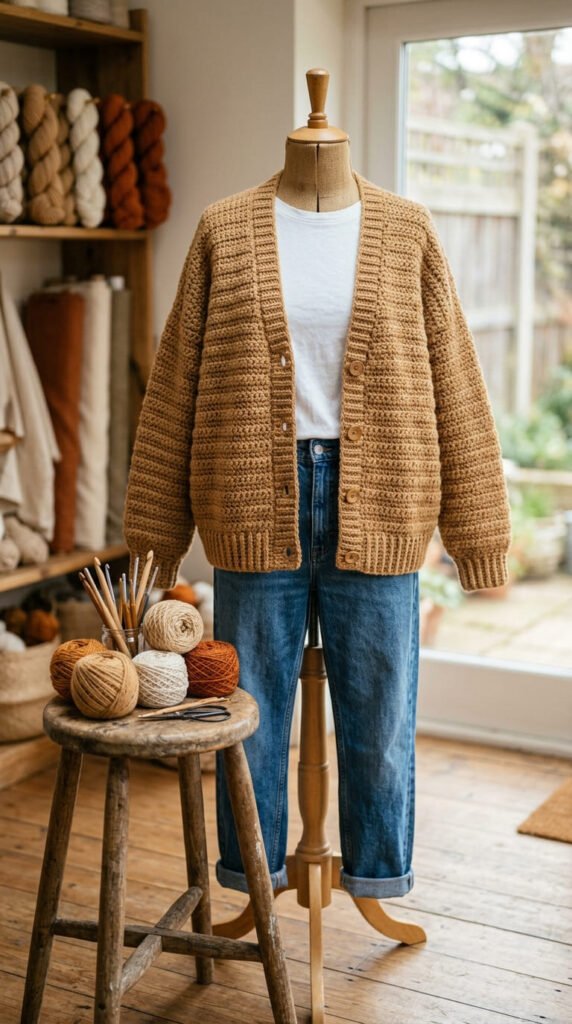
A boxy drop-shoulder cardigan is beginner-friendly because it avoids shaped armholes. The shoulder seam sits lower on the arm, which gives a relaxed look and easier fit.
Make the back and front panels wider than a fitted cardigan. Seam the shoulders, leaving the front opening. Then attach simple sleeves at the side openings. The shape is loose, so small sizing differences are less obvious.
Use half double crochet or double crochet for a soft drape. Stiff yarn can make the boxy shape look too square, so choose yarn that bends well.
For a budget version, make the cardigan hip-length instead of long. This keeps yarn use lower while still giving the drop-shoulder effect.
Try it on before closing the side seams. Check that the arm opening feels comfortable. Move your arms forward and back. If it pulls, leave a larger opening. This cardigan style is great for casual outfits and beginner garment practice.
16. Sleeveless Cardigan Vest
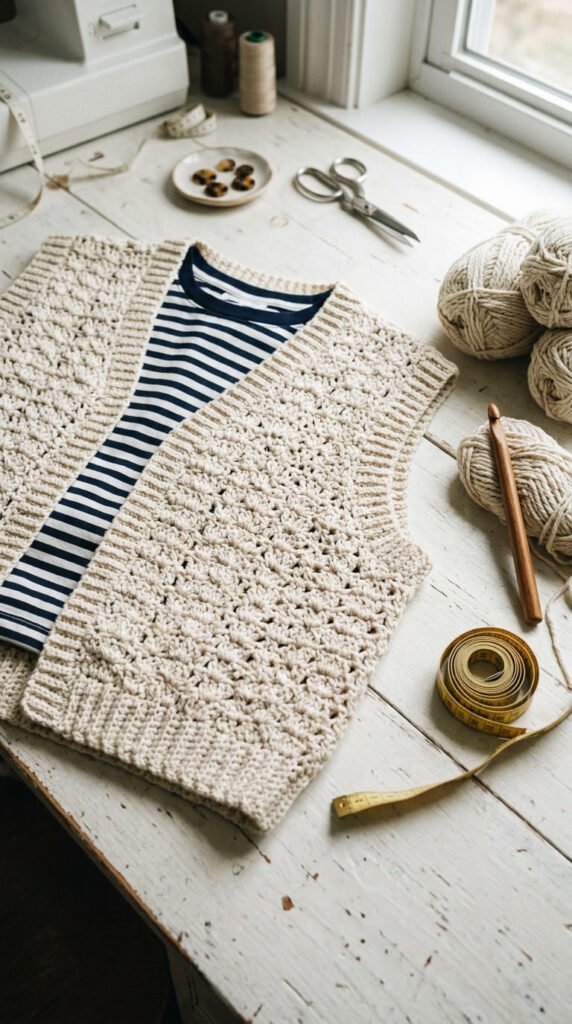
A sleeveless cardigan vest is one of the easiest ways to make your first crochet garment. You skip the sleeves, which removes one of the harder parts of cardigan assembly.
Make a back panel and two front panels. Seam the shoulders and sides, leaving armholes. Add a border around the front opening and armholes if you want a cleaner finish.
This project works well in cotton, acrylic, or lightweight yarn. Use a stitch that drapes nicely. Double crochet, granny stitch, or half double crochet can all work.
For a low-cost version, make it cropped or waist-length. You will use less yarn than a full cardigan. You can also make it in one solid color so you do not have to buy several skeins.
A sleeveless cardigan vest layers well over long sleeve shirts, dresses, and tank tops. It is a great practice project before making a full cardigan. You learn measuring, panel making, seaming, and edging without sleeve stress.
17. Beginner Baby Cardigan
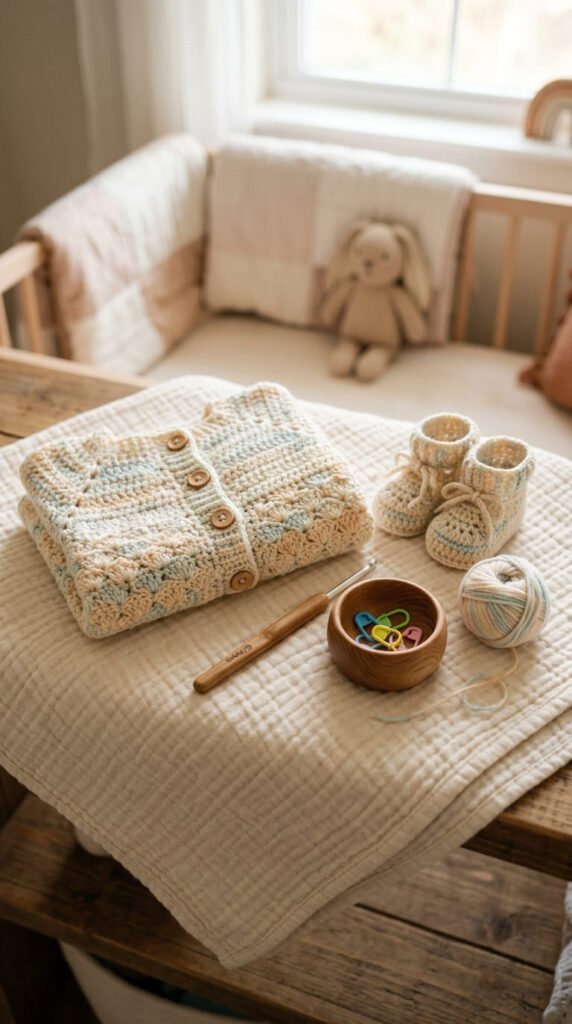
A baby cardigan is a sweet small project for beginners who want to practice garment skills without making an adult-size piece. It uses less yarn, takes less time, and still teaches shaping, seams, sleeves, and edging.
Choose soft washable yarn. Baby items should be easy to clean and gentle on skin. Acrylic baby yarn or cotton blend can work well.
Keep the design simple. A basic yoke cardigan, rectangle-style baby jacket, or tiny granny cardigan can be a good starting point. Avoid lots of buttons or loose details if the cardigan is for a very young baby.
For a budget-friendly gift, use one or two soft skeins and make a matching hat with leftover yarn. Pastel blue, cream, peach, lavender, and sage are popular choices.
Check measurements often because small sizes can change quickly with only a few rows. A baby cardigan is perfect for baby showers, handmade keepsakes, or practice before adult cardigans.
18. Basic Black Crochet Cardigan
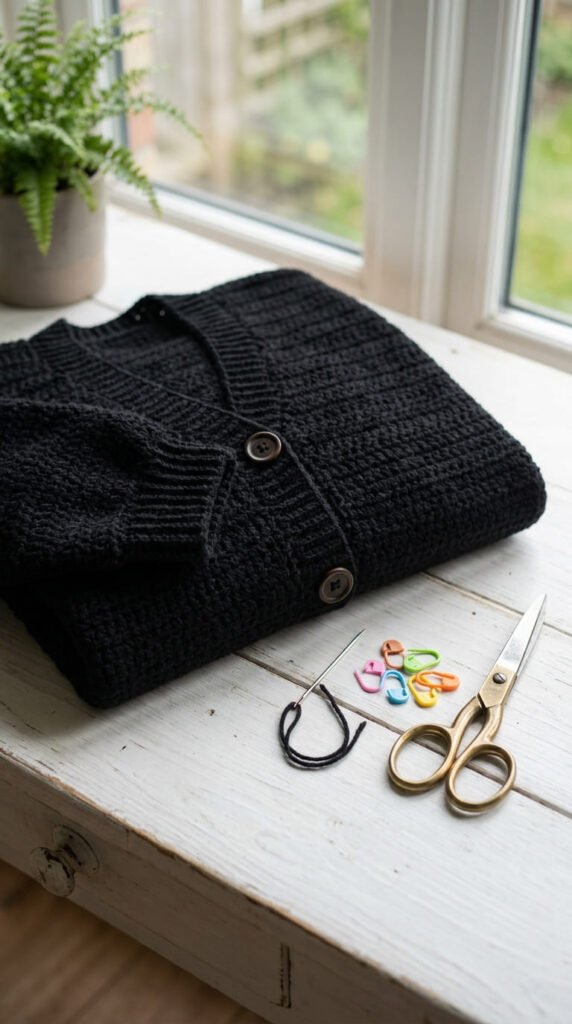
A basic black crochet cardigan can become one of the most wearable handmade pieces in your closet. It matches almost everything and looks clean even with a simple stitch.
Black yarn can be harder to see, so absolute beginners may want to practice the pattern first with a lighter color. Once you understand the stitch repeat, black yarn becomes easier to manage.
Use good lighting and stitch markers. Count rows carefully, especially on front panels and sleeves. Lay matching pieces on top of each other to check size as you go.
For a budget-friendly version, choose affordable acrylic yarn in black or charcoal. A plain half double crochet cardigan can look modern without fancy texture.
Keep the design minimal. No pockets, no stripes, no complex border. Add a simple single crochet edge around the opening and cuffs. A black cardigan is a great second beginner project after you have made a lighter practice piece. It is practical, stylish, and easy to wear often.
19. Pastel Striped Cardigan
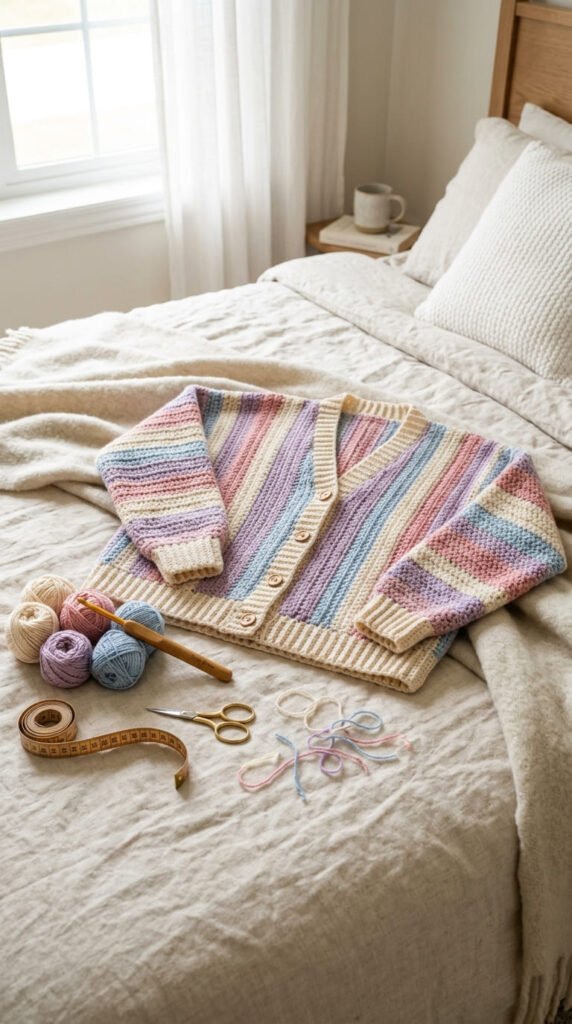
A pastel striped cardigan is a fun way to use simple stitches while making the finished piece look playful. The rows stay easy, and the color changes make the cardigan feel custom.
Choose three or four soft colors. Pink, cream, lavender, butter yellow, mint, and pale blue all work well together. Use the same yarn weight for every color so the panels stay even.
Decide your stripe plan before starting. Wide stripes mean fewer yarn ends to weave in. Thin stripes look cute but create more finishing work.
For a budget idea, use leftover pastel yarn from other projects. Just weigh or estimate the amount before starting so you do not run out halfway through a sleeve.
Change colors at the edge of a row. Carry the yarn only if the stripes are short and tidy. Otherwise, cut and weave ends as you go.
This cardigan is great for casual outfits, spring photos, and handmade gifts. Keep the shape simple so the colors can shine.
20. Scalloped Edge Cardigan
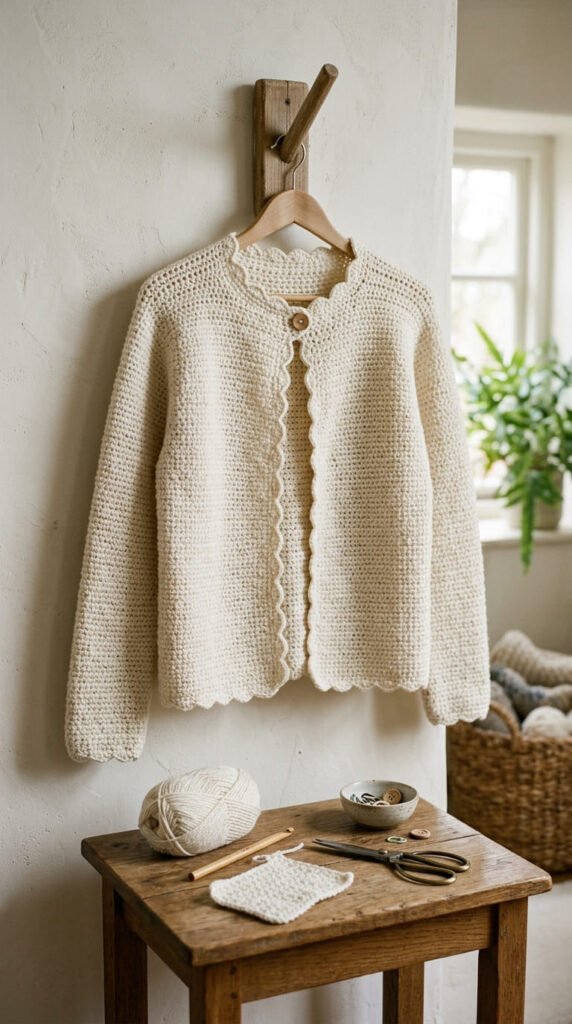
A scalloped edge can make a plain cardigan feel pretty without changing the main pattern. You crochet the cardigan with simple panels, then add the scallop border at the end.
This is a good beginner upgrade because the decorative part is separate. If the scallops feel hard, you can skip them and still have a finished cardigan.
Use the scallop edge around the front opening, hem, cuffs, or sleeves. A basic shell stitch border works well. Practice on a small swatch first so you understand the spacing.
For a budget-friendly look, use the same yarn as the cardigan. A matching scallop border looks soft and clean. If you want contrast, use a small leftover skein in cream or beige.
Keep the border loose. Tight edging can pull the cardigan inward and affect the drape. Lay the cardigan flat while working and check that the edge stays smooth.
This detail is perfect for romantic, cottage-style, or feminine cardigan designs.
21. Moss Stitch Cardigan
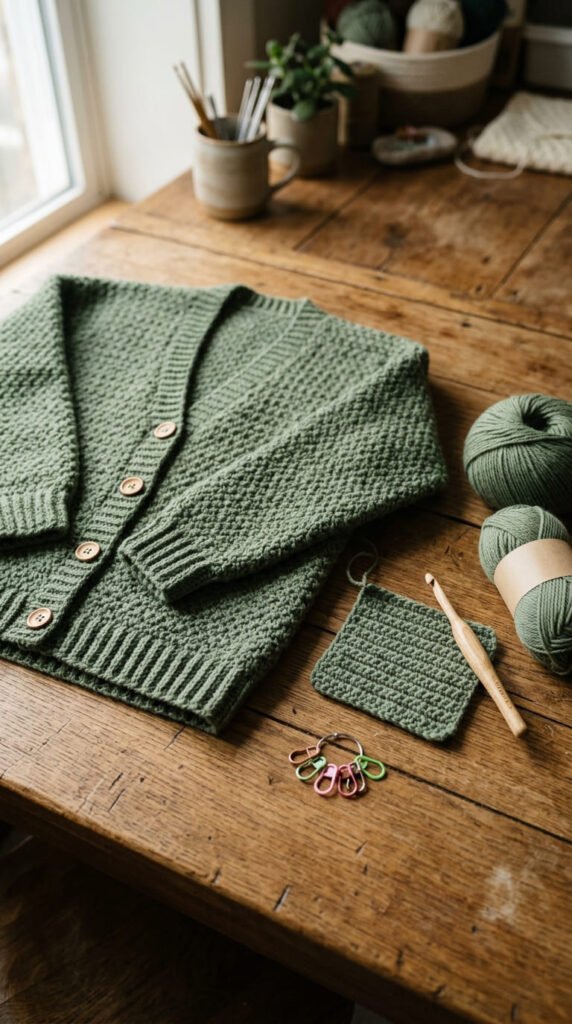
A moss stitch cardigan is simple but has a lovely texture. The stitch usually alternates single crochet and chain spaces, creating a soft woven look.
This pattern is beginner-friendly because the repeat is easy once you get the rhythm. It also makes a flexible fabric that works well for cardigans.
Start with a swatch so you can see how the stitch grows. Moss stitch may feel slower than double crochet, but the texture is worth it. Use a hook size that gives drape rather than stiffness.
For a budget version, use one solid color. Sage, oatmeal, grey, rust, and cream all look good in moss stitch. The texture adds interest without extra colors.
Make the cardigan from basic panels. Keep track of row counts so the front panels match. Add a simple single crochet border to clean up the edges.
This cardigan is a great choice if you want a beginner project that looks more detailed than it really is.
22. Buttonless Open-Front Cardigan
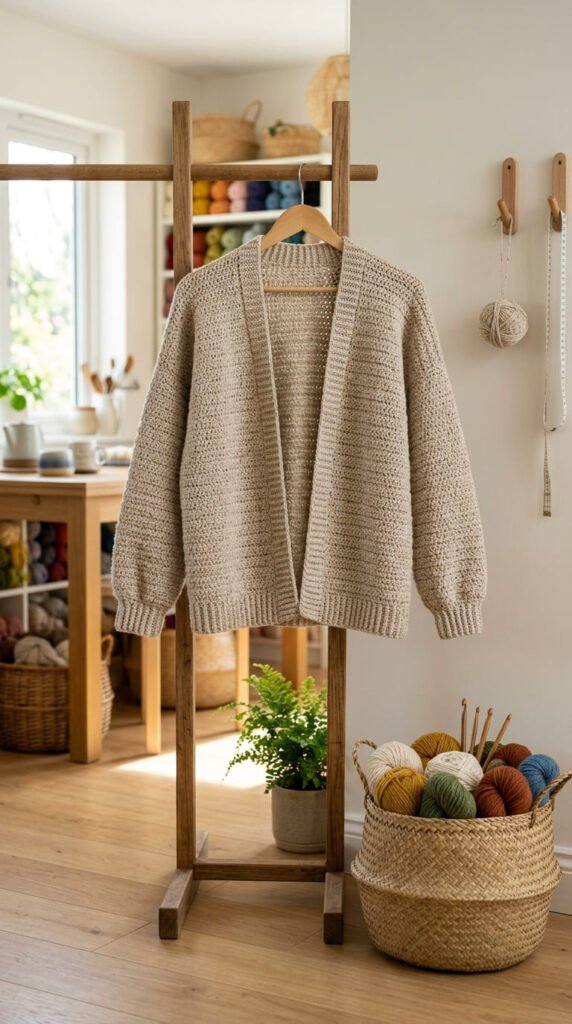
A buttonless open-front cardigan is one of the easiest beginner styles because you do not have to plan buttonholes, closures, or exact front overlap. The cardigan hangs open, which makes the fit more forgiving.
Make a back panel, two front panels, and sleeves. The front panels can be narrow or wide depending on the look you want. Since there are no buttons, the panels do not have to meet perfectly at the center.
Use half double crochet, double crochet, or a simple granny stitch. Add a neat border around the front opening so it looks finished. Work the border loosely so the edge does not pull.
For a budget-friendly cardigan, choose a color you will wear often. Cream, black, camel, charcoal, or navy are easy to style.
This project is great for absolute beginners because it avoids the stress of closures. It also layers well over dresses, tees, pajamas, and work outfits. Make this one first if you want a wearable cardigan with the least fuss.
Conclusion
Crochet cardigan patterns for absolute beginners work best when the shape stays simple, the stitches stay basic, and the fit is checked often. Rectangle cardigans, one-stitch cardigans, cropped styles, sleeveless vests, oversized layers, and buttonless open-front cardigans are all great starting points. Use affordable yarn, make a swatch, measure against a cardigan you already love, and pin pieces before seaming. Your first cardigan may not be perfect, but it can still be cozy, wearable, and handmade with pride. Pick one easy pattern from this list and start with the first panel today.