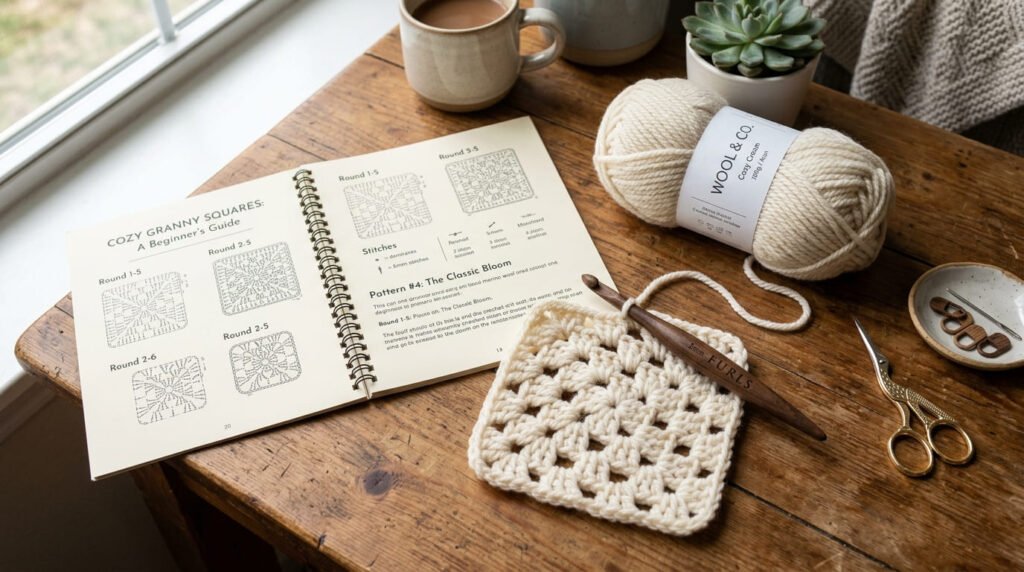
So you found the perfect pattern. The cozy blanket, the dreamy cardigan, the granny square bag you’ve been eyeing all over Pinterest. You open it up, ready to hook your first stitch… and suddenly it looks like a secret code written in a language only wizards understand.
Don’t panic. That “code” is actually super logical once someone shows you the key. By the end of this post, you’ll read patterns like a pro — no decoder ring required.
First Things First: Find the Pattern Key
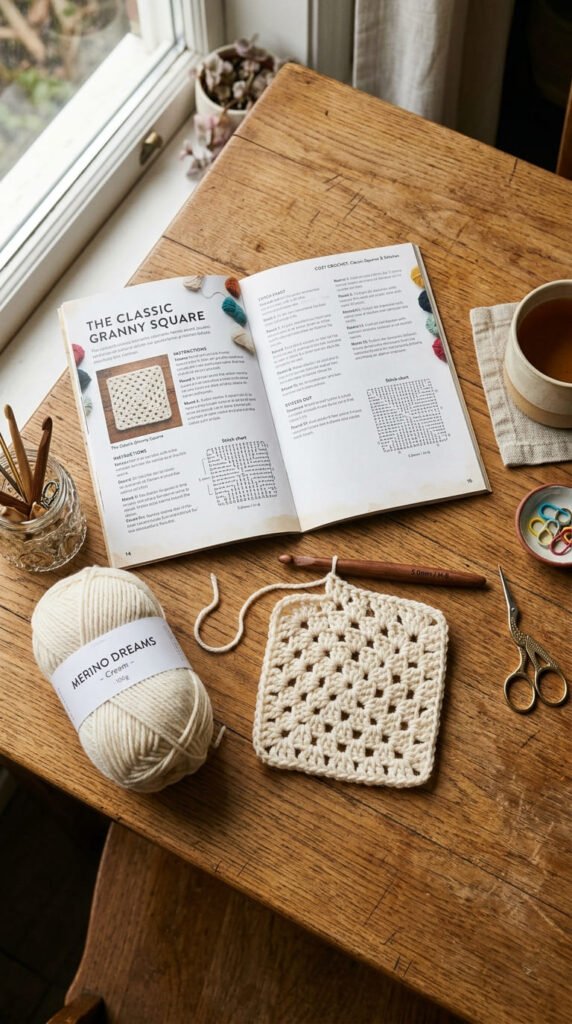
Before you make a single stitch, scroll to the top (or bottom) and find the abbreviations list or pattern key. This is your translation guide.
Every designer should include one, and reading it first saves you so much heartache. Here are the abbreviations you’ll see constantly:
- ch = chain
- sc = single crochet
- hdc = half double crochet
- dc = double crochet
- tr = treble crochet
- sl st = slip stitch
- st / sts = stitch / stitches
- rep = repeat
Pro tip: keep a printed cheat sheet next to you for your first few projects. After a couple of patterns, these will feel like second nature.
Watch Out for the UK vs. US Trap
Here’s the sneaky one that confuses so many beginners: US and UK crochet terms are different.
In the US, “double crochet” is a specific tall-ish stitch. But in the UK, “double crochet” actually means what Americans call a single crochet. Yep — same words, totally different stitch.
Always check whether your pattern is written in US terms or UK terms before you begin. If it doesn’t say, look at the designer’s location or the yarn brand for a clue. A quick conversion chart is a lifesaver here.
Cracking the Symbols and Charts
More and more patterns now use visual charts instead of (or alongside) written words. If you’re a visual learner, you’ll love these. Each little symbol represents a stitch, drawn the way it looks on the right side of your work.
A few common ones:
- A small oval or circle = chain
- A plus sign (+) or X = single crochet
- A T with one line through it = double crochet
- A T with two lines = treble crochet
The big rule? Always read the chart’s key first. Symbols can vary slightly between designers, so never assume. The Craft Yarn Council created a set of standardized symbols that most modern patterns follow, which makes life much easier.
Which Way Do I Read It? Rows vs. Rounds
This trips up a lot of beginners, but it’s simple once you know the two formats:
Working in rows (back and forth):
- Start at the bottom of the chart.
- Row 1 reads bottom to top.
- At the end of each row, you make a turning chain and turn your work.
Working in rounds (center out):
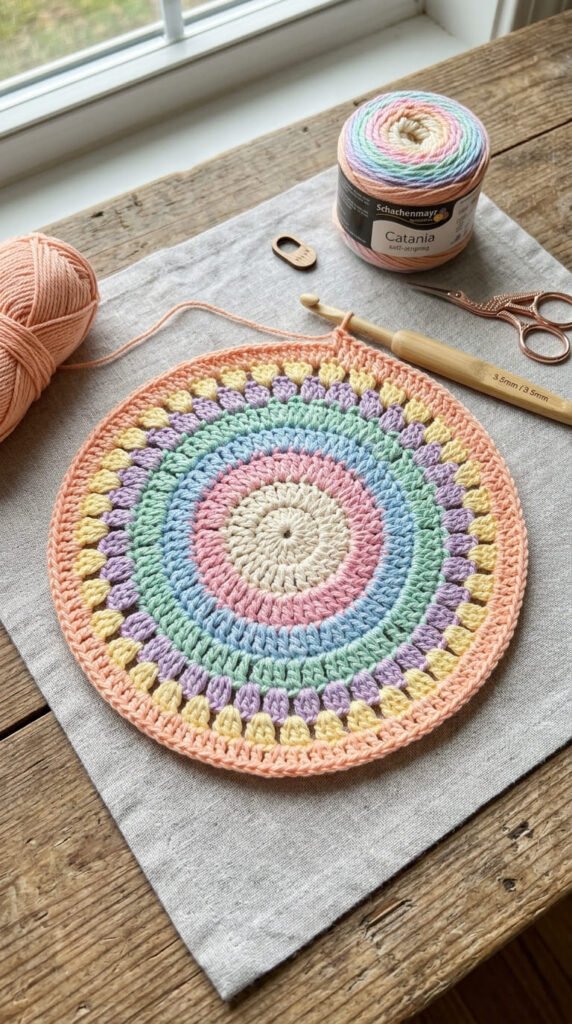
- Start at the center and spiral outward.
- This is how you make hats, granny squares, and circular motifs.
- You usually don’t turn — you keep going round and round.
A handy counting rule: in many patterns, chain 3 counts as your first double crochet, and you skip the first stitch when you start a new row. Little details like this are why reading the whole row before hooking is a great habit.
Decoding the Fancy Stitches
Once you’ve got the basics, patterns start sprinkling in shorthand for textured and decorative stitches. Don’t let them scare you:
- dc2tog / sc2tog — the “tog” means together. You’re combining stitches to decrease.
- Cluster, puff, bobble — bumpy, raised stitches that add gorgeous texture.
- 5-dc popcorn or 5-dc shell — decorative groups of stitches worked into one spot.
- FPdc / BPdc — front post and back post stitches that create that lovely ribbed, sweater-like look.
- BLO / FLO — back loop only or front loop only, which changes the texture and stretch.
When you hit one you don’t recognize, pause and look it up. A quick video search and you’ll have it in five minutes.
A Few Golden Rules to Remember
- Read the key before you start — always.
- Read each row fully before hooking it.
- Count your stitches at the end of every row.
- Use a stitch marker to track your starting point in rounds.
- Don’t rush — confidence comes from repetition, not speed.
You’ve Got This
Reading a crochet pattern is just learning a new language — and like any language, it clicks faster than you’d expect once you start using it. Soon you’ll glance at dc2tog and smile instead of sweating.
Grab a simple beginner pattern, keep your abbreviation cheat sheet handy, and dive in. Mistakes are part of the fun!
💛 Save this guide to your crochet board so it’s ready the next time a pattern tries to confuse you — and happy hooking!