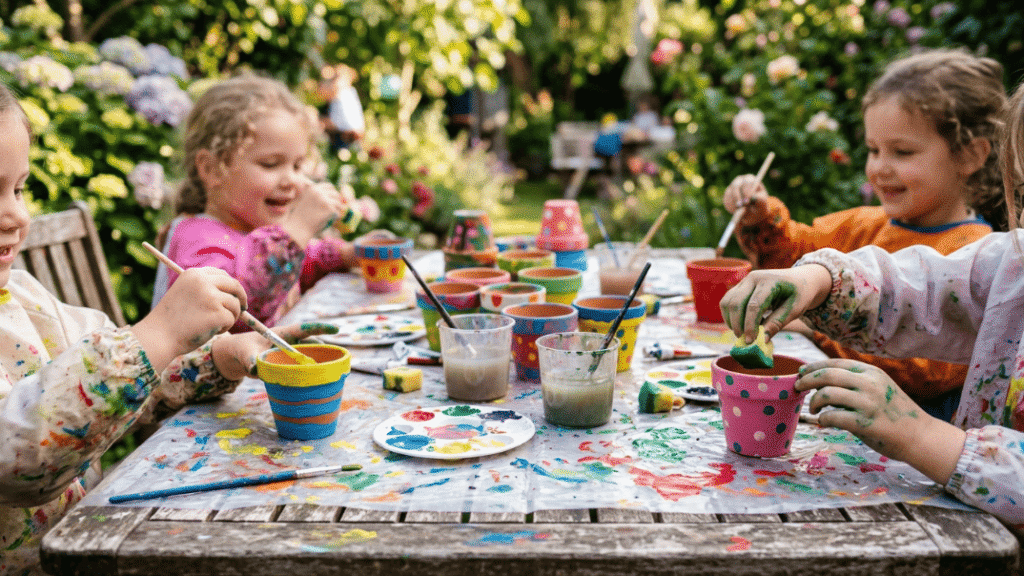
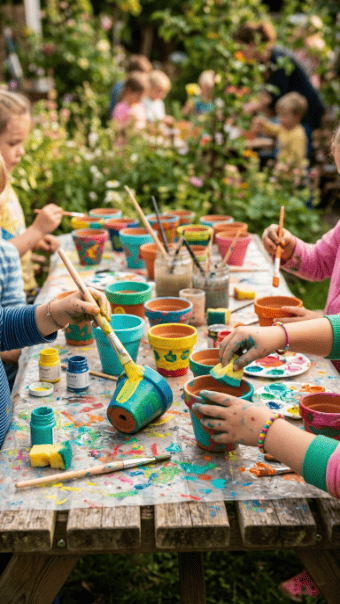
Kids don’t need complicated crafts. They need simple actions that feel satisfying. Flower pot painting works because it’s hands-on, slightly messy, and produces something real they can keep or gift.
Most parents make the mistake of chasing perfection. Straight lines. Clean finishes. That’s not the goal. The goal is engagement and confidence.
These ideas strip things down. Cheap tools. Minimal prep. Designs kids can actually finish without frustration.
1. Fingerprint Flower Garden
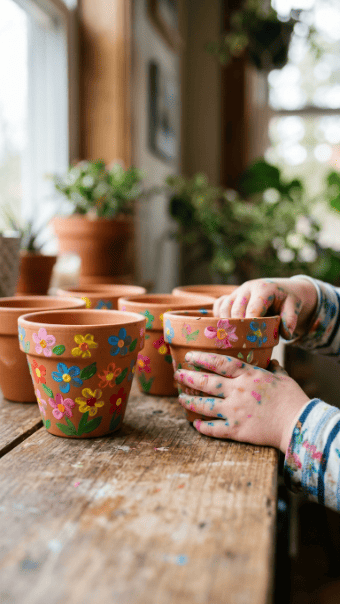
Forget brushes. Start with fingers.
Dip into paint. Press onto the pot. That’s it.
Each print becomes a petal. Add a simple green line later for stems.
This builds control without pressure. Kids learn spacing naturally.
Use washable acrylic. Don’t overthink colors. Red, yellow, and blue go a long way.
Put paper underneath. Accept the mess. Fighting it kills the fun.
2. Polka Dot Pots with Pencil Erasers
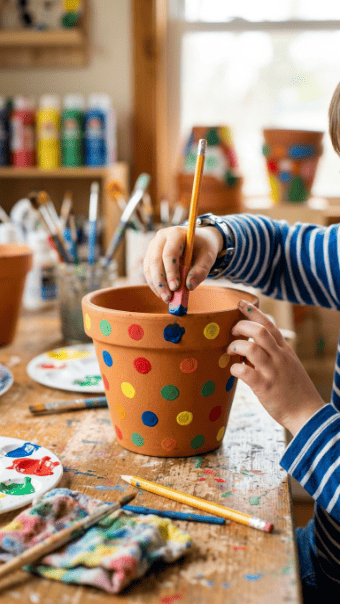
You want control? This is it.
Dip the back of a pencil into paint. Press dots across the pot.
Dots stay uniform. Kids feel “in control” fast.
Create patterns or random spreads. Both work.
Cheap and effective. No special tools required.
3. Tape Resist Stripe Designs
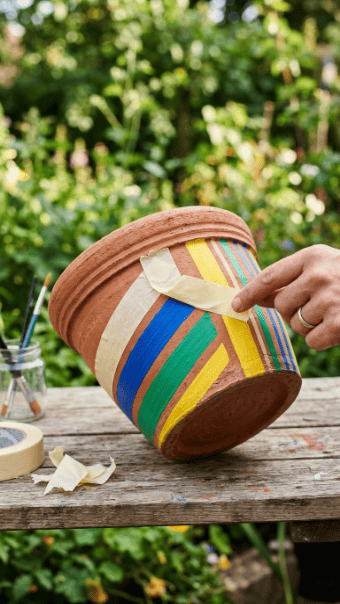
Tape solves messy lines.
Stick strips across the pot. Paint over everything. Peel once dry.
You get sharp stripes instantly.
Kids love the “reveal moment.” That’s the hook.
Use basic masking tape. Nothing fancy.
4. Sponge Dab Texture Pots
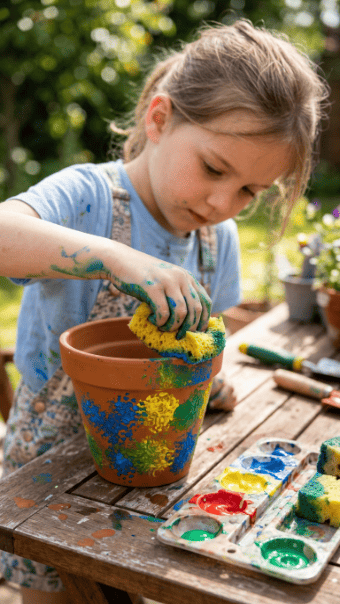
Brushes frustrate younger kids. Sponges don’t.
Cut kitchen sponges into shapes. Dip and press.
You get bold textures instantly.
Less control required. More satisfaction.
5. Cotton Swab Dot Painting
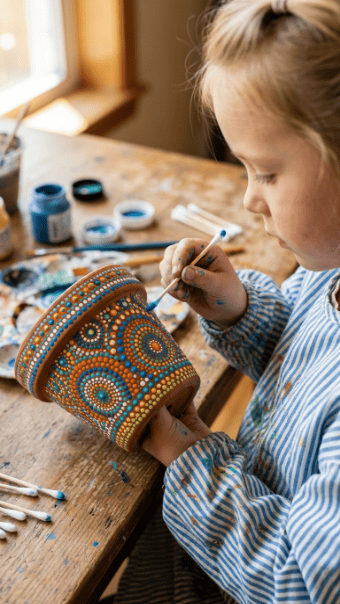
For kids who want detail.
Use cotton buds for small dots. Build patterns slowly.
This trains patience and hand control.
Great for older kids who want precision.
6. Cute Animal Face Pots
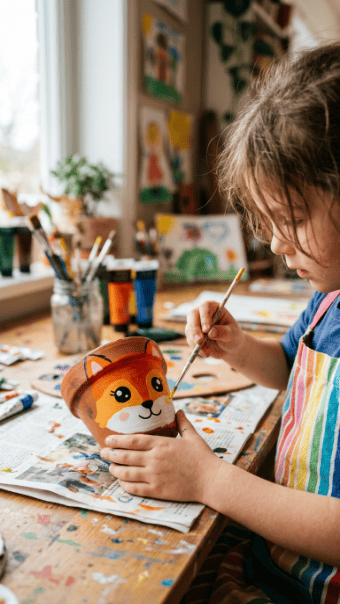
Kids love faces. Keep it simple.
Two big eyes. One smile. Done.
Don’t aim for realism. Go cartoon.
Mistakes actually make it funnier.
7. Watermelon Slice Pots
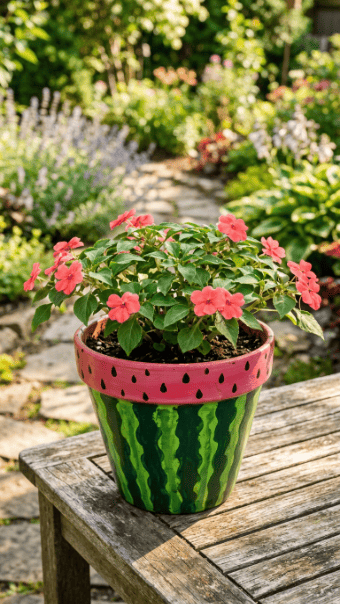
Simple color blocks.
Green outside. Pink middle. Black dots.
It looks impressive but takes minimal effort.
Perfect for quick results.
8. Rainbow Ombre Pots
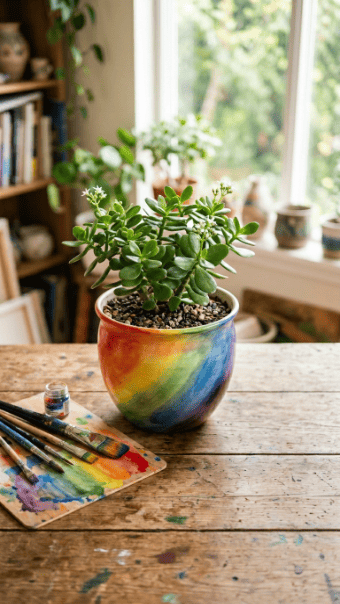
Blend colors side by side.
Let them overlap naturally.
No need for perfection. The blend hides mistakes.
Kids enjoy watching colors mix.
9. Ladybug and Bumblebee Pots
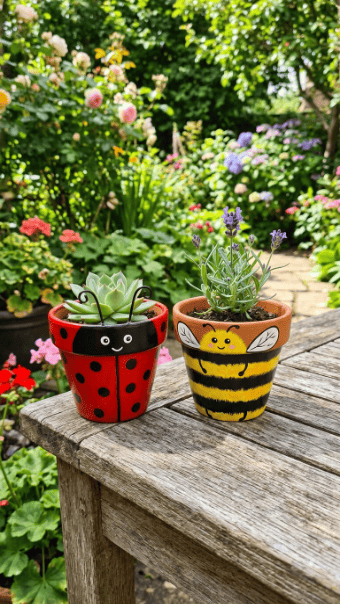
Simple shapes win again.
Red with black dots = ladybug. Yellow stripes = bee.
Recognizable instantly.
Kids feel successful fast.
10. Yarn Wrapped Pots
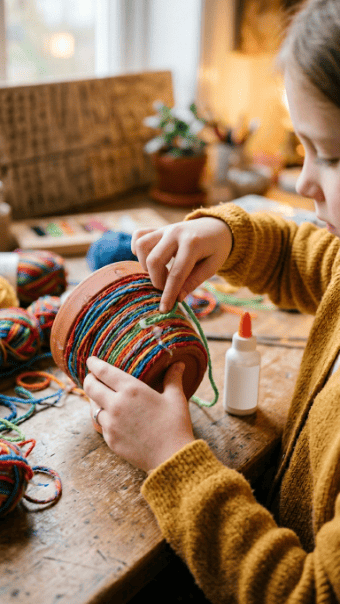
Not all crafts need paint.
Apply glue. Wrap yarn tightly around.
Repetitive motion calms kids down.
Works well for quieter play time.
11. Mosaic Tile Pots
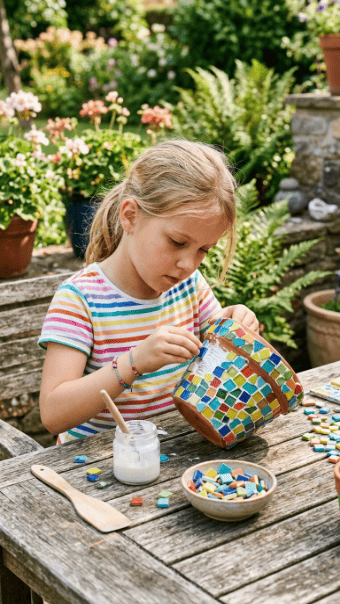
Break designs into pieces.
Glue small tiles or broken bits.
Spacing doesn’t have to be perfect.
Focus on placement, not perfection.
12. Paint Drip Pots
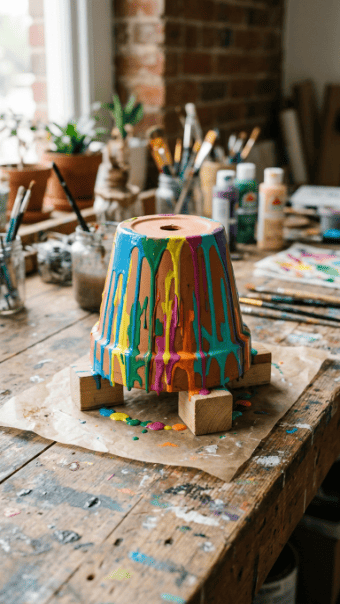
Controlled chaos.
Pour paint at the top. Let gravity do the work.
Kids love watching it drip.
Low effort, high visual payoff.
13. Unicorn and Butterfly Pots
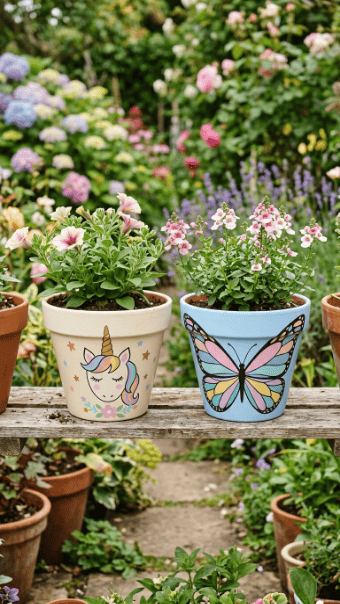
Fantasy works well.
Keep shapes basic. Add wings or horns.
Don’t over-detail. That’s where kids get stuck.
14. Kawaii Fruit Pots
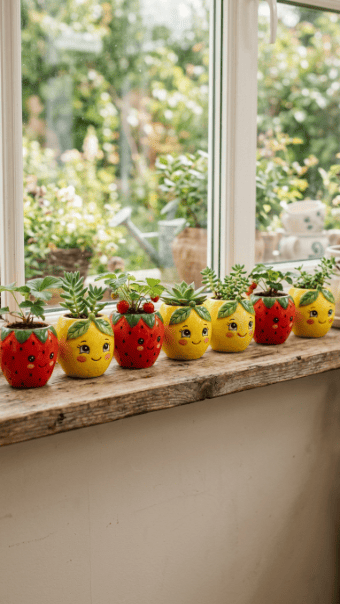
Take fruit designs and add faces.
Strawberries, lemons, oranges.
Two eyes and a smile change everything.
15. Heart Stamp Pots
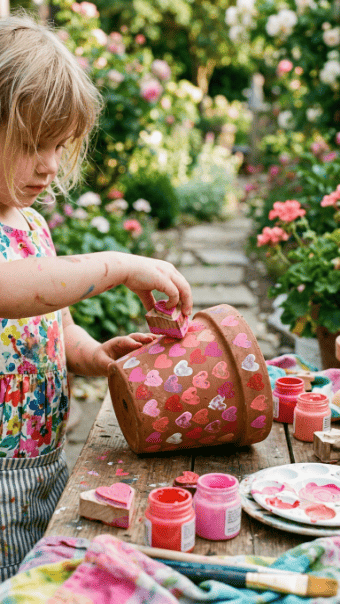
Use erasers or cut sponges into heart shapes.
Stamp repeatedly.
Fast, consistent patterns.
16. Rainbow Face Pots
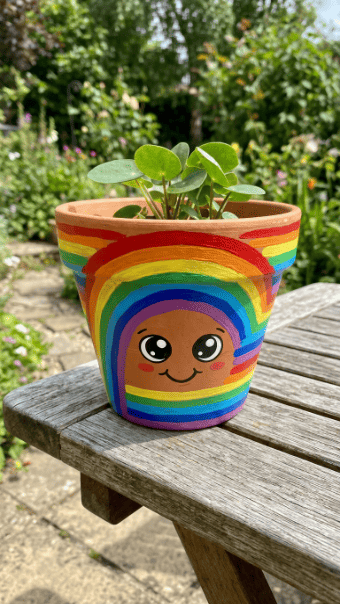
Combine two ideas.
Rainbow + face = personality.
Kids get creative with expressions.
17. Zebra Print Pots
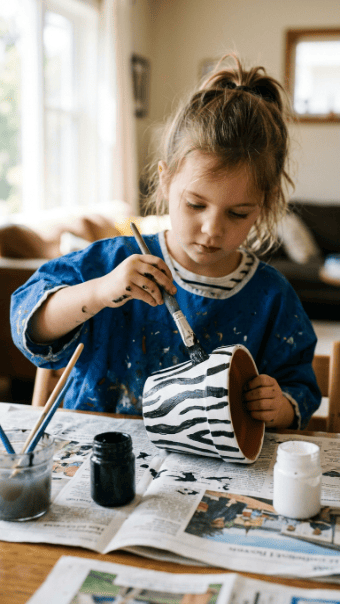
No need for symmetry.
Random black lines over white.
Imperfection actually improves the look.
18. Stackable Pot People
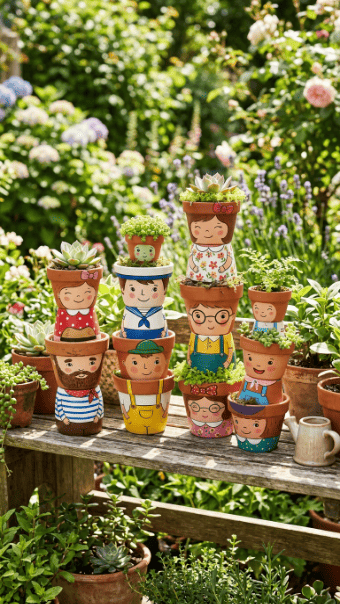
Turn pots into characters.
Stack them. Paint faces on each level.
Adds storytelling to the craft.
19. Milk Paint Natural Pots
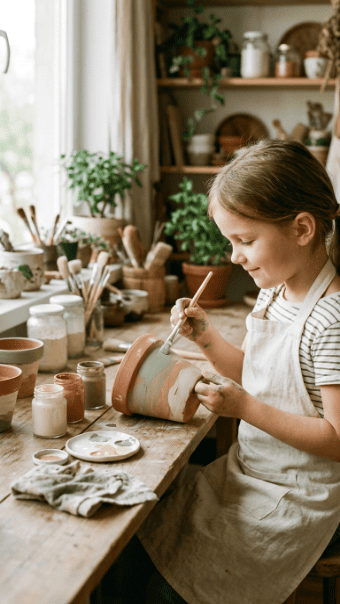
If you care about ingredients, switch paint.
Milk paint is simple and low-odor.
Less shine, more natural look.
20. Mixed Pattern Pots
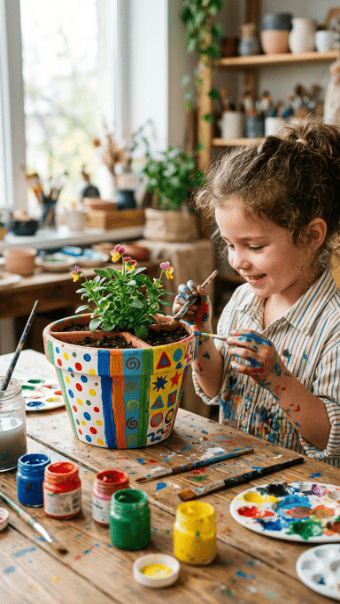
Stop forcing one idea.
Divide the pot into sections.
Each section gets a different design.
This keeps kids engaged longer.
Conclusion
You’re overthinking this if you’re still searching for the “best” idea.
Kids don’t need complexity. They need quick wins and freedom to mess up.
Pick one idea. Set a timer for 30 minutes. Let them go.
If it turns out messy, good. That means they were actually involved.
That’s the whole point.